Sourdough Pizza Dough: What It Is, How It Tastes & How to Use It
A practical guide to sourdough pizza dough: what makes it different, how fermentation changes flavour and texture, how to handle it at home and how to use ready-made sourdough pizza dough balls.
Sourdough pizza dough brings a different kind of character to pizza night. Instead of relying only on commercial baker's yeast, sourdough uses a living fermented culture to help develop the dough, building flavour gradually over time.
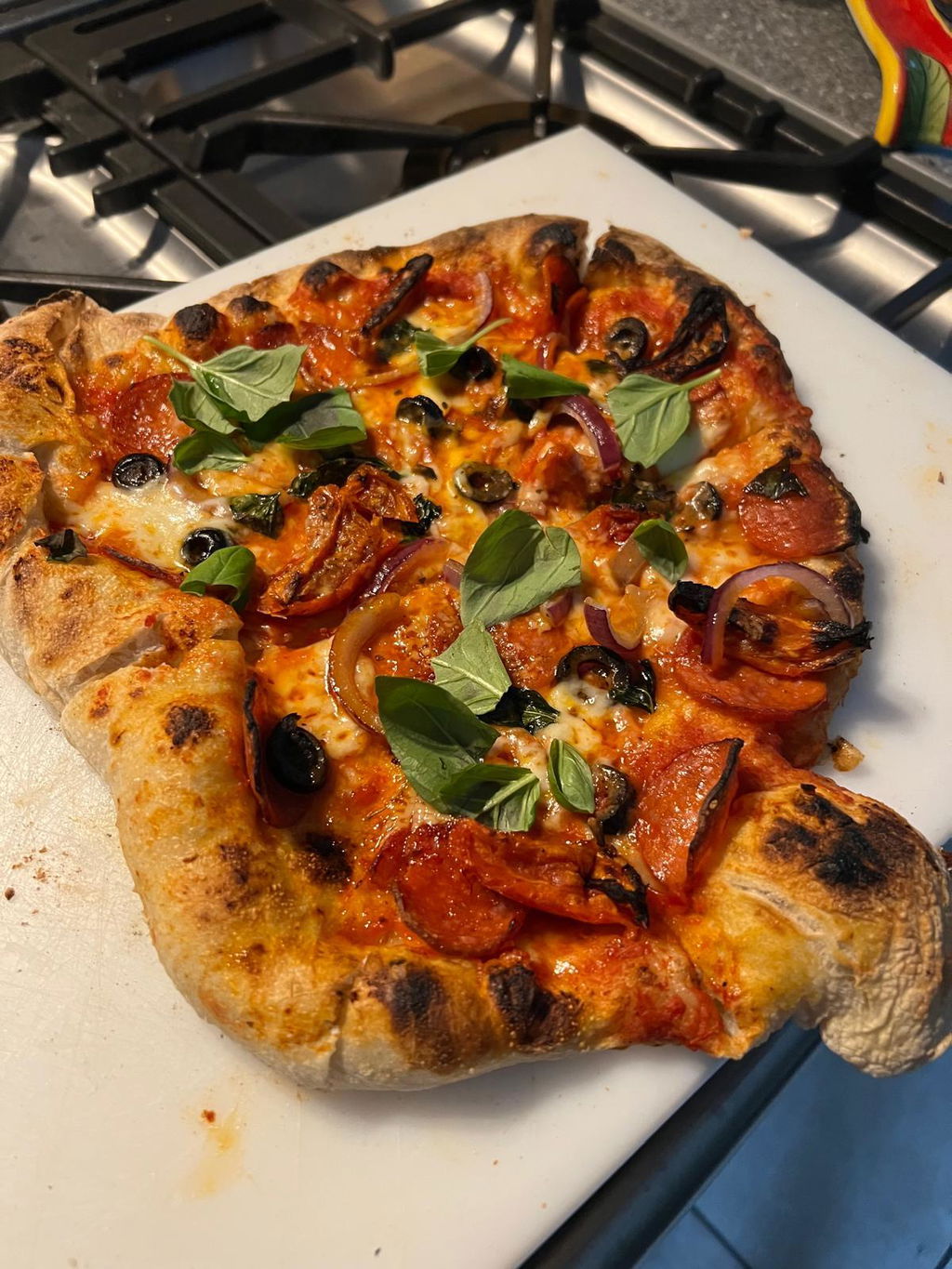
The result should not taste sharply sour. A good sourdough pizza has a gentle tang, a more complex flavour and the same thing we want from any great pizza dough: a light, airy crust that stretches well and bakes beautifully at high heat.
Quick answer: sourdough pizza dough is pizza dough fermented with a sourdough culture. It generally has a deeper flavour and a subtle tang compared with standard yeast dough. Our Dough Dorks version is slowly fermented for 48 hours, made with Italian Tipo 00 flour, individually proofed and frozen ready for pizza night.
What Is Sourdough Pizza Dough?
Sourdough pizza dough is made using a sourdough culture — a fermented mixture containing naturally occurring yeasts and bacteria — as part of the fermentation process.
That culture changes more than the flavour. Fermentation affects how the dough develops, how it stretches and how the crust behaves in the oven.
There is no single universal sourdough pizza recipe. Bakers use different flours, hydration levels, fermentation times and starter percentages. What matters is allowing enough time for the dough to develop properly rather than trying to rush it.
What Does Sourdough Pizza Taste Like?
The word sourdough can make people expect something aggressively sour. Pizza dough should be much more balanced than that.
A well-fermented sourdough pizza can have:
- a gentle natural tang
- more depth of flavour than a quickly made dough
- a light, airy crust
- a slightly more complex toasted flavour after baking
- good chew without feeling heavy
The exact flavour depends on the sourdough culture, fermentation time, temperature and flour. Longer fermentation does not simply mean “more sour” — it is about developing balance, aroma and structure.
Sourdough Pizza Dough vs Regular Pizza Dough
| Feature | Sourdough Pizza Dough | Standard Yeast Pizza Dough |
|---|---|---|
| Fermentation | Uses a sourdough culture | Usually relies on commercial yeast |
| Flavour | More complex with a gentle tang | Often cleaner and milder |
| Timing | Usually benefits from slower fermentation | Can be made on shorter schedules |
| Texture | Can produce a light, airy and characterful crust | Can also be light and airy when fermented properly |
| Best choice | For people who enjoy deeper fermented flavour | For a classic, neutral pizza-dough flavour |
Neither is automatically “better”. A carefully fermented yeast dough can be exceptional, and a badly managed sourdough can be disappointing. The quality of the ingredients, fermentation and handling matter more than the label.
Why Fermentation Matters for Sourdough Pizza
Fermentation is where much of the character of pizza dough develops. During fermentation, the culture produces gases that help the dough rise while acids and other flavour compounds gradually develop.
Give the dough time and you can build:
- better flavour
- good extensibility for hand stretching
- an airy internal crumb
- strong oven spring
- the blistering and spotting associated with high-temperature pizza
This is why we favour slow fermentation rather than trying to make dough as quickly as possible.
Our Ready-Made Sourdough Pizza Dough Balls
If you like the flavour of sourdough but do not want to maintain a starter, mix dough, calculate fermentation schedules and ball it yourself, we make ready-made Sourdough Pizza Dough Balls specifically for that job.
They are handmade in Dorset using premium Italian Tipo 00 flour, filtered water, sea salt and our sourdough culture, then slowly fermented for 48 hours. Each dough ball is approximately 260–270g, suitable for roughly a 12-inch pizza, individually proofed and frozen for convenient storage.

Shop Sourdough Pizza Dough Balls →
How to Use Ready-Made Sourdough Pizza Dough
1. Defrost it fully
For our frozen sourdough dough balls, defrost the dough in its container before you try to stretch it. Dough that is still cold or frozen in the centre will fight you and is much more likely to tear.
Follow our frozen pizza dough defrosting guide to check that the centre has thawed before you begin.
2. Let the dough relax
Once defrosted, allow the dough to come towards room temperature before stretching. Relaxed dough is easier to open by hand and less likely to spring straight back.
3. Use flour sparingly
Dust the work surface and dough lightly to prevent sticking. You need enough flour to handle the dough confidently, but piling on unnecessary flour can burn in a very hot pizza oven and alter the texture of the base.
4. Stretch by hand
Press gently from the centre towards the outside while preserving the outer rim. Avoid crushing the edge if you want an airy cornicione.
A rolling pin forces gas out of the dough and works against the light crust most people are trying to achieve.
See how to stretch pizza dough without tearing for the full hand-stretching method.
5. Keep the toppings under control
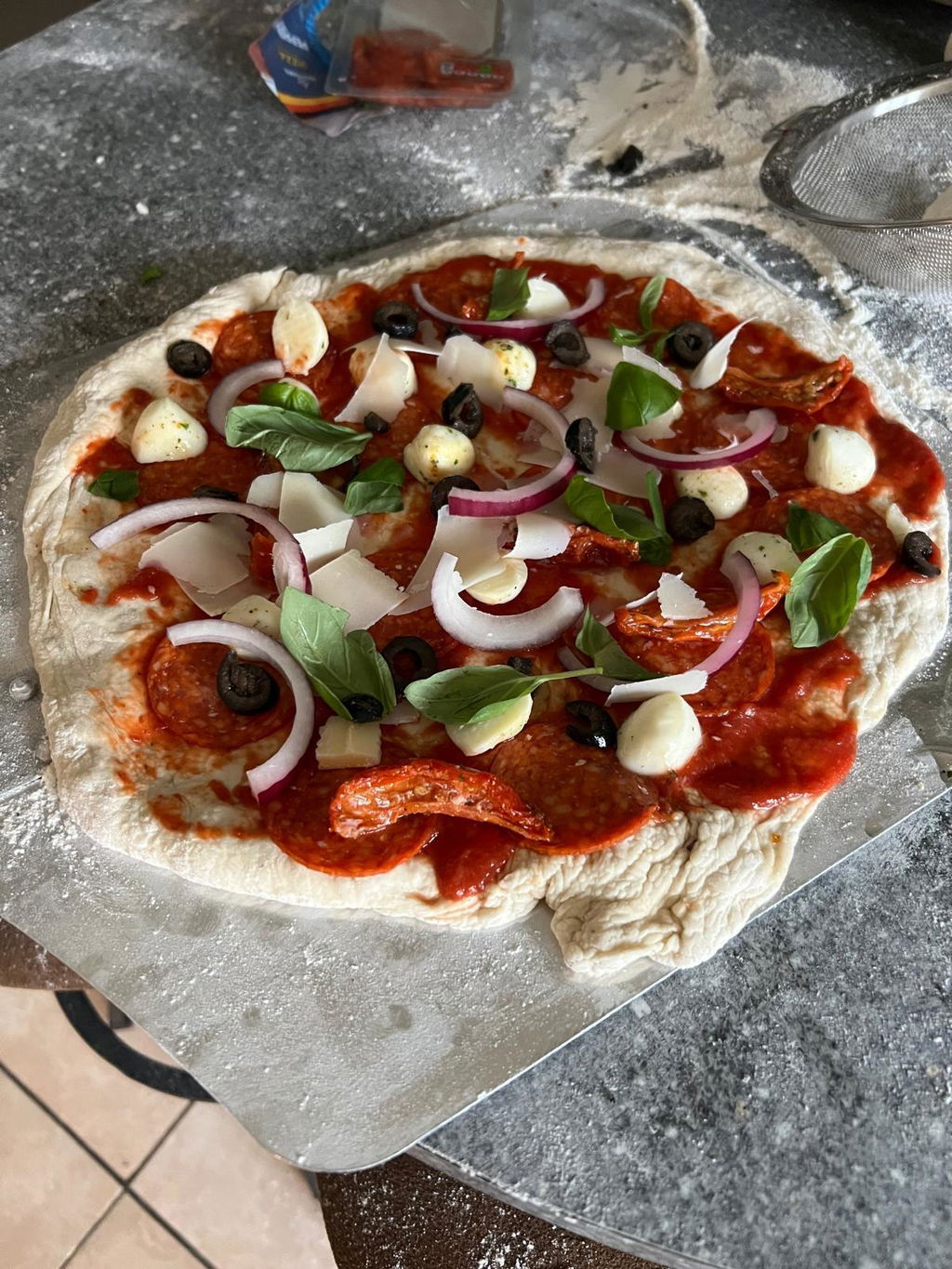
Sourdough does not need to be buried under toppings. A thin layer of sauce, sensible amount of cheese and a few well-chosen ingredients will usually cook more evenly and let the crust stay crisp.
6. Bake hot
Our sourdough pizza dough is suitable for Ooni, Gozney, Ninja, home ovens and traditional wood-fired ovens. The exact bake time depends on your oven and temperature, so cook by what you can see rather than by a stopwatch alone.
What Is a Sourdough Pizza Base?
People use the phrase sourdough pizza base in two slightly different ways. Sometimes they mean the stretched raw sourdough dough ready for toppings; other times they mean a pre-baked or pre-cooked sourdough base.
If you want the full hands-on pizza experience, dough balls give you control over stretching, thickness and the shape of the crust. A pre-cooked base is more about speed and convenience.
For the classic artisan result, starting with a properly fermented dough ball gives you the opportunity to create the raised, airy edge associated with Neapolitan-style pizza.
Sourdough Pizza Dough Recipe vs Ready-Made Dough
Making sourdough pizza completely from scratch can be hugely satisfying. You will normally need to maintain an active starter, mix and develop the dough, control fermentation temperature, divide it, ball it and judge when it is ready to bake.
That is part of the fun if dough making is the hobby.
If the pizza is the hobby, ready-made sourdough dough balls remove most of that timetable while still giving you the stretching, topping and baking experience at home.
There is room for both. We are not going to pretend maintaining a sourdough starter is difficult magic — it just takes time and consistency. Our dough exists for the nights when you would rather skip straight to making the pizza.
Best Toppings for Sourdough Pizza
Sourdough has enough flavour to stand up to bold toppings, but it is also excellent with very simple combinations.
Some of our favourites are:
- Margherita: tomato, Fior di Latte, basil and extra virgin olive oil
- Mushroom: mushrooms, mozzarella, Parmesan and thyme
- Prosciutto: tomato, Fior di Latte and prosciutto added after baking
- Pepperoni: tomato, mozzarella and crisp pepperoni
- Spicy Italian sausage: tomato, Fior di Latte and our Salsiccia Napoli Piccante for a proper spicy Neapolitan topping
- Nduja: small amounts of nduja with mozzarella and tomato
- White pizza: cheese, olive oil and herbs without tomato sauce
For the tomato side, our Authentic Neapolitan Pizza Sauce Recipe explains how to make a simple no-cook sauce. For cheese, see What Is Fior di Latte?.
Does Sourdough Pizza Always Taste Sour?
No. The best way to describe it is usually more complex, not simply more sour.
The acidity of a sourdough culture is affected by how it is maintained and how the dough is fermented. A well-balanced pizza dough can have only a subtle tang while still carrying the aroma and depth people associate with sourdough.
Is Sourdough Pizza Healthier?
Sourdough is not automatically a “healthier pizza”. The nutritional profile still depends on the flour, portion size, sauce, cheese and toppings you use.
Fermentation changes the dough and can affect its flavour and structure, but we would not treat the word sourdough as a health claim. Choose it because you enjoy the flavour and texture.
Can You Freeze Sourdough Pizza Dough?
Yes, sourdough pizza dough can be frozen when it is produced and handled appropriately. Our sourdough dough balls are individually proofed and frozen so they can be stored conveniently and defrosted when needed.
Our current product guidance is to keep them frozen until required and use them within the stated storage period on the product packaging and page.
Can You Cook Sourdough Pizza in an Ooni or Gozney?
Yes. Sourdough pizza dough works very well in high-temperature pizza ovens such as Ooni and Gozney, and our dough is formulated for those ovens as well as Ninja pizza ovens, traditional wood-fired ovens and domestic ovens.
The principle is the same in every oven: get the cooking surface properly hot, stretch gently, avoid overloading the pizza and watch the crust as it cooks.
Frequently Asked Questions
What is sourdough pizza dough?
It is pizza dough fermented using a sourdough culture. The fermentation can give the dough a deeper flavour, gentle tang and distinctive texture.
Is sourdough pizza dough hard to stretch?
It should not be when it is properly fermented, fully defrosted and relaxed before use. Very cold dough often feels tight and springs back, so temperature and timing matter.
What flour is best for sourdough pizza?
There is no single compulsory flour. For our Neapolitan-style sourdough dough balls we use premium Italian Tipo 00 flour because it suits the texture and high-temperature baking style we are aiming for.
How much sourdough pizza dough do I need for a 12-inch pizza?
Our dough balls weigh approximately 260–270g each and are designed for roughly a 12-inch pizza. Different pizza styles can use different dough weights.
Is sourdough pizza dough suitable for beginners?
Yes. A ready-made dough ball is a particularly easy way to try sourdough pizza because the mixing, fermentation, dividing and balling have already been done.
What is the difference between sourdough pizza dough and sourdough pizza base?
Sourdough pizza dough normally means the raw fermented dough, while “sourdough pizza base” can refer either to stretched raw dough or to a pre-cooked base depending on the seller and context.
Try Dough Dorks Sourdough Pizza Dough
If you want the flavour of slow-fermented sourdough without planning a starter and dough schedule days in advance, our sourdough dough balls are made to make that easy.
Shop Dough Dorks Sourdough Pizza Dough Balls →
Defrost it. Stretch it. Top it. Fire it. Then take all the credit.