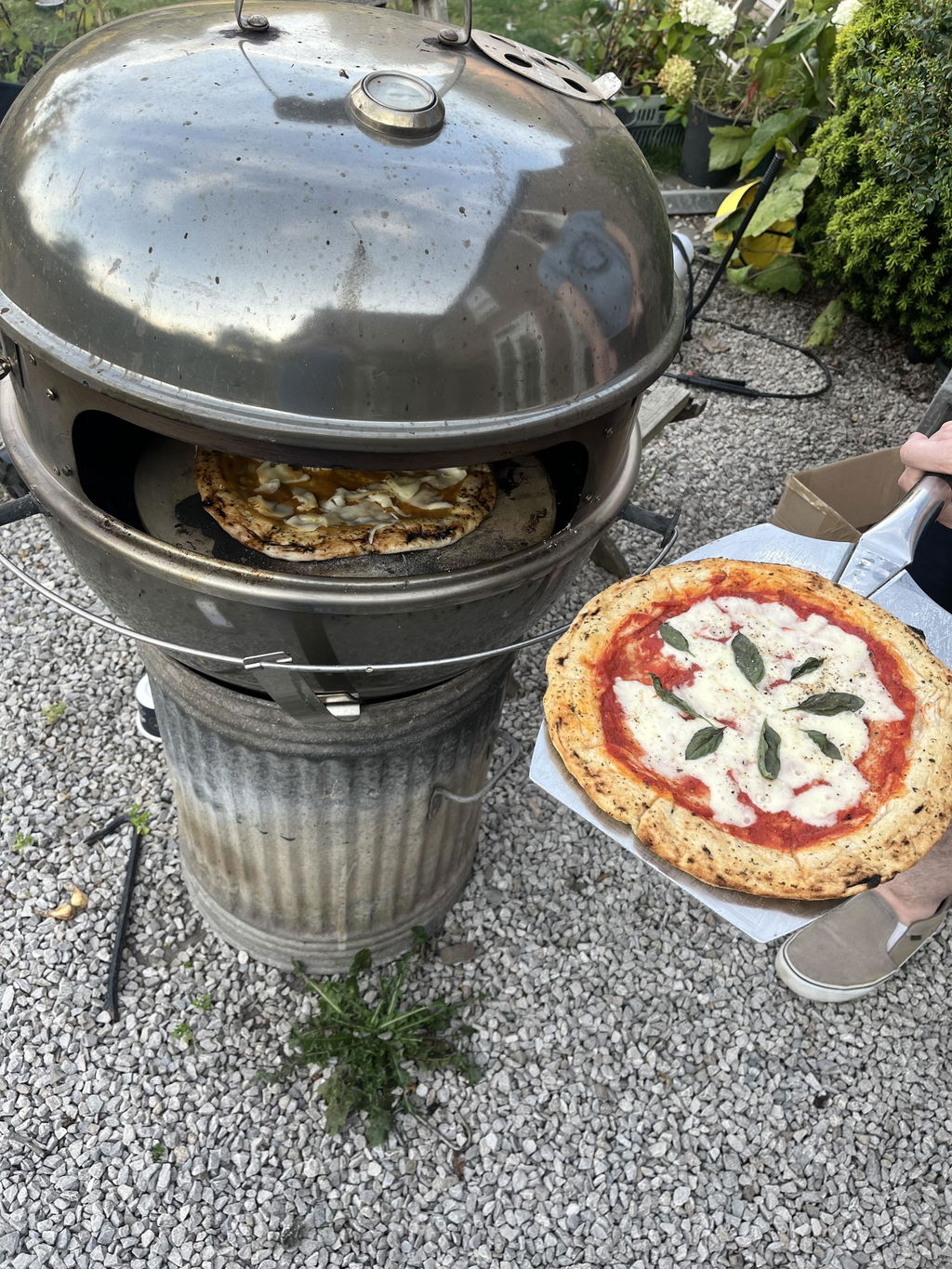
How to Defrost Frozen Pizza Dough Balls Properly
Quick answer
The best way to defrost frozen pizza dough balls is to keep them covered while they thaw, let the centre defrost completely, then give the dough enough time to become soft and relaxed before stretching.
For Dough Dorks pizza dough balls, around 18–20°C is a useful handling temperature. If the dough feels cold, firm or keeps snapping back, it simply needs more time.
How long does frozen pizza dough take to defrost?
There is no single perfect time because kitchen temperature, dough-ball size and how deeply frozen the dough is all matter. A warm summer kitchen will be quicker than a cool winter one.
- Take out only the dough balls you need.
- Keep each ball covered in its proofing pot.
- Allow it to thaw fully.
- Once thawed, let it continue warming until soft and relaxed.
- Stretch when it feels supple rather than tight.
The clock is only a guide. The dough tells you when it is ready.
How do you know when pizza dough is fully defrosted?
A dough ball can feel soft on the outside while the centre is still cold. Before stretching, check that it is soft from edge to centre, no longer firm in the middle, slightly puffy and able to stretch without immediately shrinking back.
If it keeps snapping back, cover it and leave it for another 10–15 minutes before trying again.
The best way to defrost Dough Dorks pizza dough balls
1. Keep the dough covered
Leave the dough in its individual proofing pot with the lid on while it thaws. This stops the surface drying out and forming a skin.
2. Let the centre thaw completely
Press the dough gently. If the middle feels noticeably colder or firmer than the outside, give it longer.
3. Allow the gluten to relax
Defrosted does not always mean ready to stretch. Cold gluten is tighter. As the dough warms, it becomes softer and easier to open.
4. Flour just before stretching
Lightly flour the top, release the dough from its pot and place it onto a floured work surface. Use only enough flour or fine semolina to stop sticking.
5. Stretch by hand
Press gently from the centre outwards while leaving roughly an inch around the edge untouched. That outer rim contains the gas that helps create a light, airy crust.
Avoid using a rolling pin if you want a Neapolitan-style result because it pushes out the gas you are trying to preserve.
Can you defrost pizza dough overnight?
Yes. An overnight fridge thaw is useful if you want to prepare ahead. Once thawed, chilled dough will still usually need time at room temperature before stretching.
Can you defrost pizza dough at room temperature?
Yes. Keep it covered and monitor how it feels. The warmer the room, the faster it will thaw and become active.
Can you speed up defrosting?
You can move the covered dough into a normal room-temperature environment, but avoid aggressive heat. Do not place frozen dough on a radiator, in a hot oven, in strong direct sunlight or on a hot surface. Fast heating can warm the outside before the centre and make the dough harder to control.
Why does pizza dough shrink back after defrosting?
Usually because it is still too cold or has not had enough time to relax. If it keeps shrinking, stop stretching, cover it for 10–15 minutes and try again gently.
Use our shrinking-back troubleshooting guide if the dough still resists after thawing.
Why does defrosted pizza dough tear?
Common causes include stretching while the centre is still cold, pulling one area too thin, using too much force or allowing the surface to dry out. Rotate the dough as you stretch and work gradually.
Our step-by-step hand-stretching guide shows how to open the dough evenly and repair a small hole before adding sauce.
Does frozen Dough Dorks dough need another 48-hour proof?
No. We complete the 48-hour fermentation before freezing. At home, follow the instructions supplied with your dough, let it thaw fully in its pot and allow it to relax before stretching. You do not need to repeat our production schedule.
From freezer to proper pizza
Every standard Dough Dorks dough ball weighs approximately 265g and is designed for roughly one generous 12-inch Neapolitan-style pizza. Our dough is slowly fermented for 48 hours, individually portioned and frozen for convenience.
Once fully defrosted and relaxed, it should feel soft, supple and ready to stretch.
Next steps
Read our 12-inch pizza dough weight guide, then browse our buy ready-made pizza dough balls online for UK delivery.
READY-MADE • FROZEN • UK DELIVERY
Skip the mixing. Keep proper dough in your freezer.
48-hour fermented, individually proofed in their own pot and delivered frozen across the UK. Defrost, stretch, top and bake.
-
 48-Hour Neapolitan Pizza Dough Balls – Box of 12
£26
48-Hour Neapolitan Pizza Dough Balls – Box of 12
£26
-
 48-Hour Neapolitan Pizza Dough Balls – Box of 20
£38
48-Hour Neapolitan Pizza Dough Balls – Box of 20
£38
-
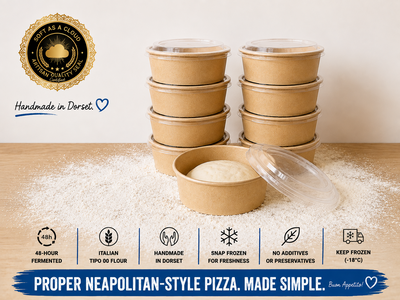 48-Hour Neapolitan Pizza Dough Balls – Box of 8
£20
48-Hour Neapolitan Pizza Dough Balls – Box of 8
£20
Handmade in Dorset • Free UK delivery over £50 • Free proofing pot with every dough ball