01
DON'T RUSH IT
Let your dough fully defrost, warm and relax before stretching.
Search below or jump straight to the bit that's causing your pizza-night drama.
Search the FAQs or jump straight to dough storage, preparation, toppings or cooking.
Each 265g–270g dough ball makes approximately one 12-inch Neapolitan-style pizza.
That's perfect for one hungry pizza lover or two people sharing.
Time is one of the most important ingredients in good dough. Our slow fermentation develops more flavour and gives the dough its characteristic stretch, chew and airy crust.
Yes. Our dough is handcrafted in Dorset using premium ingredients and a slow 48-hour fermentation process.
Each dough ball is portioned and placed into its own individual proofing pot before being frozen.
Each dough ball comes in its own individual proofing pot for convenience and protection.
Orders are packed frozen with insulated packaging to help keep everything cold during delivery.
For specific delivery areas, check our delivery information .
Absolutely. Try it for:
Basically: if dough is involved, there's probably something Dorky you can do with it.
Yes. If you're planning a pizza party, private event or need larger quantities, get in touch .
We can discuss larger and custom orders depending on what you need.
Order before 3:30pm for next-business-day delivery where available.
Saturday delivery is available where selected. Orders placed after the Friday cutoff are dispatched from Monday.
See the latest schedule on our Delivery page .
Up to 3 months.
For the best results, keep the dough frozen until you're ready to start preparing it for pizza night.
You can refreeze the dough, but repeated freezing and defrosting can affect its texture and fermentation.
For the best result, only defrost the number of dough balls you intend to use.
For best quality, use refrigerated dough within around 2–3 days.
It can last longer, but the dough may continue fermenting and become increasingly difficult to handle.
Keep the dough in its proofing pot and allow it to defrost completely.
Before stretching, you want the dough soft, relaxed and roughly 18–20°C.
Cooler weather can require more time. In warm summer conditions the dough may become ready considerably faster.
For the full method visit Make My Pizza .
No.
A microwave can heat the dough unevenly and damage the texture you're trying to preserve.
Give it time to defrost naturally instead.
Sticky dough can happen when the dough is cold, condensation has formed on the surface, or the dough simply needs a little more flour during handling.
Try this:
The gluten is still too tight.
Leave the dough to rest for another 10–15 minutes, then try stretching again.
Properly relaxed dough should feel soft and stretch without fighting you.
Usually: too much moisture.
With Neapolitan-style pizza, less is usually more.
Some ingredients definitely benefit from it.
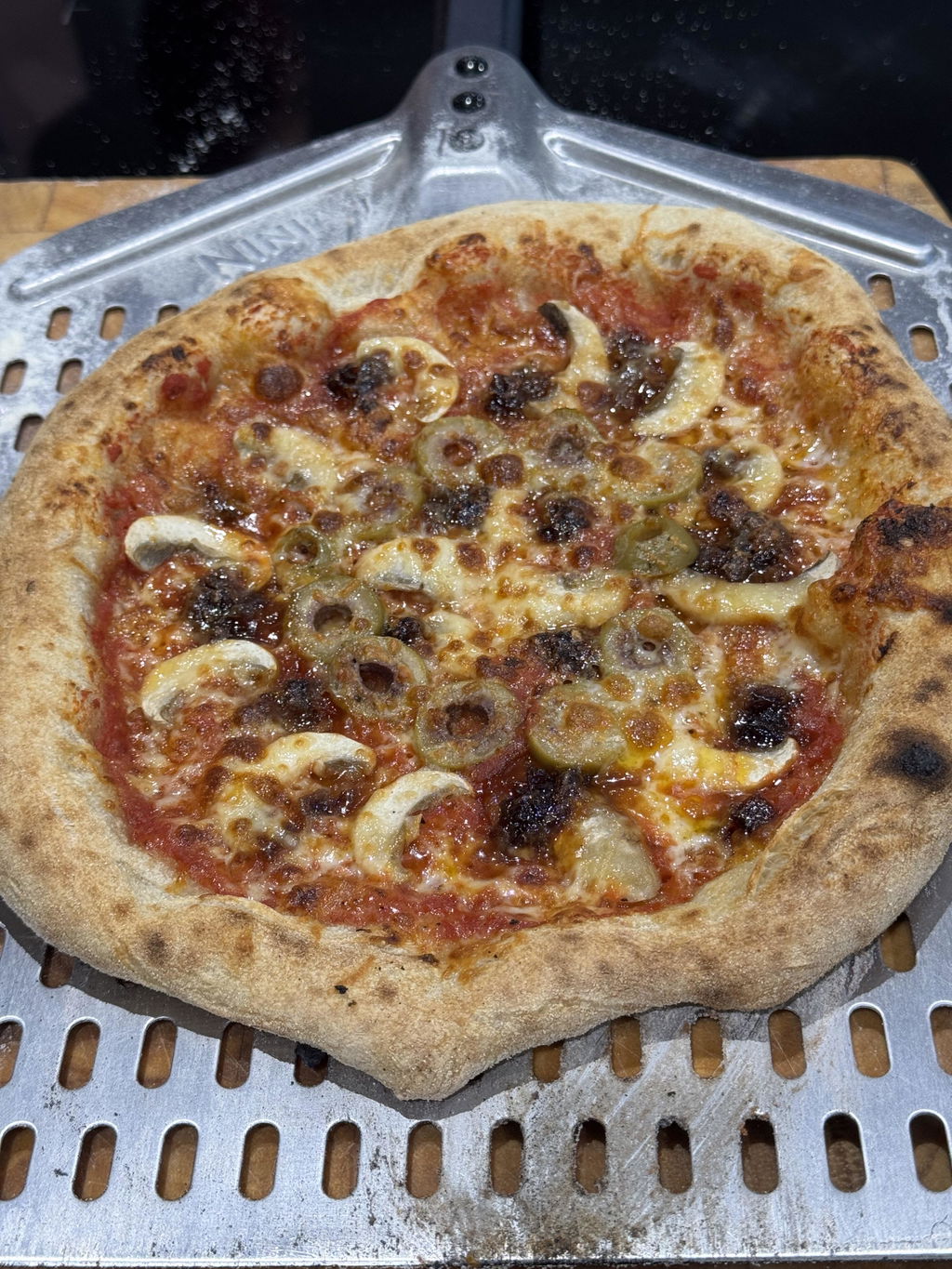
Pre-cook particularly watery vegetables such as mushrooms, peppers and spinach.
Raw meats such as sausage should also be cooked appropriately before topping your pizza.
Dust the peel with semolina or flour before placing the stretched base onto it.
Once topped, work quickly. Don't leave the pizza sitting on the peel absorbing moisture.
Give the peel a small shake before launching. The pizza should move freely.
Neapolitan-style pizza works best with relatively light toppings.
Tomato:
Cheese:
Proteins:
Keep wet toppings drained and avoid piling everything into the middle.
The problem isn't usually the ingredient itself — it's excess moisture or weight.
Be careful with:
And yes — even pineapple can technically work if it's well drained and used sparingly. We'll try not to judge you.
San Marzano tomatoes are prized for pizza because of their flavour, flesh and consistency when cooked at very high temperatures.
| TYPE | MEANING |
|---|---|
| DOP | Protected-origin product with controlled sourcing. |
| San Marzano style | Refers to type or style rather than protected origin. |
Both buffalo mozzarella and fior di latte can make brilliant pizza.
| BUFFALO | FIOR DI LATTE | |
|---|---|---|
| Moisture | Higher | Lower |
| Flavour | More intense | Cleaner / milder |
| Control | Needs more draining | Easier to manage |
Whichever you choose, drain excess moisture before topping.
Absolutely.
Set your oven as hot as it will safely go — normally around 250–290°C depending on the appliance.
A properly preheated pizza stone or steel will help enormously.
No.
A pizza oven, pizza steel or stone can improve results, but you can still make excellent pizza in a conventional oven using a thoroughly preheated baking surface.
For Neapolitan-style pizza, aim for a floor temperature around 400–450°C.
At those temperatures a pizza can cook in roughly 60–90 seconds.
Rotate the pizza during the bake for even colouring.
Preheat your oven to its maximum safe temperature.
If you're using a pizza stone or steel, give it around 45–60 minutes to become thoroughly heated.
Depending on the oven and baking surface, your pizza will usually take several minutes rather than the 60–90 seconds of a dedicated pizza oven.
For our full step-by-step guide visit Make My Pizza .
Let your dough fully defrost, warm and relax before stretching.
Stretch by hand and leave the outer crust alone.
Too much sauce, cheese or moisture is the enemy of a great base.
Give your oven and baking surface plenty of time to preheat.
If your question isn't here, get in touch. Pizza problems are exactly the sort of problems we like.

Sign up for our email newsletter for special discounts and exclusive offers and more
M : S
Get 10% off your entire order with this code!
Copied successfully