A Tablespoon a Day: When Extra Virgin Olive Oil Beats Olive Oil
Evidence forward cooking guide to extra virgin and refined olive oil. Learn why a tablespoon a day matters, when to finish with EVOO.
Extra virgin olive oil is mechanically pressed without heat or chemicals, preserving more antioxidants and a stronger flavor. Regular “olive oil” is typically a refined blend, chosen for its neutral taste and higher heat tolerance. Reach for extra virgin olive oil (EVOO) to finish dishes and for most everyday cooking; save refined oil for very high heat or when you want the oil to disappear into the background. EVOO costs more and fades faster, so buy it in smaller bottles you’ll use up quickly.
TL;DR:
- Extra virgin olive oil contains higher phenolic content and antioxidants than refined oils, but variability depends on production method and freshness.
- Cooking at typical home temperatures up to 400°F is safe for EVOO, especially when used for dressing, finishing, or sautéing, but less suitable for deep-frying.
- Consumers should focus on harvest date and packaging; look for dark bottles and avoid relying on “light” labels to gauge quality and freshness.
- A daily intake of about 10 grams of olive oil correlates with lower cardiovascular disease and mortality, but phenolic levels vary widely between bottles.
- Proper storage in cool, dark environments extends EVOO’s shelf life, with sensory signs like rancidity indicating it’s time to discard.
Table of Contents
- Extra Virgin Olive Oil vs Olive Oil: How the Grading System Works
- Why Extraction Method Changes Flavor and Nutrients
- Does Extra Virgin Olive Oil Actually Improve Heart Health?
- Can You Cook With Extra Virgin Olive Oil, or Will It Burn?
- What Should You Look for When Buying Olive Oil?
- How Long Does Olive Oil Stay Fresh Once Opened?
- Dough Dorks’ Take: Extra Virgin Olive Oil on Pizza
- Try Dough Dorks’ Neapolitan Ingredients at Home
- Where This Article’s Facts Come From
- Sources
Extra Virgin Olive Oil vs Olive Oil: How the Grading System Works
The grades on a bottle aren’t marketing fluff. They’re a legal classification tied to how the oil was made and how it tastes and tests in a lab. The International Olive Council sets the benchmark most producing countries follow, and it comes down to a chemistry number called free acidity, plus a sensory panel that sniffs out defects.
Extra virgin olive oil must be extracted mechanically without heat or solvents, with a free acidity of 0.8% or lower and no sensory defects. Virgin olive oil is mechanically extracted as well but can have free acidity between 0.8% and 2.0% and minor sensory flaws. Once oil fails those thresholds, it gets refined, chemically treated to strip out bitterness, odor, and defects, then usually blended with a small amount of virgin oil for flavor. That’s what ends up labeled “olive oil,” “pure,” or “light.”
- Extra virgin: mechanically extracted, ≤0.8% acidity, no flavor defects
- Virgin: mechanically extracted, 0.8%–2.0% acidity, minor defects allowed
- Olive oil / pure / light: refined oil blended with a touch of virgin oil
One label trap catches almost everyone: “light” refers to flavor intensity, not calories. Every grade of olive oil carries roughly the same calorie count and the same monounsaturated fat profile.
Why Extraction Method Changes Flavor and Nutrients
Everything that makes EVOO taste and behave differently traces back to one decision: whether the oil gets refined. Cold, mechanical pressing is essentially olive juice, nothing added, nothing stripped out. Refining is a chemical cleanup process built to fix a defective batch of oil.
- Mechanical extraction preserves the polyphenols responsible for bitterness, pepperiness, and most of the compound’s antioxidant punch
- Refining uses heat, solvents, or chemical treatments that strip color, aroma, and much of the polyphenol content, leaving a more neutral fat
- Harvest timing, olive variety, and regional climate shift phenolic content so widely that two EVOO bottles can differ about as much as a light table wine differs from a bold red
- Unfiltered, freshly pressed oil (sometimes labeled “olio nuovo”) tastes especially vivid and grassy for a few weeks after pressing, then mellows fast
That variability is why “extra virgin” on a label guarantees a production method, not a guaranteed flavor intensity or phenolic count. Two bottles that meet the same legal threshold can taste worlds apart.
Does Extra Virgin Olive Oil Actually Improve Heart Health?
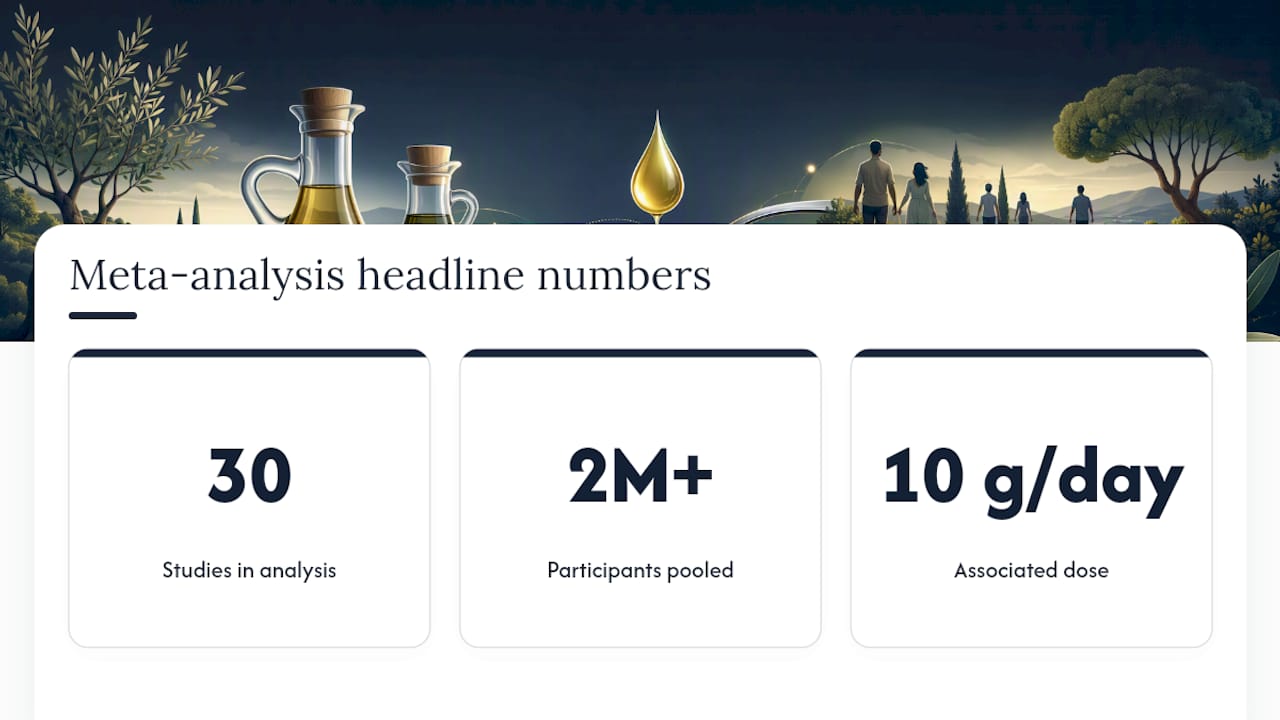
A 2024 meta-analysis of 30 studies including over two million participants found that each 10 gram daily increase in olive oil intake was associated with a lower incidence of cardiovascular disease and lower all-cause mortality. That’s roughly a tablespoon a day, according to the pooled data, and it’s one of the stronger nutrition signals in recent research.
Extra virgin olive oil typically carries more of the polyphenols responsible for that effect, since refining strips most of them out. Some high-quality EVOOs test near 800 milligrams of phenolics per kilogram, while others test near zero despite carrying the same grade label. Phenolics act as antioxidants and appear to calm inflammation, which is the leading theory behind olive oil’s cardiovascular benefit.
Two caveats matter here. Most of the underlying research studies olive oil as part of a broader Mediterranean eating pattern, not as an isolated ingredient swapped in and out of an otherwise unchanged diet. And phenolic content varies enough between bottles that “extra virgin” alone doesn’t guarantee you’re getting a high dose. Still, the monounsaturated fat base is healthy across every olive oil grade. Choose extra virgin when you specifically want the antioxidant bump; any olive oil beats most other cooking fats on the fat-quality front.
Can You Cook With Extra Virgin Olive Oil, or Will It Burn?
The old rule that EVOO can’t handle heat doesn’t hold up. UC Davis testing found that high-quality extra virgin olive oil stays stable at typical home cooking temperatures, up to roughly 400°F, because its antioxidants slow the breakdown that ruins lower-quality fats under heat. Sautéing, roasting, and pan-searing all fall well within that range.
Here’s the practical breakdown for the kitchen:
- Dressings and drizzling: extra virgin, always. This is where the flavor and phenolics do their job.
- Sautéing and roasting: extra virgin works fine at normal stovetop and oven temperatures.
- Deep-frying: use refined “olive oil” or another high-smoke-point fat. EVOO’s flavor gets wasted at fryer temperatures, and it costs too much per bottle to burn through that fast.
- Finishing a cooked dish: extra virgin, added after cooking, for a fresh hit of flavor.
Pro Tip: Save your best-tasting EVOO for the last step, drizzled on after the pan comes off the heat. High heat mutes flavor long before it damages the oil.
Pizza is a perfect example of this split. A pre-cook brush of neutral oil helps crust color and crispness, while a post-bake drizzle of a peppery extra virgin brings the aroma that actually reaches your nose.
What Should You Look for When Buying Olive Oil?
Marketing words on the front of the bottle tell you less than the fine print. Focus on a few concrete signals instead.
- Look for “extra virgin” on the label along with a harvest or press date, not just a vague “best by” date years out
- Choose dark glass or tin over clear bottles, since light degrades polyphenols over time
- Treat price as a rough signal, not gospel. Freshness and sourcing matter more than the number on the shelf tag
- If you want a high-phenolic oil, look for tasting notes like “peppery,” “grassy,” or “bitter” on the label or shelf card
- Buy finishing-quality EVOO in smaller bottles you’ll use within a few months, and save larger bottles for oil you’ll cook through quickly
Buyer vigilance actually matters here. UC Davis quality testing has flagged retail bottles labeled “extra virgin” that failed strict chemical or sensory standards, meaning the label alone isn’t a perfect guarantee. A recent harvest date and a trusted producer are better predictors of what’s actually in the bottle than the word “extra virgin” by itself.
How Long Does Olive Oil Stay Fresh Once Opened?
Heat and light are the enemy. UC Davis found that oil stored at 59°F holds its quality noticeably longer than oil stored at room temperature closer to 77°F, and freezing preserves it even better than refrigeration.
- Store bottles in a cool, dark cabinet, away from the stove and direct sunlight
- Expect flavor and antioxidant levels to fade gradually over months, faster once opened and exposed to air
- Cloudiness after refrigeration is normal and reversible. It’s solidified fat, not spoilage
- A rancid, crayon-like smell or flat, greasy taste means it’s time to toss the bottle
- Buy finishing oil in a size you’ll finish within a few months rather than stockpiling a large tin
Dough Dorks’ Take: Extra Virgin Olive Oil on Pizza
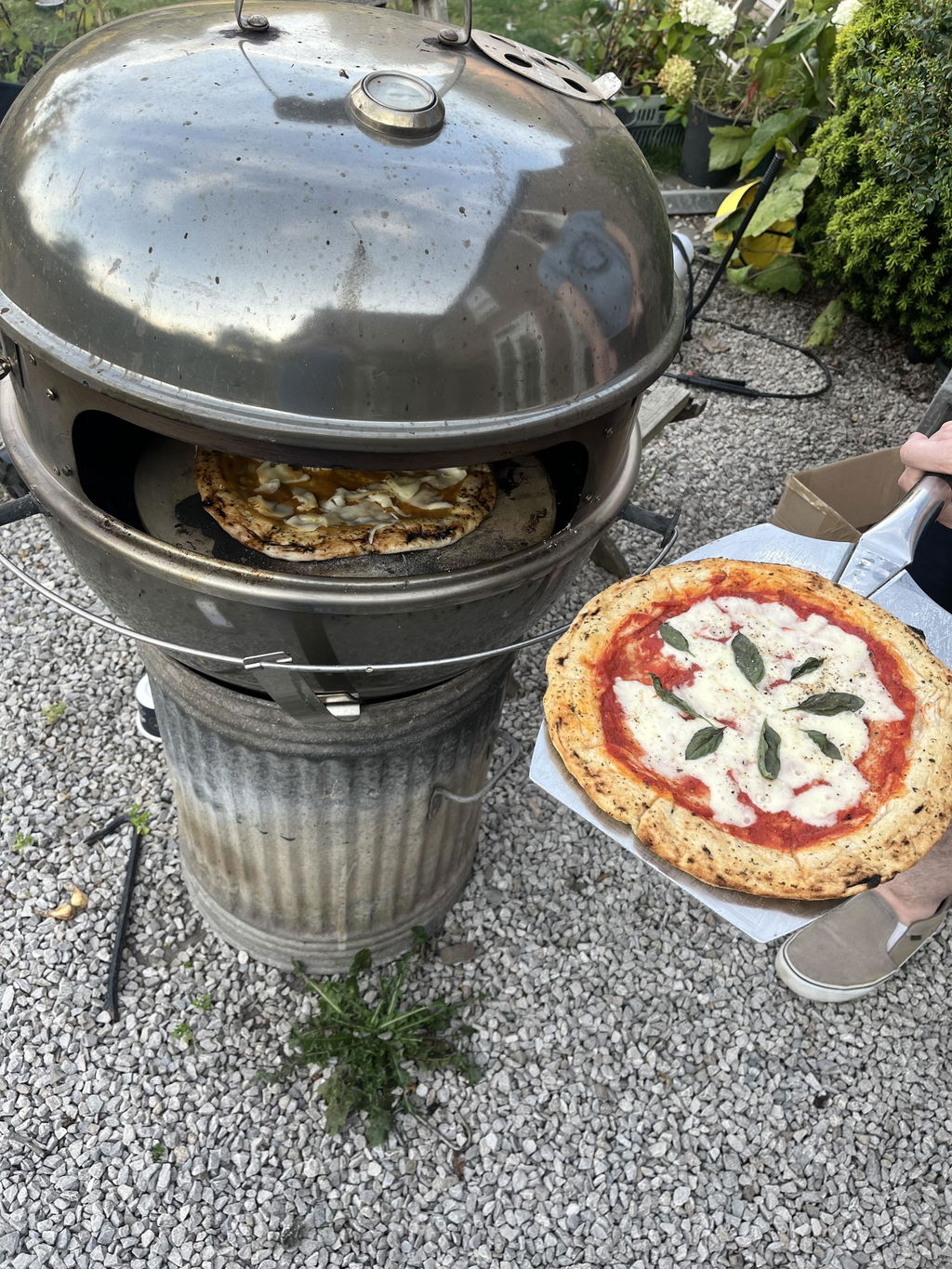
Extra virgin olive oil is commonly folded directly into 48-hour fermented pizza doughs because it adds flavor and helps the crust color properly in a hot oven. On finished pies, a light brush before baking and a drizzle after are two different jobs, not one. Pre-bake oil supports crust texture; post-bake oil delivers the aroma. For most home ovens, a teaspoon or two per pizza is plenty. Our guide to using olive oil on pizza walks through timing and quantities in more detail.
— Michael
Try Dough Dorks’ Neapolitan Ingredients at Home
If this has you thinking about which oil belongs on your next homemade pizza, Dough Dorks builds that decision into the dough itself. Some 48-hour fermented dough balls are made with Italian 00 flour, fresh yeast, and extra virgin olive oil, so you’re not left guessing which grade to add or how much.

For a hands-on comparison, pick up our Neapolitan pizza dough balls and finish your own pie with a good EVOO drizzle straight from the oven, following the timing tips in our guide to olive oil on pizza. Order a box today and see the difference the right oil makes on a Neapolitan-style crust.
Where This Article’s Facts Come From
The IOC’s olive oil standards define the grading thresholds. The cardiovascular meta-analysis backs the health figures. UC Davis’s myths-and-facts guide covers cooking stability and storage. For broader nutritional context on cooking fats, see this breakdown of hidden oil calories.
Sources
- International Olive Council — Olive oil
- Meta-analysis on olive oil intake and cardiovascular outcomes (PubMed)
- UC Davis — Olive oil myths and facts
- Umbrella review on olive oil and health (PMC)
Recommended
- Olive Oil for Pizza: How to Use the Right Oil
- How to Use Olive Oil on Pizza: Timing, Types, and Amounts
PIZZA NIGHT, SORTED
Build the pizza with proper Italian ingredients
Shop Italian toppings, then add 48-hour fermented dough balls from Dorset for a complete pizza night.
-
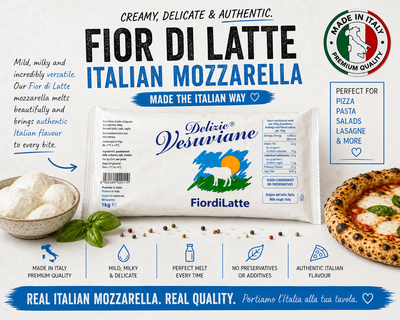 Fior di Latte Mozzarella for Pizza – 1kg
£12.59
Fior di Latte Mozzarella for Pizza – 1kg
£12.59
-
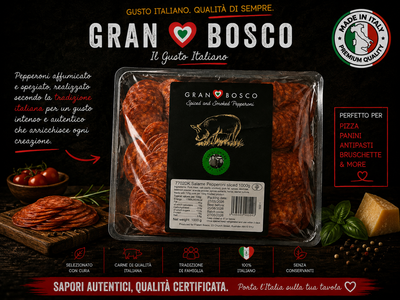 Gran Bosco, Smoked Sliced Pepperoni – 1kg
£18
Gran Bosco, Smoked Sliced Pepperoni – 1kg
£18
-
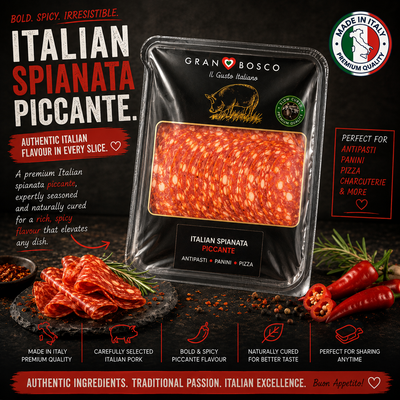 Gran Bosco - Italian Spianata Piccante 250g
£8.10
Gran Bosco - Italian Spianata Piccante 250g
£8.10
Handmade in Dorset • Free UK delivery over £50 • Free proofing pot with every dough ball