430–480°C Stone, 60–90s Bake: Neapolitan Pizza Temps for Home Bakers
Get stone and dome temps for a true 60–90s Neapolitan bake. Clarify AVPN and EU ranges, use IR checks, and follow a home baker checklist.
Launch your Neapolitan pizza only when the stone reads between 430°C and 480°C (806°F to 896°F), with the dome sitting around 450°C to 500°C (842°F to 932°F). Get those two numbers right and the pizza cooks in 60 to 90 seconds, which is the real definition of a proper Neapolitan bake. Check the stone with an infrared thermometer before every launch, not the oven’s built-in gauge, and never load the pizza until that reading holds steady.
TL;DR:
- Achieving a proper Neapolitan bake requires stone and dome temperatures within 430°C to 500°C, confirmed with an infrared thermometer on the landing spot.
- Home ovens, especially domestic models, rarely reach the necessary 430°C to 480°C range, limiting them to near-Neapolitan results at lower temperatures and longer cook times.
- Preheating should last between 20 to 90 minutes depending on oven type, with enough soak time to ensure the stone reaches target temperatures before launching the pizza.
- Accurate temperature measurement involves taking multiple IR readings of the stone surface, as oven gauges typically only measure air and are unreliable for baking.
- For consistent results, use dough fermented for 48 hours, and consider pre-cooked bases if your oven cannot hit the high-heat range necessary for a true 60-90 second Neapolitan cook.
Table of Contents
- What Is the Ideal Temperature for Neapolitan Pizza?
- How Do You Measure Pizza Oven Temperature Accurately?
- What Kind of Pizza Oven Actually Reaches Neapolitan Temperatures?
- How Long Should You Preheat a Pizza Oven Before Launching?
- What’s the Right Way to Launch and Rotate a Pizza?
- A Practical Checklist for Home Neapolitan Attempts
- Should You Chase Authenticity or Just Cook a Great Pizza?
- Get Consistent Results Without Chasing 900 Degrees
- Sources
- FAQ
What Is the Ideal Temperature for Neapolitan Pizza?
Two official bodies publish two different numbers, and it trips up a lot of home cooks who assume there’s one sacred figure carved in stone. The AVPN Disciplinare specifies certain temperatures for the floor and dome with a bake time of 60 to 90 seconds. Commission Regulation (EU) No 97/2010, which legally defines Pizza Napoletana, lists a reversed range for floor and dome compared to AVPN.
Nobody’s wrong here. Wood-fired ovens don’t heat evenly, and depending on where the thermometer points, floor and dome readings can swap depending on flame position and measurement method. A 2024 IR thermal-scanning review found floor temperatures holding around 439°C ± 3°C with dome readings climbing to 480°C to 500°C under certain flame conditions, landing right between the two official ranges, as documented in the Journal of Food Science.
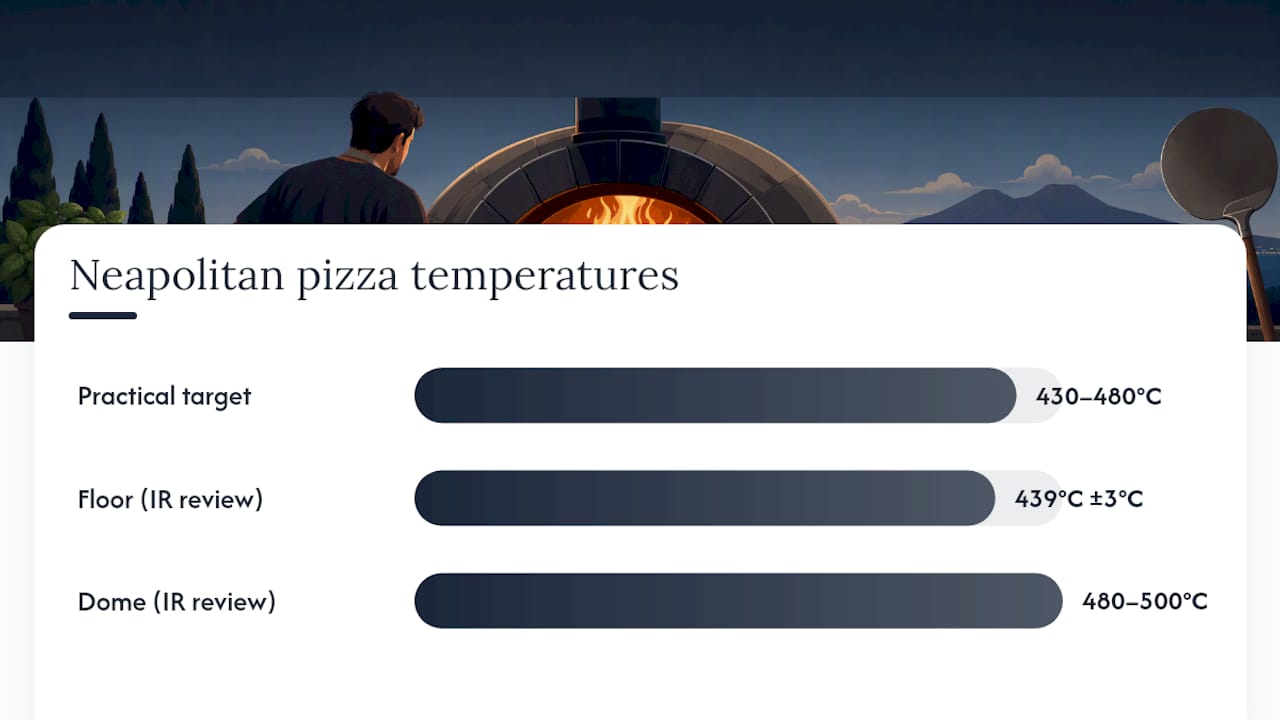
For practical purposes, target stone and dome temperatures within a generally high range to achieve the goal of a 60 to 90 second bake, which defines the Neapolitan style. That window is short enough to set the crust before the toppings overcook, and long enough to develop the char and leopard spotting Neapolitan pizza is known for. If your pizza takes three minutes, your oven isn’t hot enough, no matter what the dial says.
How Do You Measure Pizza Oven Temperature Accurately?
The oven’s built-in gauge measures air, not stone, and air heats up faster than dense refractory material. This gap is the single biggest reason home bakers pull out a pale, gummy base despite a dial that claims the oven is “ready.”
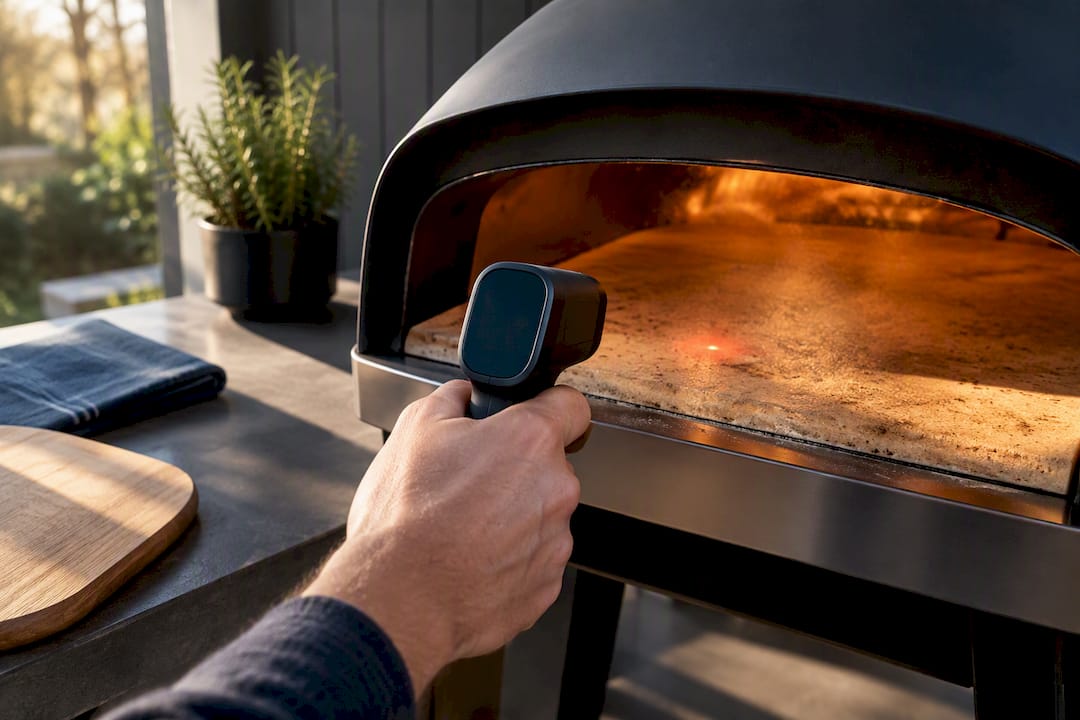
An infrared thermometer solves this. Point it at the exact spot on the stone where the pizza will land, not the edges or the back wall, since uneven heating is common in wood-fired setups. Cheap IR guns can misread reflective or dark surfaces due to emissivity, so take two or three readings across the landing zone rather than trusting one number.
- Point the IR gun straight down at the center of the stone, roughly 6 inches away.
- Take readings from at least two spots before you trust the average.
- If the air gauge reads target temperature but the stone reads 50°C to 80°C lower, keep heating.
- No IR gun? Sprinkle a pinch of flour on the stone. If it browns in 5 to 10 seconds, you’re close.
Heat soak matters as much as peak temperature. Running the oven past the point where the air hits target temperature, then holding it there another 15 to 20 minutes, lets the dense stone actually catch up.
Pro Tip: Buy an IR thermometer rated above 500°C. Cheaper kitchen models cap out around 400°C and will simply flash an error right when you need the reading most.
What Kind of Pizza Oven Actually Reaches Neapolitan Temperatures?
Not every oven on the market is built to hit these numbers, and knowing your equipment’s ceiling saves you from chasing a bake time your setup physically cannot deliver.
- Wood-fired ovens are the traditional route and, with a well-managed fire, comfortably produce a 380°C to 480°C floor and a 450°C to 500°C dome. Flame position controls the balance between floor and dome heat, so cooks rake coals to one side and let residual heat radiate onto the pizza.
- Certified gas and electric ovens can reach Neapolitan-range temperatures when built for it. The AVPN Disciplinare explicitly permits certified gas and electric ovens that meet its technical parameters, so authenticity doesn’t require a wood fire specifically.
- Domestic kitchen ovens rarely exceed 300°C even at maximum broil, which caps their floor temperature well below true Neapolitan range. A steel or stone left under a maxed broiler reaches roughly 250°C to 300°C and produces a strong near-Neapolitan pizza in about 4 to 7 minutes, according to guidance from Taste Cooking. It won’t leopard the way a 90-second bake does, but it’s a legitimate result on its own terms.
How Long Should You Preheat a Pizza Oven Before Launching?
Peak temperature means nothing if the stone hasn’t caught up with the air around it, so preheating is really a two-stage process: heating the chamber, then soaking the mass.
- Wood-fired ovens typically need 45 to 90 minutes of active fire before the stone is fully heat soaked, depending on dome size and insulation.
- Certified gas or electric ovens usually reach a stable, soaked stone in 20 to 40 minutes since their heating elements sit closer to the deck.
- Domestic ovens with a steel need at least 45 to 60 minutes at maximum temperature under broil, since steel is thick and slow to fully saturate with heat.
- Expect the stone to drop 30°C to 80°C after each pizza comes out, and give it at least 60 to 90 seconds of recovery before the next launch.
- If you’re running a wood fire and the flame dies down between pizzas, toss in pampuglia, small dry kindling that flares fast and rebuilds dome heat without waiting for new logs to catch.
Pace your bakes. Rushing four pizzas back to back without letting the stone recover is the fastest way to turn a hot oven into a lukewarm one by pizza number three.
What’s the Right Way to Launch and Rotate a Pizza?
Getting the temperature right only pays off if the launch technique doesn’t undo it. Slide the pizza off the peel in one confident motion rather than dragging it, which tears the base and lets cold air stall the cook.
Rotate the pizza every 15 to 20 seconds using the peel to lift and turn it a quarter turn, since flame and heat rarely distribute evenly across the deck, as described in detail by Zio Al’s Pizza & Pasta catering techniques. A quick lift also checks the underside, letting you catch a scorching bottom before it turns black. Heavy toppings, especially wet mozzarella, lower the surface temperature of the pizza and delay leoparding, so a loaded pie may need the longer end of the 60 to 90 second window, as thermal camera studies confirm.
- Pale base after 90 seconds: your stone wasn’t heat soaked. Wait longer next time.
- Soggy center: too much sauce or a dough that hasn’t developed enough gluten strength for proper hydration balance.
- Rim blisters too late: dome temperature is lagging behind the floor. Add fuel or raise the broiler position.
A Practical Checklist for Home Neapolitan Attempts
Before you even light the fire, run through this: preheat for the full duration your oven class needs, confirm the stone with an IR reading (not the dial), flour the peel generously so the dough releases clean, launch the moment the stone holds steady, and pace your bakes to let the stone recover between pies.
- Preheat fully: 45 to 90 minutes wood-fired, 20 to 40 minutes certified gas or electric.
- Confirm stone temperature with an IR thermometer, not the built-in gauge.
- Flour the peel heavily to prevent sticking during the launch.
- Launch only when the reading holds steady across multiple spots.
- Pace bakes with a recovery gap so the stone doesn’t cool below range.
If your setup can’t consistently hit 430°C, the variable most within your control is the dough itself. Doughdorks’ 48-hour fermented dough balls arrive at a consistent hydration and fermentation stage every time, which removes one guessing game from a bake that already has plenty of them. For anyone working with a lower-temperature domestic setup, a pre-cooked base shortens the oven time needed to finish a pizza properly.
Pro Tip: If your stone consistently reads 50°C below target no matter how long you preheat, the issue is usually insulation, not fuel. Check for gaps around the oven door or dome seams before assuming your fire is too small.
Should You Chase Authenticity or Just Cook a Great Pizza?
The AVPN and EU specifications matter if you’re chasing certification or arguing history at a dinner party. For everyone else standing in a backyard with a thermometer, the number that actually predicts a good pizza is bake time. A pie that cooks clean in 75 seconds with a soft, leoparded rim has done its job, regardless of which document’s floor number your stone happens to match.
Treat the official ranges as a compass, not a rulebook. Test your own oven, log what temperature and timing produce your best bake, and adjust from there instead of assuming a single missed degree ruins the pizza.
— Michael
Get Consistent Results Without Chasing 900 Degrees
Doughdorks exists for the exact gap this article just described: not every oven can hit 480°C, and not every home cook wants to spend an hour babysitting a wood fire before dinner. Our 48-hour fermented dough balls give you the same hydration and rise every single time, so the one variable you can’t control with a thermometer stops being a variable at all.

If your setup tops out closer to a domestic broiler than a wood-fired dome, our pre-cooked Neapolitan bases do part of the high-heat work for you before the pizza ever reaches your kitchen. Add your own toppings from our pizza toppings collection and finish it in whatever oven you’ve got. Head to Doughdorks and order a small pack to see how it holds up in your own setup this weekend.
Sources
- Unlocking the secrets of Neapolitan pizza: A concise review of wood‐fired, electric, and gas pizza ovens (Journal of Food Science, 2024)
- Neapolitan-Style Pizza in Your Home Oven - Taste Cooking
FAQ
How Long Should Pizza Bake at 200°C?
A typical home oven bake at lower temperatures usually takes several minutes, far longer than the 60 to 90 second Neapolitan window. Such lower temperatures suit a thicker, home-style pizza rather than the thin, high-heat Neapolitan crust.
Is 4 Hours Too Long to Let Pizza Dough Rise?
A 4-hour rise at room temperature is fine for many recipes, but authentic Neapolitan dough usually ferments for a longer period to develop proper flavor and digestibility. Doughdorks’ dough balls ferment a full 48 hours before they reach your kitchen, so there’s no waiting involved on your end.
Is 250°C Enough for Neapolitan Pizza?
250°C is well below the 430°C to 480°C stone range Neapolitan pizza needs for a true 60 to 90 second bake, but it’s enough to produce a solid near-Neapolitan pizza using a steel and broiler in 4 to 7 minutes, according to Taste Cooking.
Can I Cook a Pizza at 400°F Instead of 425°F?
Yes, lower temperatures typical of home ovens will work for most home-style pizzas, just extend bake time and watch crust color closely. Neither temperature comes close to true Neapolitan range, so expect a home-style result rather than a leoparded, 90 second bake.
What Temperature Should the Stone Be Before I Launch a Neapolitan Pizza?
The stone should read between 430°C and 480°C on an infrared thermometer, confirmed at the exact spot where the pizza will land. Never trust the oven’s air gauge alone, since it typically reads higher than the stone actually is.
Recommended
READY-MADE • FROZEN • UK DELIVERY
Skip the mixing. Keep proper dough in your freezer.
48-hour fermented, individually proofed in their own pot and delivered frozen across the UK. Defrost, stretch, top and bake.
-
 48-Hour Neapolitan-Style Pizza Dough Balls – Box of 12
£22.88
-
 48-Hour Neapolitan-Style Pizza Dough Balls – Box of 20
£32.30
-
 48-Hour Neapolitan-Style Pizza Dough Balls – Box of 8
£18
Handmade in Dorset • Free UK delivery over £50 • Free proofing pot with every dough ball