Stop Watery Pizza Sauce: UK Pantry Fixes and 48 Hour Batch Methods
Fix watery pizza sauce tonight with pantry tricks (tomato paste, cornstarch) in 5–15 minutes, then use UK-tested 48 hour batch methods and dough tips to...
Drain or thicken your sauce right now with a spoonful of tomato paste or a quick cornstarch slurry, then top your pizza. For the long term, simmer your base low and slow and start with passata, Roma tomatoes, or paste instead of watery canned whole tomatoes. Either way, stop cooking while the sauce still looks a touch thinner than you want, as it firms up as it cools.
TL;DR:
- Using passata or high-quality canned Roma tomatoes and draining them properly before cooking prevents excess moisture in the sauce.
- Incorporating a tablespoon of tomato paste gradually offers better flavor and thickening than quick fixes like cornstarch slurry, which is mainly for speed.
- Applying a thin, even layer of sauce and pre-baking the crust reduce sogginess caused by excess moisture or too much sauce.
- If the sauce remains watery, check the initial tomato quality, reduce it further before baking, and ensure toppings are moisture-controlled to prevent pooling during baking.
Table of Contents
- What Causes Watery Pizza Sauce?
- Fast Fixes You Can Do in 5 to 15 Minutes
- Why Low and Slow Reduction Beats Quick Fixes
- How Much Sauce to Use and How to Spread It
- If the Pizza Still Comes Out Watery, Run This Checklist
- Dough Dorks’ Tested Approach to Sauce Consistency
- Why Most Sauce Advice Gets the Priority Backwards
- Skip the Sogginess Problem Entirely With a Better Base
- Sources
- FAQ
What Causes Watery Pizza Sauce?
Most runny sauce problems trace back to one of five things, and figuring out which one is yours saves you from fixing the wrong problem.
Fresh tomatoes are the biggest culprit. They’re mostly water, and unless you deliberately reduce that liquid, it ends up on your crust. The NHS food safety guidance points to excess moisture from fresh tomatoes, not enough cooking time, and skipping the drain step as the three most common causes of watery sauce, and it recommends paste-type tomatoes like Roma along with proper draining of canned tomatoes before you even start cooking.
Beyond the tomato itself, a few other habits sneak up on you:
- Not simmering long enough. Sauce needs time on the heat for water to evaporate. Rushing this step is probably the single most common mistake home cooks make.
- Piling on too much sauce. Even a properly thickened sauce turns your pizza soggy if you spread it on with a heavy hand.
- Wet toppings and cheese. Fresh mozzarella, in particular, sheds water as it melts, and that liquid pools right on top of your sauce layer.
- Starting with the wrong base. Straight tomato juice, or a sauce heavy on canning liquid, is fighting you before it even hits the stove.
Once you know which of these applies, the fix gets a lot more specific.
Fast Fixes You Can Do in 5 to 15 Minutes
When the pizza’s going in the oven in twenty minutes and your sauce is soup, you don’t have time for a slow reduction. These fixes work in real time.
- Drain it first. If you’re working from canned or fresh tomatoes, tip them into a colander or line one with cheesecloth and let the excess liquid run off for a few minutes before you build the sauce. This alone solves a surprising number of watery-sauce problems before they start.
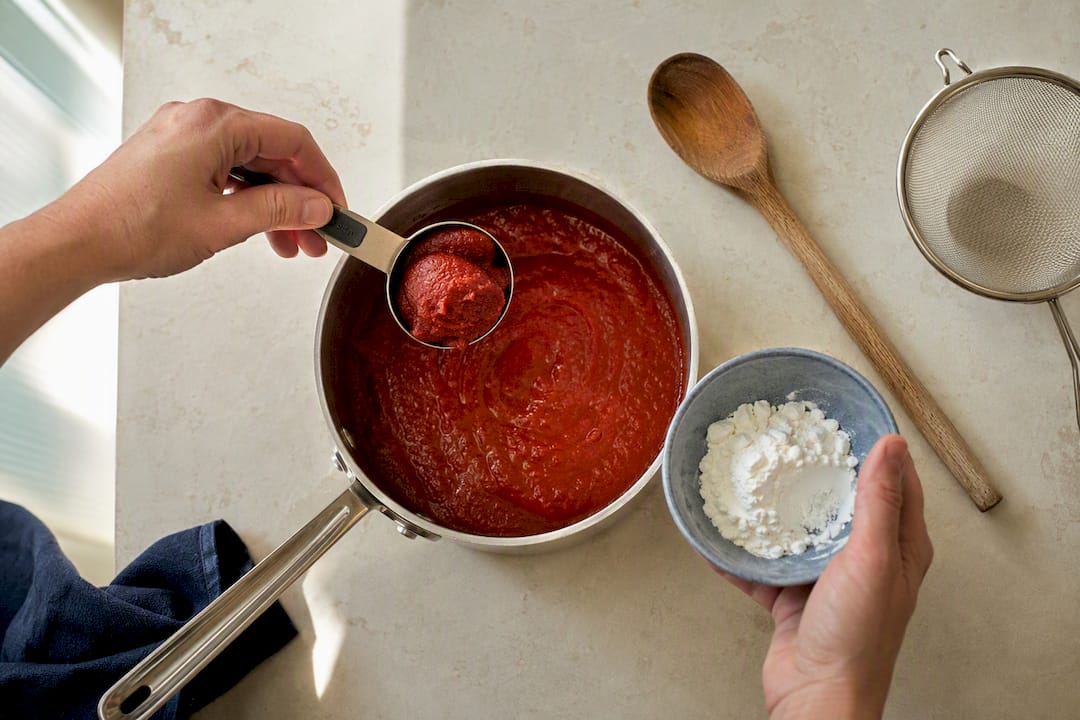
- Stir in tomato paste, a spoonful at a time. Add one tablespoon, stir it through, and taste. Repeat until the sauce coats the back of a spoon instead of sliding off it. Allrecipes recommends this exact incremental approach because paste is concentrated tomato with almost none of the water, so it thickens without watering down flavor the way a splash of extra liquid would.
- Mix a cornstarch slurry if you need speed. Combine equal parts cornstarch and cold water, roughly a tablespoon of each for a standard batch of sauce, and stir until smooth before adding. Pour it into the simmering sauce slowly, stirring constantly, so it doesn’t clump. Let it bubble for a full minute or two. Cornstarch needs heat to activate, and if you don’t cook it through, you’ll taste a chalky, starchy edge that ruins an otherwise good sauce.
- Reach for mashed potato flakes or fine breadcrumbs in a pinch. Both absorb moisture fast, but use them sparingly. Too much and you’ll notice the texture and a faint starchy or bready flavor creeping in.
Pro Tip: Cornstarch slurry works faster than tomato paste, but paste tastes better. If you’ve got even five extra minutes, add paste first and only bring in cornstarch if the sauce is still too loose.
Choosing between these comes down to how much time you actually have. Paste is the better trade-off for flavor. Cornstarch is the better trade-off for speed.
Why Low and Slow Reduction Beats Quick Fixes
Quick fixes solve tonight’s pizza. Simmering solves the problem for good, and it’s the method most kitchen guides agree on as the most reliable path to consistently thick sauce.
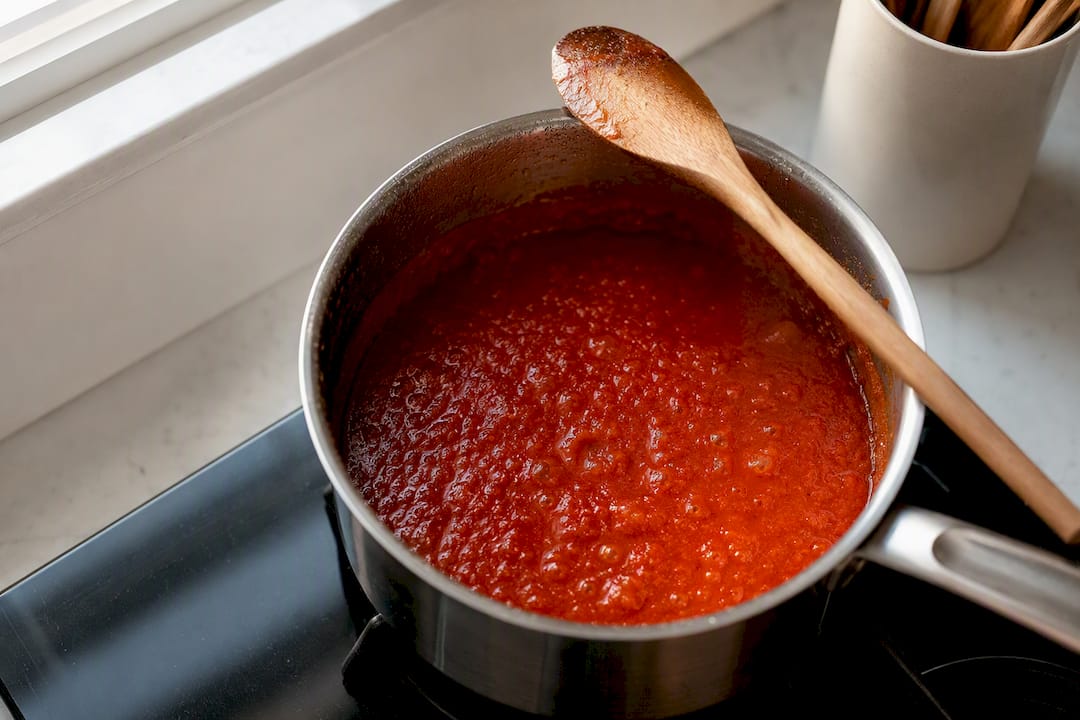
Here’s what’s actually happening when you simmer: water evaporates off the surface, the tomato’s natural pectin concentrates and thickens the mixture, and the sugars and acids intensify because nothing’s being diluted anymore. Rushing this with high heat scorches the sugars and gives you a bitter, one-note sauce instead of something rounded and rich.
A few practical notes make the process easier:
- Use a wide, shallow pan instead of a deep pot. More surface area means faster evaporation, which is one of the more overlooked practical tips for thickening pizza sauce.
- Simmer uncovered. A lid traps steam and defeats the entire point.
- Stir occasionally, not constantly, to keep the bottom from catching.
- Budget your time realistically. Canned tomatoes typically need less time than fresh, since fresh ones carry more water to begin with.
You’ll know it’s ready when a spoon dragged through the sauce leaves a visible trail instead of filling back in instantly. Pull it slightly before it hits your ideal thickness, since sauce continues to thicken as it cools, and overcooking it on the stove often means an overly stiff, paste-like sauce once it’s cold.
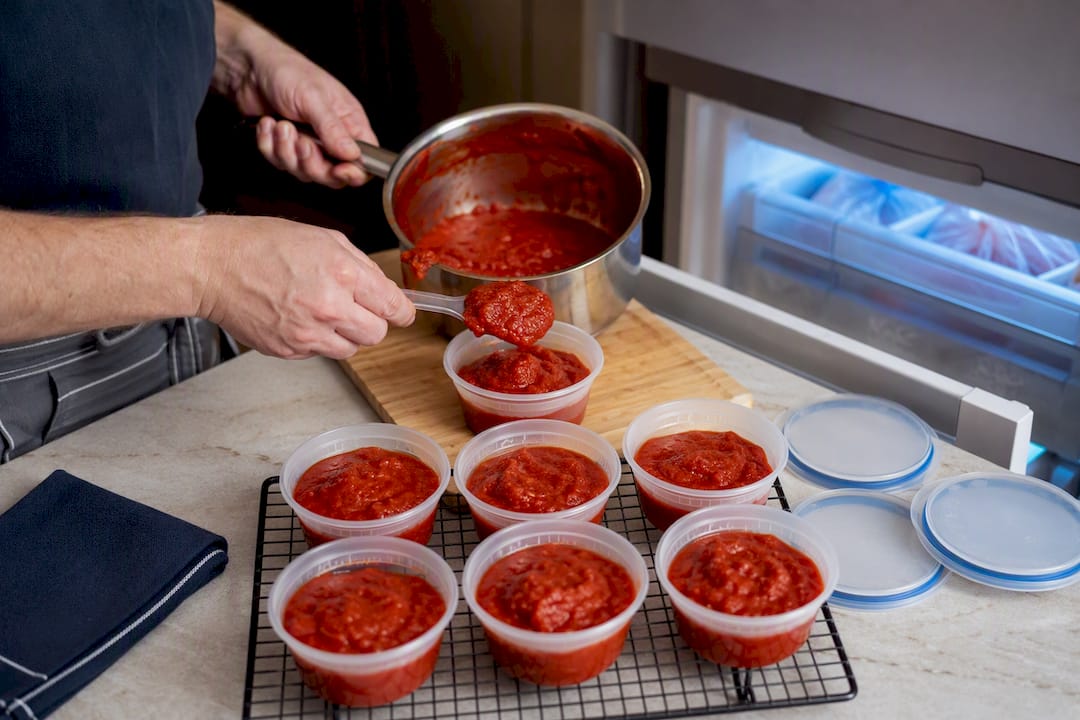
If you’re batch-prepping for the freezer, cook it a little thicker than you’d use fresh, since reheating and stirring loosens it back up. Skip adding dairy or extra starch before storage. It can throw off the acidity balance and shorten how long the batch keeps well.
How Much Sauce to Use and How to Spread It
A thin, even layer beats a thick, generous one every time. Backyard Oven’s analysis of soggy crust is blunt about this: a watery sauce soaks straight into the dough no matter how well you baked it, and too much sauce, even a properly thickened one, does the same thing.
For a standard 12 inch pizza, aim for a moderate, controlled amount of sauce, adjusting as needed for larger pies. Using a thin, even layer helps prevent sogginess.
- Spoon the sauce into the center and spread it outward in a spiral, leaving a bare rim of about half an inch to an inch for the crust.
- Stop before you see it pooling anywhere. Pooled sauce is the number one sign you’ve gone too heavy.
- Preheat your pizza stone or steel for a full 30 to 45 minutes before baking, and set your oven as high as it will go.
- Place the pizza on the hottest part of the stone or steel, not just in a hot oven, since direct contact heat is what actually crisps the base.
- Pat down wet toppings like fresh mozzarella or sliced tomatoes with a paper towel first, and consider a lower-moisture, part-skim mozzarella if soggy centers are a recurring issue.
If the Pizza Still Comes Out Watery, Run This Checklist
Sometimes the sauce isn’t actually the problem, even when it looks like it. Work through these steps in order before you blame the recipe.
- Retest the sauce on its own. Spoon some into a dish and let it sit for a minute. If liquid separates out around the edges, it wasn’t thick enough to begin with. Reheat it and reduce it further, or add a bit more paste.
- Check your dough. Overhydrated or underproofed dough can’t hold up to any sauce, thick or thin. If you’re troubleshooting texture issues beyond the sauce itself, it’s worth reviewing your Neapolitan sauce recipe alongside your dough handling, since the two problems often get confused for one another.
- Verify your oven’s actual temperature. Built-in dials are notoriously inaccurate. An infrared thermometer aimed at the stone tells you the real number, and you may need to extend your bake time if it’s running cooler than the dial claims.
- Isolate the variable. Bake one pizza with less sauce, one with drier cheese, and one on a pre-baked base. Whichever one comes out right tells you exactly where the problem was hiding.
Dough Dorks’ Tested Approach to Sauce Consistency
Recipes built around Neapolitan tradition focus on 48 hour fermented dough, curated low-moisture toppings, and ingredients sourced with authenticity in mind, delivered efficiently.
For home cooks chasing a proper Neapolitan result, the target is a sauce that clings to a spoon without sliding off, thick enough to hold its shape in a small dollop but still loose enough to spread thin. If your sauce pools or runs when you tilt the spoon, it needs more time on the heat or another spoonful of paste.
A few resources worth bookmarking:
- The San Marzano tomato guide breaks down why lower-moisture varieties give you a head start on thickness.
- The Neapolitan pizza sauce recipe walks through the exact ratios that produce a properly clinging sauce.
- Pre-cooked bases handle the crisping side of the soggy-crust equation, which pairs naturally with a properly reduced sauce.
Why Most Sauce Advice Gets the Priority Backwards
Most sauce troubleshooting content leads with the fancy fix: cornstarch ratios, pectin chemistry, precise simmer times. That’s backwards. The single biggest lever isn’t technique, it’s what you started with. A passata-based sauce made with almost no active cooking beats a fresh-tomato sauce simmered for twenty minutes, nearly every time.
The conventional wisdom also oversells quick fixes as a permanent solution. Cornstarch and paste are triage, not strategy. They rescue tonight’s dinner, but if you’re reaching for them every single week, the fix belongs earlier in the process, at the ingredient aisle, not at the stove.
If you take one thing from this: buy better tomatoes before you buy a better thickener. Passata or good canned Roma tomatoes solve most of this problem before you’ve turned on the burner. Everything else, the paste, the slurry, the careful spreading, is cleanup for people who didn’t start there. That’s not a criticism. It’s just where the actual leverage sits.
— Michael
Skip the Sogginess Problem Entirely With a Better Base
There are other ways to fight soggy pizza: careful sauce reduction, blotting toppings, cranking your oven as hot as it goes. All of it helps. But one variable you can remove entirely is the dough itself. Dough Dorks’ 48 hour Neapolitan dough is fermented long enough to develop the structure to hold sauce, toppings, and moisture without collapsing into a soggy middle.

If you’re short on time, the pre-cooked Neapolitan bases crisp up fast in a home oven and give you a head start on the one thing a home setup usually struggles with most: getting properly charred, structurally sound crust without a wood-fired oven. Pair either option with the curated topping collection for lower-moisture cheese choices, and you’ve eliminated two of the biggest sogginess variables before you’ve even made your sauce. Order a dough ball or a pack of bases and see the difference on your next pizza night.
Sources
- How to thicken pizza sauce — DroolRecipes
- Allrecipes — How to thicken tomato sauce
- Backyard Oven — Why pizza sauce makes dough soggy and how to fix it
FAQ
What Should I Do if My Pizza Sauce Is Too Watery?
Drain the tomatoes if you haven’t already, then stir in tomato paste one tablespoon at a time, or whisk in a cornstarch slurry and simmer for a minute or two until it thickens.
How Can I Thicken Pizza Sauce Without Changing the Flavor Much?
Tomato paste is the best option since it’s concentrated tomato with no added starch, while a low and slow simmer thickens the sauce naturally by reducing water content rather than adding anything.
How Do I Fix a Sauce That’s Already Too Runny After Cooking?
Return it to the stove, add a small amount of paste or a cornstarch slurry, and simmer briefly, stirring so it doesn’t clump or scorch on the bottom of the pan.
Why Does My Pizza Always Turn Out Watery?
It’s usually one of three things: sauce that wasn’t reduced enough, too much sauce spread on the base, or wet toppings like fresh mozzarella releasing moisture during baking.
Does Sauce Get Thicker as It Cools?
Yes, sauce continues to firm up as it cools, so pull it off the heat while it still looks slightly thinner than your target consistency.
Recommended
- Authentic Neapolitan Pizza Sauce Recipe UK
- The Only Neapolitan Pizza Sauce Recipe You Need
- San Marzano Tomatoes: Pizza Sauce Guide
- Why 48 Hour Pizza Dough Benefits Matter
READY-MADE • FROZEN • UK DELIVERY
Skip the mixing. Keep proper dough in your freezer.
48-hour fermented, individually proofed in their own pot and delivered frozen across the UK. Defrost, stretch, top and bake.
-
 48-Hour Neapolitan-Style Pizza Dough Balls – Box of 12
£22.88
-
 48-Hour Neapolitan-Style Pizza Dough Balls – Box of 20
£32.30
-
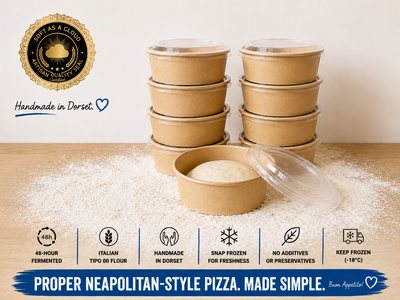 48-Hour Neapolitan-Style Pizza Dough Balls – Box of 8
£18
Handmade in Dorset • Free UK delivery over £50 • Free proofing pot with every dough ball