48 Hours: The Pizza Dough Fermentation Time Home Cooks Should Use
Clear, copy-ready schedules, yeast percentages, and the poke test for home cooks. Start with 48 hours to get reliable flavor and texture.
For the best flavor and easiest handling, ferment your pizza dough cold for 48 to 72 hours. That’s the sweet spot most home ovens and home fridges reward. Twenty-four hours is the minimum window where you’ll actually taste a difference from same-day dough, and a same-day ferment of 4 to 8 hours works fine when you’re pressed for time. The core rule: slower and colder builds flavor, so cut your yeast when you stretch the timeline, and trust the dough’s feel over the clock.
TL;DR:
- Cold fermentation for 48 hours is the optimal balance, producing a deep tang and complex aroma without risking slack dough, especially with strong flour.
- Shorter schedules, like 24 hours, already improve flavor and browning, while same-day dough yields milder, softer crusts suitable for quick decisions.
- Longer ferments beyond 72 hours require reduced yeast and stronger flour to prevent dough slackness as enzymes break down gluten.
- Fridge temperature variations from 2°C to 6°C significantly affect fermentation speed and should be monitored for consistency.
- Ready-made dough balls fermented for 48 hours are available, allowing immediate baking without complex timing or temperature adjustments.
Table of Contents
- Pizza Dough Fermentation Time: Choosing the Right Schedule
- How Temperature and Yeast Change Your Fermentation Time
- How to Tell When Your Dough Is Actually Ready
- Copy-Ready Timelines for Every Fermentation Schedule
- Fixing Dough That’s Gone Too Far or Not Far Enough
- How Dough Dorks Applies This to Every Dough Ball
- Why 48 Hours Deserves to Be Your Default, Not Your Ceiling
- Skip the Timeline, Keep the Flavor
- Sources
- FAQ
Pizza Dough Fermentation Time: Choosing the Right Schedule
Four schedules cover almost every situation a home cook runs into: same-day, 24 hour, 48 hour, and 72 hour. Each one trades convenience for flavor in a fairly predictable way, and knowing the tradeoffs upfront saves you from ruining a Friday pizza night with dough that’s either bland or blown out.
Same-day dough, fermented several hours at room temperature, gives you a workable crust with mild flavor and a soft, easy-to-stretch texture. It’s the schedule for a weeknight decision made at 2 p.m. Twenty-four hour dough, mixed the night before and given a short warm rest before chilling, already shows noticeably better browning and a faint tang. Forty-eight hours is where most home bakers land permanently: the flavor jump from 24 to 48 hours is bigger than the jump from 48 to 72, according to ThePizzaPlanet’s cold-fermentation guide, and the dough is still forgiving to shape. Seventy-two hours deepens the tang further but asks more of you: lower yeast, a strong flour, and closer attention, since the dough can turn slack if you’re not careful.
| Schedule | Flavor | Texture and handling | Yeast (instant dry) |
|---|---|---|---|
| Same-day (4–8h) | Mild, yeasty | Soft, easy to stretch, low chew | 0.3% |
| 24 hours | Light tang, better browning | Firmer, slightly extensible | 0.15% |
| 48 hours | Noticeable tang, complex aroma | Balanced strength and stretch | 0.1–0.15% |
| 72 hours | Deep tang, most complex | Can turn slack without adjustment | 0.05–0.1% |
A few practical notes on picking between them:
- Choose same-day dough for a spontaneous pizza night or when you’re testing a new topping combination and don’t want a two-day commitment riding on it.
- Choose 24 hours when you know by dinner tonight that you want pizza tomorrow. It’s the smallest planning ahead with a real payoff.
- Choose 48 hours as your default. It’s the schedule Fond’s fermentation guide and most serious home pizza makers treat as the baseline.
- Choose 72 hours only with strong flour (high protein, high W value) and reduced yeast, and only once you’ve already run a 48 hour batch successfully.
- Weaker all-purpose flours tend to break down before 72 hours arrives, so match your ambition to your flour bag.
- A hotter oven shortens your margin for error on any schedule, since overproofed dough struggles more with oven spring under high heat. Check what temperature your pizza oven should hit before you commit to a long ferment.
How Temperature and Yeast Change Your Fermentation Time
Temperature and yeast quantity are the two levers that actually control fermentation speed, and they work together, not separately; you can find expert tips on dough rising temperatures on Missy Lala’s baking mix blog. As a rough guide, every 8°C (about 15°F) change in dough temperature roughly doubles or halves the fermentation rate. That single number explains almost every confusing result home bakers run into.
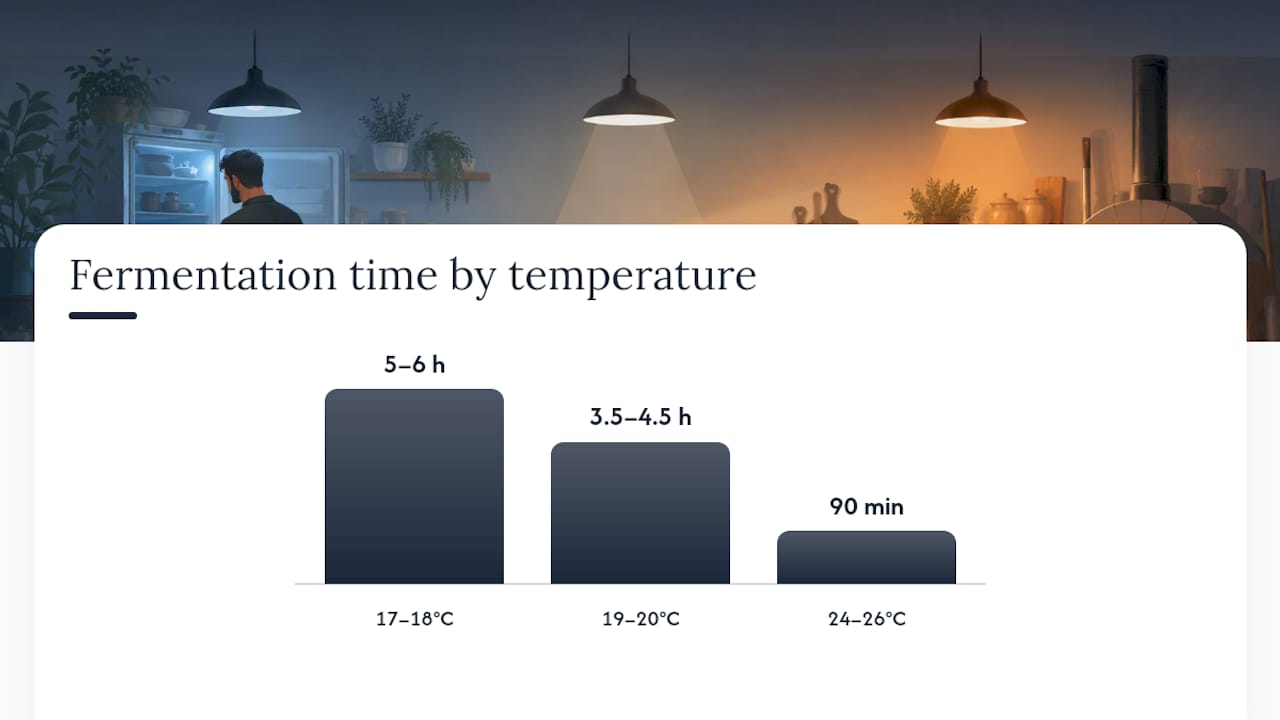
At room temperature (20 to 26°C), dough typically finishes in 4 to 8 hours, but the range within that band is wide. Room-temperature bulk tests show dough at 17 to 18°C needing 5 to 6 hours, dough at 19 to 20°C needing 3.5 to 4.5 hours, and dough sitting at 24 to 26°C finishing in as little as 90 minutes. That’s the same recipe, same yeast amount, cutting its fermentation time by more than half just because the kitchen was warmer.
Drop the dough into a fridge running 3 to 6°C and you slow fermentation enough to stretch it across 24 to 72 hours, which is the entire point of cold fermentation. But a fridge isn’t a fixed number. Domestic fridges commonly run anywhere from 2°C to 6°C, and a fridge on the warm end of that range will finish a “48 hour” dough noticeably faster than one running cold, according to PizzaStunde’s guide to 24, 48, and 72 hour rises.
Yeast percentage by schedule (instant dry yeast, percent of flour weight):
- Same-day: a higher percentage in the lower part of the typical range
- 24 to 48 hours: a moderate percentage lower than same-day but higher than extended
- 48 to 72 hours: a lower percentage appropriate for extended cold fermentation
Pro Tip: Let your mixed dough sit at room temperature for 20 to 30 minutes before you put it in the fridge. That short head start lets the yeast wake up and get moving, so your cold ferment behaves consistently even if your fridge runs a degree or two warmer or colder than you think.
How to Tell When Your Dough Is Actually Ready
Clock time is a guideline. The dough itself is the real signal, and reading it correctly matters more than hitting an exact hour count.
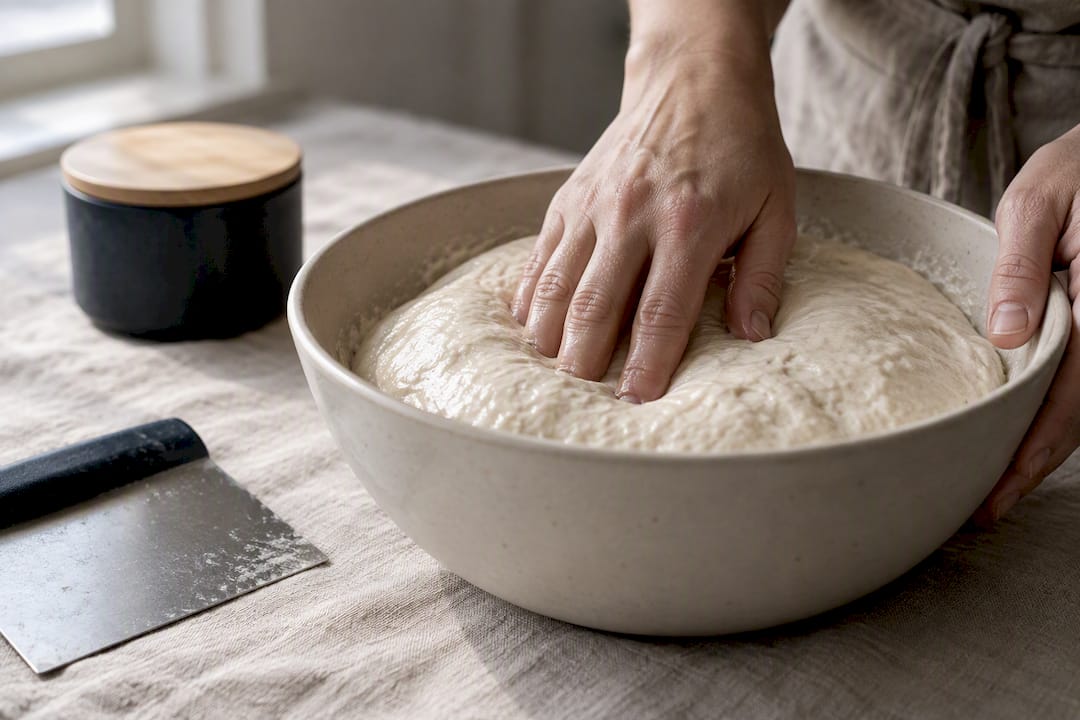
- Run the poke test. Press a floured finger about half an inch into the dough. A slow spring-back that leaves a slight dimple means it’s ready. Instant, full spring-back means it needs more time. No spring-back and a slow collapse means it’s gone too far.
- Check the volume. Bulk dough should look roughly 1.7 to 2 times its starting size, not flat and not doubled and straining against the container lid.
- Look at the surface. Ready dough looks smooth and slightly domed, with small bubbles visible under the surface. A surface riddled with large bubbles or a slightly sour smell edging toward alcohol suggests you’re at the edge of overproofing.
- Temper cold balls before shaping. Pull dough balls from the fridge 1 to 2 hours before baking so they warm closer to room temperature. Cold, stiff dough tears instead of stretching.
Getting comfortable with the poke test and other proofing signs will do more for your pizza than memorizing any single recipe’s hour count.
Copy-Ready Timelines for Every Fermentation Schedule
Here’s how each schedule actually plays out in a home kitchen, hour by hour.
- Same-day: Mix dough by 11 a.m. Bulk ferment 1 to 2 hours at room temperature. Divide into balls, then let them proof another 2 to 4 hours until puffy and passing the poke test. Shape and bake by 4 to 6 p.m.
- 24-hour: Mix dough the evening before, around 7 p.m. Let it sit at room temperature for 30 minutes, then move it to the fridge overnight. The next morning, pull it out, divide into balls, and let them rest at room temperature for 2 to 3 hours before shaping. Bake that evening.
- 48-hour: Mix Wednesday evening. Bulk ferment briefly at room temperature, then refrigerate. Divide into balls Friday morning using reduced yeast (0.1% to 0.15%), let them come to room temperature over 2 to 3 hours, and bake Friday night. This is the schedule most guides, including ThePizzaPlanet, point to as the reliable home-baker default, and Dough Dorks’ own 48 hour cold-fermented dough formula follows the same logic.
- 72-hour: Mix Tuesday evening with yeast dropped to 0.05% to 0.1% and a stronger flour than usual. Refrigerate through Friday, then ball and temper as with the 48 hour schedule. Watch closely. Dough held this long can slacken fast once it warms, especially with weaker flour, so don’t walk away from it for long once it’s out of the fridge.
Most of the actual flavor development happens during the ball proof, not the bulk stage, which is why professional shops often keep bulk fermentation short and let the long clock run after dividing, according to JayArr Pizza’s proofing guide.
Fixing Dough That’s Gone Too Far or Not Far Enough
Overfermented dough collapses under the poke test, smells sharply of alcohol, and tears instead of stretching. If you catch it early, degas it gently, reshape into a tighter ball, and give it a short 20 to 30 minute rest before trying again. If it’s badly slack and won’t hold shape at all, a stint back in the fridge can firm it up enough to work with, but past a certain point the gluten structure has genuinely broken down and the batch is better used as a flatter, thinner style than pushed into a puffy crust. Serious Eats’ multi-day cold-ferment test found flavor peaking around three to five days, with real decline by day six, which lines up with what happens structurally once fermentation runs too long.
Sticky, underdeveloped dough usually means it hasn’t fermented long enough or the flour is too weak. Give it a fold, a short bench rest, and more time before you add extra flour, which just masks the problem.
Pro Tip: If your fridge runs warm, drop yeast by about a third and check dough a full day earlier than your recipe suggests. A cheap fridge thermometer solves more fermentation mysteries than any recipe adjustment.
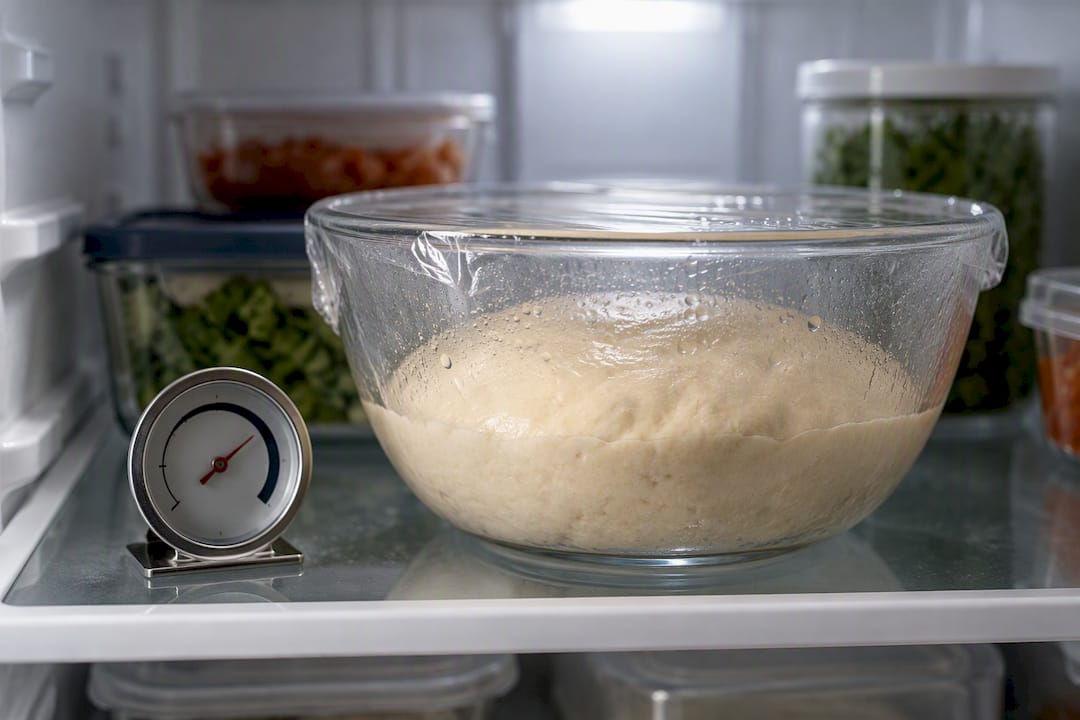
For your next batch: measure your fridge temperature once, write down your yeast percentage and total time, and note how the dough felt at bake time. That log turns guesswork into a repeatable system after two or three tries.
How Dough Dorks Applies This to Every Dough Ball
Every principle above, cold, slow, and yeast-light, is exactly how some dough balls are handcrafted with Italian 00 flour, fresh yeast, and extra virgin olive oil, then cold-fermented for 48 hours before shipping.
That 48-hour window isn’t arbitrary. It’s the recommended sweet spot, resting in proofed balls when they reach your kitchen.
- No mixing, no yeast math, no fridge thermometer required on your end.
- The 48-hour fermentation is already complete, so your only job is tempering and shaping.
- Pair the dough with a Neapolitan-style bake for the closest match to the flavor this fermentation window is built for.
If you want to see the timing work without running the clock yourself, that’s the shortcut.
Why 48 Hours Deserves to Be Your Default, Not Your Ceiling
Most fermentation advice treats 72 hours as the advanced move and 48 as the beginner step. I’d argue that’s backward for most home cooks. The jump from 24 to 48 hours is where the real flavor payoff sits, and 72 hours mostly rewards people who already have a reliable flour, a known fridge temperature, and the patience to babysit dough on day three.
Start with a 48-hour batch and actually keep notes: yeast percentage, fridge temperature, how the dough felt at hour 40 versus hour 48. Then push to 72 hours once, deliberately, as an experiment rather than an assumption that longer automatically means better. The data on multi-day fermentation backs this up. Quality plateaus and then drops, it doesn’t climb forever.
— Michael
Skip the Timeline, Keep the Flavor
If reading all this made you want great dough tonight rather than in two days, ready-made dough balls that already spent 48 hours cold-fermenting with premium ingredients can be delivered ready to temper and shape.

Pull a ball from the fridge, let it warm for an hour or two, stretch it, and bake. No yeast math, no thermometer checks, no wondering if you hit the sweet spot. Browse the full range of dough balls, pre-cooked bases, and ready-made pizzas, or go straight to the Italian Herb Neapolitan dough balls if you want flavor built in before it even hits your counter. For a tangier alternative, the 48-hour sourdough dough balls follow the same cold-fermentation logic with a different starter. Order tonight and your next pizza night skips straight to the bake.
Sources
- Pizza Dough Fermentation: Room Temp vs Cold Methods | Fond
- How Long Should I Let My Pizza Dough Cold Ferment? | Serious Eats
- Thepizzaplanet
FAQ
Can You Ferment Pizza Dough Too Long?
Yes. Past roughly 72 to 96 hours, enzymes break down gluten structure faster than flavor improves, leaving dough slack and hard to shape. Serious Eats’ testing found flavor peaking around three to five days, with clear decline by day six.
Can I Ferment Pizza Dough for 72 Hours?
Yes, but reduce your yeast to 0.05% to 0.1% and use a stronger flour to handle the extended time without turning slack. ThePizzaPlanet treats 72 hours as an advanced step beyond the 48-hour sweet spot most home bakers rely on.
What’s a Good 3-Day Fermented Pizza Dough Recipe?
Mix your dough with roughly 0.05% to 0.1% instant dry yeast and a strong flour, rest briefly at room temperature, then refrigerate for 72 hours before balling and tempering. Some dough balls are cold-fermented for 48 hours using Italian 00 flour, fresh yeast, and extra virgin olive oil, which is a shorter, more forgiving version of the same approach.
Can I Cold Ferment Pizza Dough Overnight?
Yes, a cold ferment of 24 hours already produces noticeably better flavor and browning than same-day dough. It’s the smallest time investment that reliably makes a difference, according to Fond’s fermentation guide.
Recommended
- 48 Hour Cold Fermented Pizza Dough for UK Home Cooks, Exact Formula
- The Best Fridge Time for Pizza Dough: 48 to 72 Hours
- Why 48 Hour Pizza Dough Benefits Matter
- Keep Oven Spring When Hand Stretching Pizza Dough for Home Cooks
READY-MADE • FROZEN • UK DELIVERY
Skip the mixing. Keep proper dough in your freezer.
48-hour fermented, individually proofed in their own pot and delivered frozen across the UK. Defrost, stretch, top and bake.
-
 48-Hour Neapolitan-Style Pizza Dough Balls – Box of 12
£22.88
-
 48-Hour Neapolitan-Style Pizza Dough Balls – Box of 20
£32.30
-
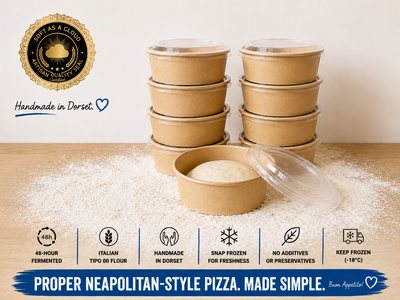 48-Hour Neapolitan-Style Pizza Dough Balls – Box of 8
£18
Handmade in Dorset • Free UK delivery over £50 • Free proofing pot with every dough ball