Fit a Pizza Proofing Box in a UK Fridge: 3 Cheap Setups
For UK kitchens: fridge friendly ways to proof pizza dough at home. Fit a low profile box in tight fridges, or try 3 cheap oven or cooler methods with...
For most home bakers, a low-profile airtight fridge tub or a compact stackable pizza box is the fastest, cheapest way to proof dough reliably. If you don’t want to buy anything, the oven method with a bowl of hot water works almost as well for short proofs, and a covered mixing bowl handles single dough balls just fine. The real trade-off is consistency versus cost: a dedicated box costs more upfront but saves you from guessing every single bake.
TL;DR:
- A low-profile fridge tub like the Baking Steel container offers better consistency for frequent proofing and fits easily on standard refrigerator shelves.
- Commercial-grade containers such as Cambro pizza dough boxes provide tight seals and durability but are often more expensive than needed for home use.
- Freeproofing methods like using a warm oven, covered bowls, or a DIY cooler with a heat mat are effective, low-cost options suitable for short proofs and small batches.
- When choosing a proofing container, ensure it is food-grade, BPA-free, dishwasher safe, and appropriately sized for your batch and fridge space.
- Buying a dedicated proofing box makes sense only if you proof dough weekly or handle multiple batches, while occasional bakers can rely on simpler or DIY solutions.
Table of Contents
- What Is the Best Pizza Dough Proofing Container to Buy?
- Cheap and No-Cost Proofing Methods You Can Use Today
- How Do You Choose the Right Proofing Box for Your Kitchen?
- Dough Dorks’ Rules of Thumb and Tips From Michael
- How These Proofing Options Were Evaluated
- When I’d Buy a Box and When I Wouldn’t
- A Simpler Route: Skip the Proofing Setup Entirely
- Sources
- FAQ
What Is the Best Pizza Dough Proofing Container to Buy?
A pizza proofing box at home doesn’t need to be complicated. It needs to hold dough at a stable temperature, keep the surface from drying out, and fit somewhere in your kitchen without taking over a fridge shelf. Six options cover almost every home baker’s situation, from someone proofing one ball a week to someone running through a dozen for a Friday pizza night.
The compact fridge tub category includes the Baking Steel dough container (5L low-profile), built specifically to sit flat on a standard refrigerator shelf. Its selling point is the airtight seal combined with a flat profile, which matters more than people expect once you’ve tried wedging a tall, round tub between the milk and last night’s leftovers. Generic stackable pizza dough boxes in the 30x40cm or 60x40cm style, common in catering supply shops, solve the opposite problem: they stack cleanly and hold multiple balls, but they eat more vertical space unless your fridge has adjustable shelving.
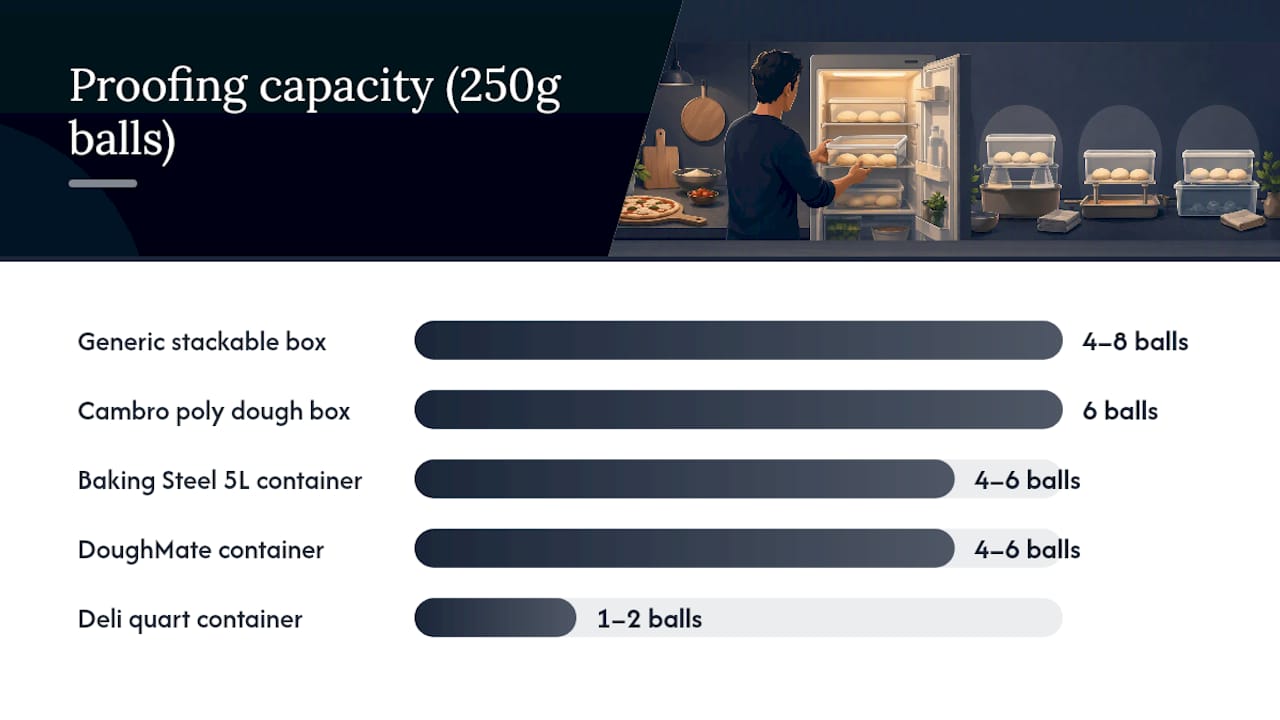
For bigger batches, Cambro pizza dough boxes are the commercial standard. They come in multiple depths, are reinforced and dishwasher safe, and can handle a wide temperature range without warping or clouding over time the way cheaper plastics do. The Cambro Pizza Proofing Box line specifically targets dough storage rather than general food service, with lids designed to seal tighter against crusting. DoughMate Containers sit in a similar category, purpose-built for pizzerias but increasingly sold in smaller sizes for home use.
At the budget end, Deli Quart Containers (the kind that once held potato salad) work well for individual 250g dough balls and cost next to nothing if you’re already buying takeout. Pyrex 4-quart Lidded Mixing Bowls double as proofing vessels for anyone who already owns a set, and the glass sides let you watch the dough rise without lifting a lid and losing heat.
| Option | Capacity (250g balls) | Fridge footprint | Material | Stackable | Price range |
|---|---|---|---|---|---|
| Baking Steel 5L container | 4 to 6 | Low profile, flat fit | Food-grade, airtight | Yes | Mid-range |
| Cambro poly dough box | 6 | Deep, needs shelf clearance | Reinforced polycarbonate | Yes | Mid to high |
| Generic stackable box (30x40cm) | 4 to 8 | Moderate, stacks well | Food-grade plastic | Yes | Budget to mid |
| DoughMate Containers | 4 to 6 | Compact | Food-grade plastic | Yes | Mid-range |
| Deli Quart Containers | 1 to 2 | Very small | Food-grade plastic | Limited | Budget |
| Pyrex 4-quart bowl | 1 to 3 | Round, less efficient | Glass | No | Budget to mid |
Before buying anything online, check the listing actually states three things: exact dimensions (so you know it fits your shelf), whether the plastic is BPA-free and food-grade, and whether it’s dishwasher safe. A surprising number of budget tubs on general marketplaces skip at least one of these details entirely, and you end up guessing.
Cheap and No-Cost Proofing Methods You Can Use Today
You don’t need to spend a penny to proof pizza dough properly. Three methods cover almost every situation.
- The oven method. Heat about 720ml (3 cups) of water until it’s roughly 200°F (93°C), which takes about 4 to 6 minutes in a microwave. Place the water on the oven’s lower rack, put your covered dough on the middle rack, and close the door. This creates a warm, humid pocket around 75–95°F (24–35°C), ideal for a shorter proof of a few hours. Check the water temperature every 45 minutes or so and reheat if it’s cooled off.
- Covered bowls or tubs. A single 250 to 300g dough ball fits comfortably in a standard mixing bowl covered with plastic wrap or a damp towel. For multiple balls, a lidded storage tub with enough headroom for doubling works nearly as well as a dedicated box.
- A DIY insulated cooler. Line a cooler with a low-wattage seedling heat mat, add a thermometer to monitor the internal temperature, and keep a small bowl of water inside for humidity. This setup can hold a steady 75–85°F (24–29°C) for hours without checking constantly.
Pro Tip: If you’re using the oven method overnight, set a phone reminder to check the water halfway through. A cold oven with no reheat defeats the entire point of the setup.
The oven method costs nothing but demands attention. Covered bowls are nearly effortless but limited to short proofs and small batches. The cooler setup takes the most work to build but gives you the closest thing to a dedicated box without buying one.
How Do You Choose the Right Proofing Box for Your Kitchen?
Size is where most people get it wrong, so consider using an Easy Roll Rolling Pin (Stainless Steel) With Stand and Base Included to help evenly shape your dough before proofing. A single dough ball needs roughly a quart of headroom to double in volume without spilling over. If you’re proofing two to six balls at once, look for a container at least 30cm long with enough depth that the lid doesn’t press against rising dough. Measure your fridge shelf clearance before you buy anything. A box that’s 8cm tall might be perfect on paper and useless once you realize your shelf gap is only 7cm.
Material and safety matter more than people assume when they’re shopping on price alone. Run through this checklist before buying:
- Confirm the plastic is explicitly labeled food-grade and BPA-free, not just “food storage.”
- Check the lid seals tightly rather than just resting on top, since proofing boxes reduce the risk of dough forming a crust during the final rise.
- Verify it’s dishwasher safe if you plan to use it multiple times a week.
- Look for a low profile if fridge space is tight, and stackable sides if you’re proofing multiple batches.
Dedicated proofing boxes mainly help with organization and repeatability for bakers doing frequent batches. If you’re baking pizza once every couple of weeks, a covered bowl does the job fine, and spending on a Cambro-style box is probably overkill. If you’re doing weekly batches of four or more dough balls, the extra cost buys real convenience: no more juggling cling film and hoping nothing dries out overnight.
Dough Dorks’ Rules of Thumb and Tips From Michael
I keep dough between 4°C and 6°C for the bulk of a 48-hour cold fermentation, then pull it out about two hours before shaping to let it come up to room temperature. For container sizing, give each 250g ball roughly double its resting volume in headroom. Cramped containers cause dough to fuse together at the seams, which makes shaping a mess later.
- Individual pots beat batch boxes when you’re proofing different flavors or hydration levels side by side.
- Batch boxes win when everything in the container is identical and timing matters more than separation.
- How individual pots compare to shared boxes comes down mostly to how many variables you’re juggling at once.
- For exact timing and the visual cues that tell you dough is ready, this proofing guide walks through it step by step.
How These Proofing Options Were Evaluated
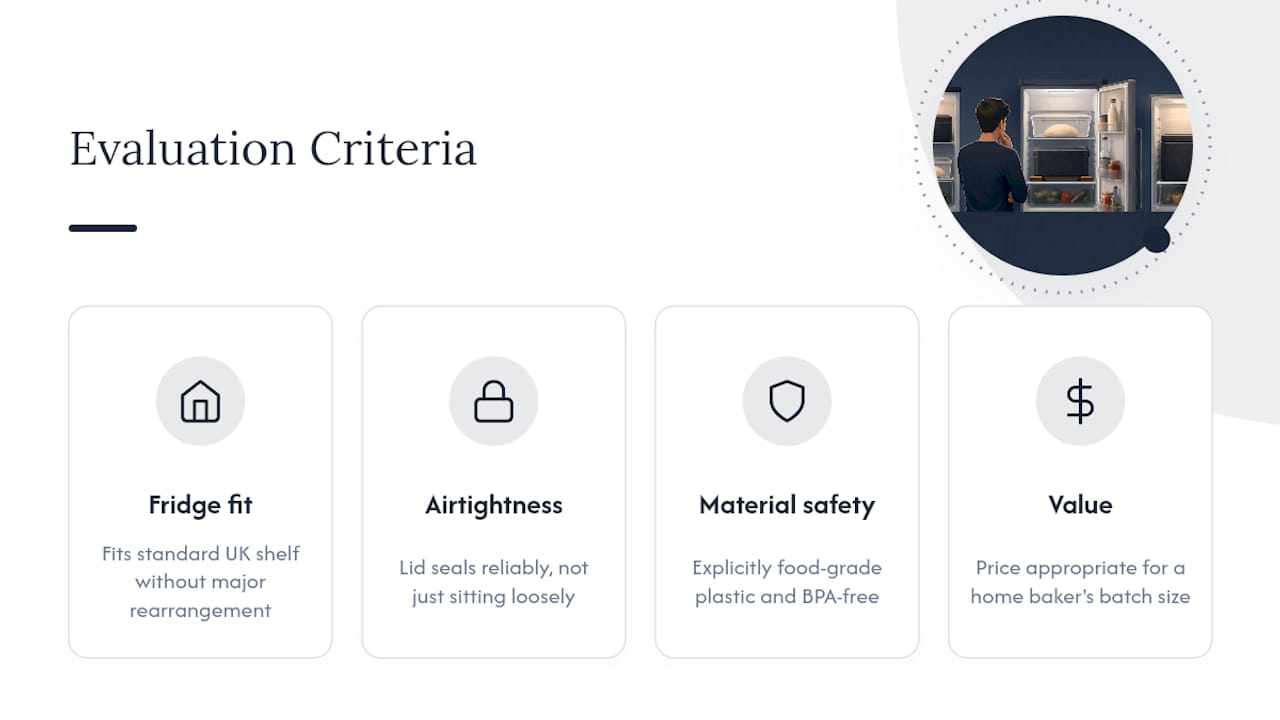
Every product mentioned here was assessed against four practical criteria rather than lab conditions: fridge compatibility (does it fit a standard UK fridge shelf without rearranging everything else), airtightness (does the lid actually seal or just sit loosely), material safety (is the plastic explicitly food-grade and BPA-free), and value relative to batch size (does the price match what a typical home baker actually needs, rather than commercial-kitchen volume).
Manufacturer specifications came directly from product pages where available, including Cambro’s own listing of depths and dishwasher-safe ratings, and Baking Steel’s stated dimensions for its 5L container. Where manufacturer data wasn’t available, general retail listings on UK marketplaces provided a reasonable price band and feature comparison, particularly for generic stackable boxes without a dedicated brand page.
DIY methods were judged on how repeatable the temperature range is without specialized equipment. The oven method and cooler setup both rely on published temperature targets from baking resources rather than guesswork, since consistent fermentation depends on staying within a narrow band rather than eyeballing it.
When I’d Buy a Box and When I Wouldn’t
I switched to a low-profile fridge tub after one too many stuck-together dough balls from a mixing bowl covered in cling film. The difference in consistency was immediate, less mess, more predictable rise times. That said, if you bake pizza occasionally rather than weekly, a covered bowl or the oven method will serve you just as well. Buy a box once proofing becomes routine, not before.
— Michael
A Simpler Route: Skip the Proofing Setup Entirely
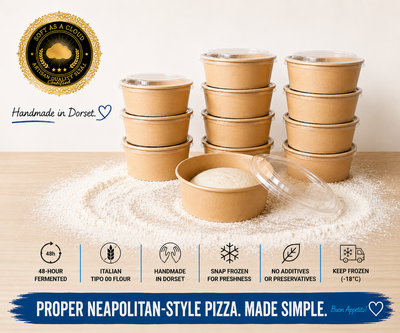
If all this talk of tubs, thermometers, and shelf clearance sounds like more than you want to deal with, there’s a shorter path. Doughdorks ships handcrafted, 48-hour fermented pizza dough balls made with Italian 00 flour, fresh yeast, and extra virgin olive oil, already proofed and ready to shape. You skip the container shopping, the temperature checks, and the guesswork entirely.

Each dough ball ships individually with a recyclable proofing pot, eliminating the need to buy a dedicated proofing box or measure your fridge shelf before checkout. If you’d rather build a full pizza night without sourcing separate ingredients, the pizza toppings collection covers cheeses, sauces, and charcuterie, and the Italian Herb Neapolitan dough balls are a good starting point if you want something with flavor built in. Doughdorks delivers UK-wide, so head to the Doughdorks storefront and place an order for your next pizza night.
Sources
FAQ
What Can I Use Instead of a Proofing Box?
A covered mixing bowl, a lidded plastic tub, or the oven method with a bowl of hot water all work as substitutes. None require buying dedicated equipment, though they demand more attention to timing and temperature.
Is It Worth Getting a Proofing Box?
It’s worth it if you proof dough weekly or handle multiple batches at once, since dedicated boxes improve consistency for long cold ferments. Occasional bakers usually do fine with a covered bowl.
Can I Proof Pizza Dough at Home?
Yes. A stable, warm spot, whether that’s a fridge tub, a covered bowl, or an oven with hot water on the lower rack, is all you need for reliable results. If you’d rather skip the setup, Doughdorks’ pre-proofed dough balls arrive ready to shape.
Do I Need a Pizza Proofing Box?
No, a proofing box isn’t required. It helps with consistency and organization if you bake often, but covered bowls and the oven method both produce good results for occasional bakers.
Recommended
- Pizza Dough Proofing Box vs Individual Proofing Pots: Which Is Better?
- How to Proof Pizza Dough: Time, Temp & Signs It’s Ready
- Pizza Dough Proofing Pots: Do You Actually Need One?
READY-MADE • FROZEN • UK DELIVERY
Skip the mixing. Keep proper dough in your freezer.
48-hour fermented, individually proofed in their own pot and delivered frozen across the UK. Defrost, stretch, top and bake.
-
 48-Hour Neapolitan-Style Pizza Dough Balls – Box of 12
£22.88
-
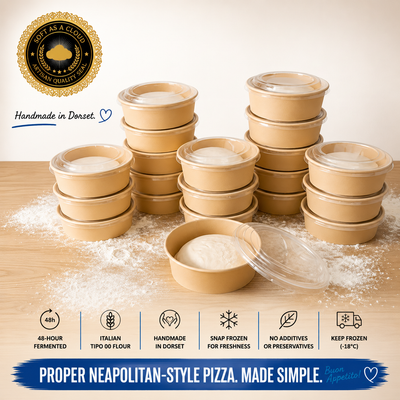 48-Hour Neapolitan-Style Pizza Dough Balls – Box of 20
£32.30
-
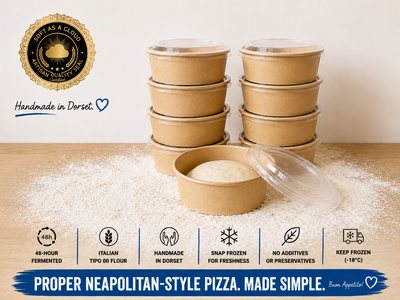 48-Hour Neapolitan-Style Pizza Dough Balls – Box of 8
£18
Handmade in Dorset • Free UK delivery over £50 • Free proofing pot with every dough ball