3 Sauces, 8–10 Toppings: Easy Pizza Party Menu with Ready Dough
Plan a low stress pizza party using 3 sauces, 8–10 toppings, clear portion and timing rules, plus ready-made dough options to cut prep and oven headaches.
Host a DIY pizza bar: three sauces, 8 to 10 toppings, dough for roughly one pizza per person, one big salad, one crunchy side, and dessert. Plan on 2 to 3 slices per adult and one extra pizza as a buffer against second helpings. Cover dietary needs with a labeled vegan cheese, a gluten-free base, and clear utensil separation, and the whole spread runs itself.
TL;DR:
- Use one dough ball per adult or 4 to 5 for a group of eight, and let the dough rest for two to three hours before stretching.
- Limit toppings and sauces to eight to ten options to keep the party streamlined and prevent queues.
- Preheat your pizza stone or steel for 45 to 60 minutes at 230 to 250°C (450-500°F) to achieve a crispy crust.
- Prepare ingredients a day in advance and organize the toppings bar in the order guests will build their pizzas to reduce congestion.
- Store leftovers in airtight containers and freeze unused dough for up to three months to minimize waste.
Table of Contents
- Pizza Party Menu Basics: Bases and Dough Options
- Sauces, Cheeses, and Topping Categories That Add Variety Without Chaos
- How Do You Set Up a DIY Pizza Toppings Bar?
- Sides, Finger Foods, and Drinks That Round Out the Menu
- Dietary Adaptations: Keeping Everyone Fed and Included
- What’s the Best Way to Cook Pizza at Home for a Crowd?
- Timing and Portions: A Simple Schedule for Party Day
- Why This Menu Works: Publisher Expertise and Product Fit
- Detailed Shopping List for a Pizza Party by Guest Count
- Sample Pizza Party Menus You Can Copy Exactly
- Party Day Cooking Workflow, Step by Step
- Managing Guests Around a Build-Your-Own Pizza Bar
- Storing Leftovers and Make-Ahead Components
- Host Checklist and a Quick Note From the Publisher
- Dough Dorks Products to Make Party Night Easier
- Sources
Pizza Party Menu Basics: Bases and Dough Options
Every good pizza party menu starts with the base, and you have three real routes to choose from. Supermarket dough balls are the fastest option, but they’re often under proofed and tear the moment you try to stretch them thin. Homemade dough gives you full control over flavor and texture, but it demands planning. Pre-cooked Neapolitan bases split the difference, giving you a proper leopard-spotted crust with almost none of the labor.
For quantities, figure on one dough ball per adult if you’re serving individual pizzas, or 4 to 5 dough balls for a group of 8 sharing slices, a ratio echoed in Camille Styles’ pizza party breakdown. Whichever route you pick, timing matters more than the recipe itself:
Portion dough into individual balls and let them rest at room temperature for at least 2 to 3 hours before stretching, since cold dough tears instead of stretching cleanly, according to Serious Eats’ pizza party guide.
- Make dough 1 to 4 days ahead when possible. The extra fermentation time improves flavor and makes the dough far easier to handle on the day.
- Par-bake bases for 3 to 4 minutes if you’re feeding a crowd in waves, then finish them to order as guests build their own pies.
If dough timing feels like one more thing to manage on party day, a ready-made pizza bases guide can walk you through skipping that step entirely.
Sauces, Cheeses, and Topping Categories That Add Variety Without Chaos
Three sauces cover almost every craving without turning your kitchen counter into a science fair. A classic tomato base handles the traditionalists, a garlic butter or white bechamel satisfies anyone who wants something richer, and a pesto or barbecue sauce gives you a curveball for adventurous eaters.
Cheese is simpler than people think. Fresh mozzarella (torn, not sliced) melts evenly and stays soft; a sharper aged cheese like pecorino adds bite when scattered thinly after baking. Keep cheese cold until the last possible moment. It handles better and melts more evenly straight from the fridge.
For toppings, think in three categories rather than a random pile of ingredients:
- Proteins: pepperoni, cooked sausage, prosciutto, or spiced chickpeas for a plant-based option
- Roasted or fresh vegetables: caramelized onion, roasted peppers, mushrooms, cherry tomatoes
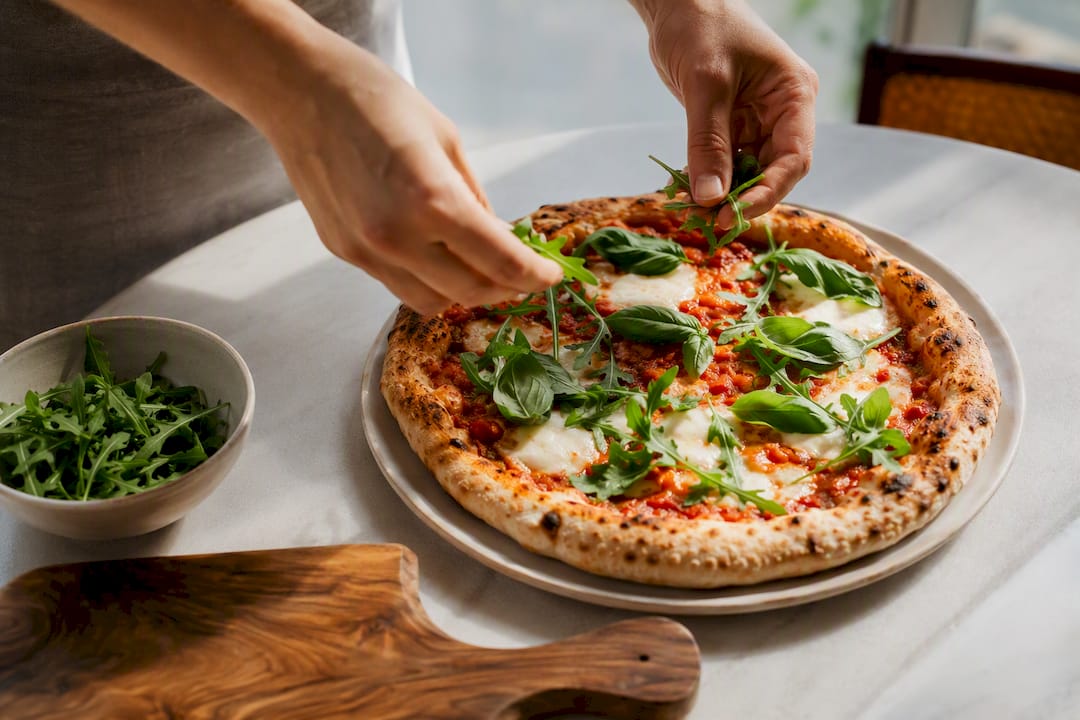
- Post-bake finishes: fresh basil, chili oil, rocket, a drizzle of good olive oil
Limiting the lineup to several high-quality toppings, rather than 20 mediocre ones, keeps the bar moving and cuts down on food waste. It also happens to make a better pizza.
Pro Tip: Add delicate finishes like basil or rocket after the pizza comes out of the oven. Baking them in turns fresh herbs bitter and wilted greens sad.
How Do You Set Up a DIY Pizza Toppings Bar?
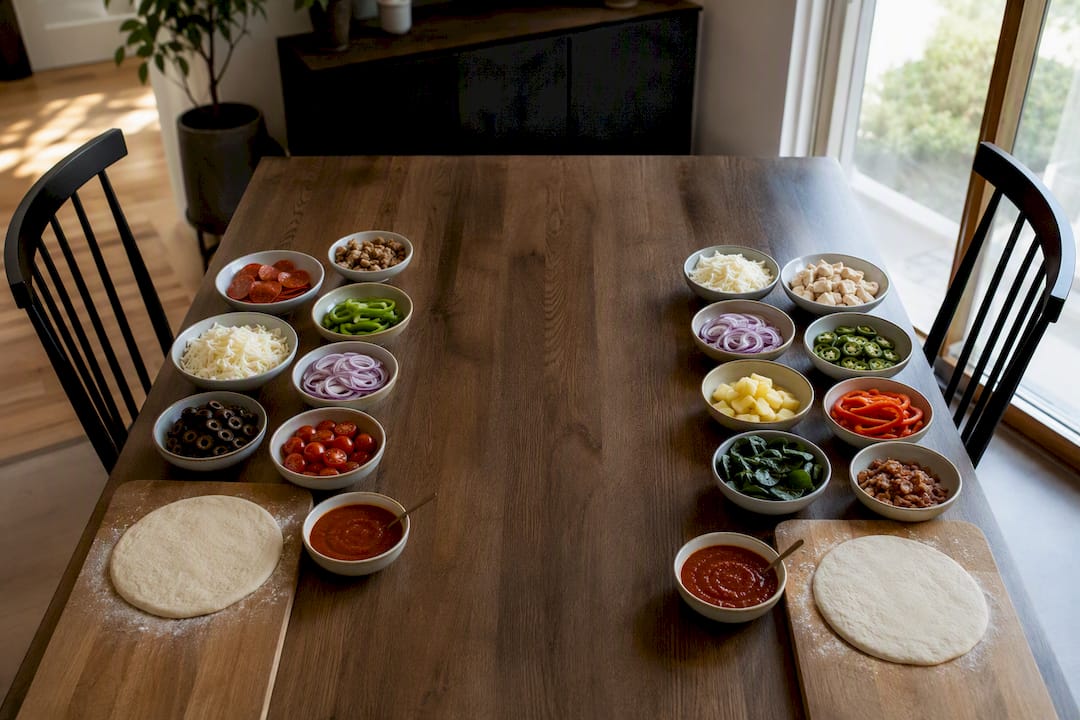
Line up your station in the order pizzas actually get built, and the whole thing runs itself. Guests move down the line once rather than doubling back for forgotten items, helping prevent bottlenecks.
- Stretched dough or bases first, laid out on trays or peels
- Sauces, spooned into small bowls with spoons (not squeeze bottles that clog with toppings)
- Cheeses, kept cold in bowls set into a larger bowl of ice if the party runs long
- Proteins and vegetables, sorted by category rather than mixed together
- Seasonings and post-bake finishes, kept separate from the raw toppings
- A landing zone near the oven for finished pizzas to rest before slicing
Keep the tools simple but complete:
- Pizza peels or a flat baking sheet for transferring pies to the oven
- A rolling pin or your hands for stretching (both work fine)
- Small bowls and spoons for every topping, never one shared serving spoon
- Handwritten labels for anything containing nuts, dairy, or gluten
Limiting the bar to 8 to 10 toppings and three sauces isn’t a compromise. It’s the number that keeps a mixed group of guests moving without a queue forming behind the pepperoni.
Sides, Finger Foods, and Drinks That Round Out the Menu
A pizza party menu built entirely on pizza gets one note fast. A crisp salad and something crunchy on the side fix that in about ten minutes of prep.
Two salad templates cover most tastes. A simple rocket, parmesan, and lemon salad cuts through rich, cheesy toppings without competing for attention. A chopped Italian-style salad with tomatoes, cucumber, red onion, and a vinegar dressing adds crunch and acidity that pizza alone doesn’t deliver.
For shareable sides, keep it low effort:
- Garlic bread or breadsticks made from any leftover dough scraps
- Store-bought antipasti (olives, marinated artichokes, cured meats) arranged on a board
- Baked wings if you have oven space to spare between pizzas
Drinks work best as a self-serve station. Set out a pitcher of something fizzy with lemon and mint alongside the usual soft drinks, and let guests build their own glass rather than taking orders all night.
Dietary Adaptations: Keeping Everyone Fed and Included
Mixed groups need a plan that doesn’t turn into a separate meal for three people. Swap in dairy-free mozzarella for vegan guests, keep a stack of gluten-free pre-cooked bases on hand, and offer a plant-based protein like marinated tofu or spiced chickpeas alongside the pepperoni.
For a group of 10 to 12, one dedicated gluten-free base and one dairy-free cheese option usually covers demand without leaving you with leftovers nobody eats. Scale up only if you know multiple guests share the same restriction.
- Store gluten-free bases separately, and use a different peel or tray to avoid cross-contact with wheat-based dough.
- Label every dietary swap clearly on a small card or sticky note, not just verbally at the door.
- Keep one set of tongs or spoons dedicated to the vegan and gluten-free stations only.
- Prep the vegan cheese and toppings first, before the kitchen gets any flour dust or cheese residue on surfaces.
Pro Tip: Bake gluten-free and vegan pizzas first, while the oven and stone are cleanest. It’s a small sequencing change that avoids most cross-contact issues entirely.
If you want ideas beyond the basics, a vegetarian topping guide covers combinations that satisfy meat eaters too.
What’s the Best Way to Cook Pizza at Home for a Crowd?
Your oven is capable of more than most home cooks realize, but only with the right setup. A pizza stone or steel needs 45 to 60 minutes to fully preheat at your oven’s highest setting, according to KitchenAid’s guidance on pizza stones, typically 230 to 250°C (450 to 500°F). Skip that wait and you’ll end up with a soggy center no matter how good your dough is.
Preheating for 45 to 60 minutes isn’t optional if you want a crisp base. That single step separates a pizzeria-style crust from a pale, floppy one, regardless of how expensive your flour or toppings are.
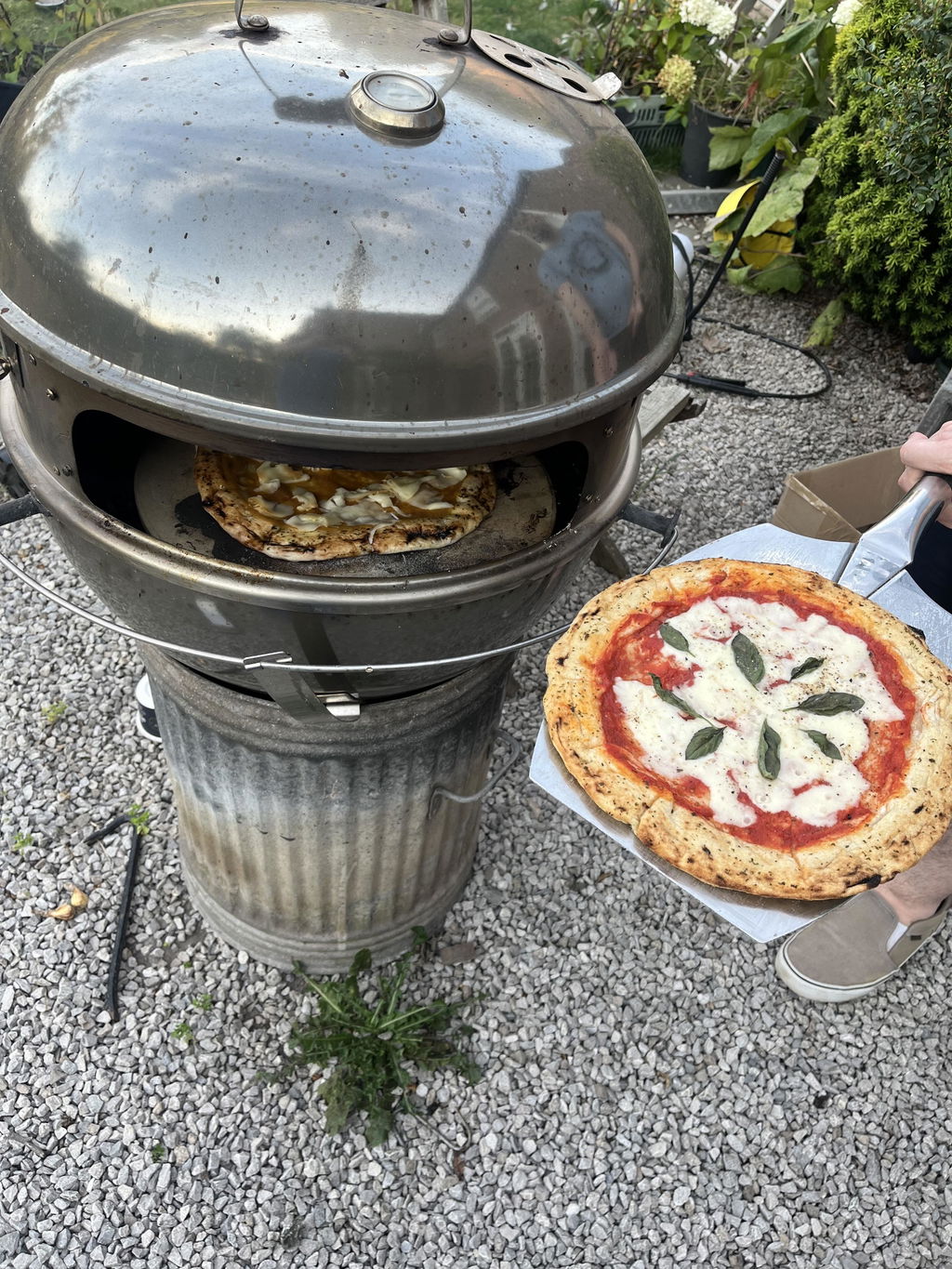
Outdoor pizza ovens and gas grills cook faster, often in 90 seconds to 2 minutes at much higher temperatures, and they free up your kitchen entirely for sides and prep. If you’re running one, keep a peel nearby and rotate the pizza halfway through for even charring.
No stone, no outdoor oven? A cast iron frying pan works as a genuine fallback: sear the base for 2 to 3 minutes, then finish under a hot broiler to melt the cheese.
- Preheat stone or steel well before the first pizza goes in.
- Par-bake bases ahead of time if you’re feeding a crowd in stages.
- Hold finished pizzas warm on a low oven setting, or insulate them in a cool bag lined with warmed bricks for outdoor parties, a trick BBC Good Food recommends for keeping pies hot without drying them out.
Timing and Portions: A Simple Schedule for Party Day
Plan on 2 to 3 slices per adult and 1 to 2 slices per child, then add one full extra pizza as a buffer. That buffer pizza matters more than people expect. It’s the difference between a relaxed second round and running back to the kitchen mid-party, a portion rule backed by hosting guides that recommend the same 3-slice baseline.
- 48 to 24 hours before: Make or order your dough, prep sauces, and shop for toppings that hold up in the fridge.
- 6 to 2 hours before: Portion dough into balls and let it rest at room temperature, chop vegetables, and set out cheese to come to temperature just before serving.
- Final 30 minutes: Preheat your stone or steel, arrange the toppings bar, and stretch the first few bases so guests can start building right away.
Rotate finished pizzas onto a warming tray or into a low oven so nobody’s pie goes cold while the next batch bakes.
Why This Menu Works: Publisher Expertise and Product Fit
This menu blueprint holds up because every rule in it traces back to how dough and heat actually behave, not guesswork. The 48-hour fermented dough balls incorporate resting principles Serious Eats recommends for home cooks, letting the dough develop flavor and stretch without tearing.
- The 48-hour fermentation window gives home ovens a fighting chance at pizzeria-style texture, even without a wood-fired setup.
- Pre-cooked bases remove the single biggest point of failure for first-time hosts: underbaked, gummy centers.
- Portion guidance (roughly one dough ball per adult) lines up with the slice rules used throughout this menu.
For deeper troubleshooting on ovens, stretching, or crust texture, the Doughdorks knowledge hub covers the fixes that come up most often at home.
Detailed Shopping List for a Pizza Party by Guest Count
Shopping gets simple once you tie every ingredient to a slice count rather than guessing. For 8 guests, working from the 1.5 pizzas per person rule, you’ll need roughly 10 to 12 dough balls, 900g to 1kg of tomato sauce, 800g to 1kg of fresh mozzarella, and 300 to 400g of a harder cheese like pecorino for finishing.
On the topping side, aim for 200 to 300g of each protein option (pepperoni, cooked sausage, prosciutto), 2 to 3 bell peppers, 250g of mushrooms, 2 to 3 red onions, and a large bunch each of basil and rocket for post-bake finishing. Round it out with a jar of good olives, a small tub of chili oil, and a bottle of extra virgin olive oil for drizzling.
For a group of 15 to 20, scale up dough balls and sauce accordingly, but keep your topping variety moderate rather than very extensive. Buying more of fewer things is always cheaper and less wasteful than buying a little of everything.
Don’t forget the sides: one large bag of salad greens per 6 to 8 guests, a loaf or two of crusty bread for garlic bread, and enough soft drinks or sparkling water to cover roughly 2 to 3 drinks per guest over a few hours. A quick tally on paper before you shop saves at least one panicked mid-party run to the corner shop.
Sample Pizza Party Menus You Can Copy Exactly
A classic Neapolitan night keeps things simple: tomato sauce, fresh mozzarella, basil, and a rocket and parmesan salad on the side, finished with a shared tiramisu for dessert. It’s the safest option for a mixed group that includes kids and picky eaters.
A build-your-own feast leans into variety: three sauces, all 8 to 10 toppings on offer, a chopped Italian salad, garlic bread, and a dessert pizza with Nutella and strawberries to close the night. This works best for groups of 8 or more who want to graze rather than sit down to a set meal.
A movie night mini-pizza menu swaps full-size pies for individual 6 inch bases, letting each guest build and bake their own without waiting on a shared oven queue. Pair it with a simple green salad and popcorn as a nod to the theme.
For a dietary-inclusive spread, build the menu around a naturally overlapping core: a vegan tomato and roasted vegetable pizza, a gluten-free margherita, and a standard meat-lovers option, so every guest has at least one pizza they can eat without a special request. Add a shared antipasti board that’s naturally dairy-free and gluten-free (olives, cured meats, marinated vegetables) so nobody’s left picking at a side salad while everyone else eats pizza.
Party Day Cooking Workflow, Step by Step
Start the oven or outdoor pizza oven first, before anything else. A stone or steel needs its full 45 to 60 minute preheat, and there’s no shortcut worth taking here. While it heats, lay out your toppings bar in the order guests will move through it: dough, sauce, cheese, proteins, vegetables, finishes.
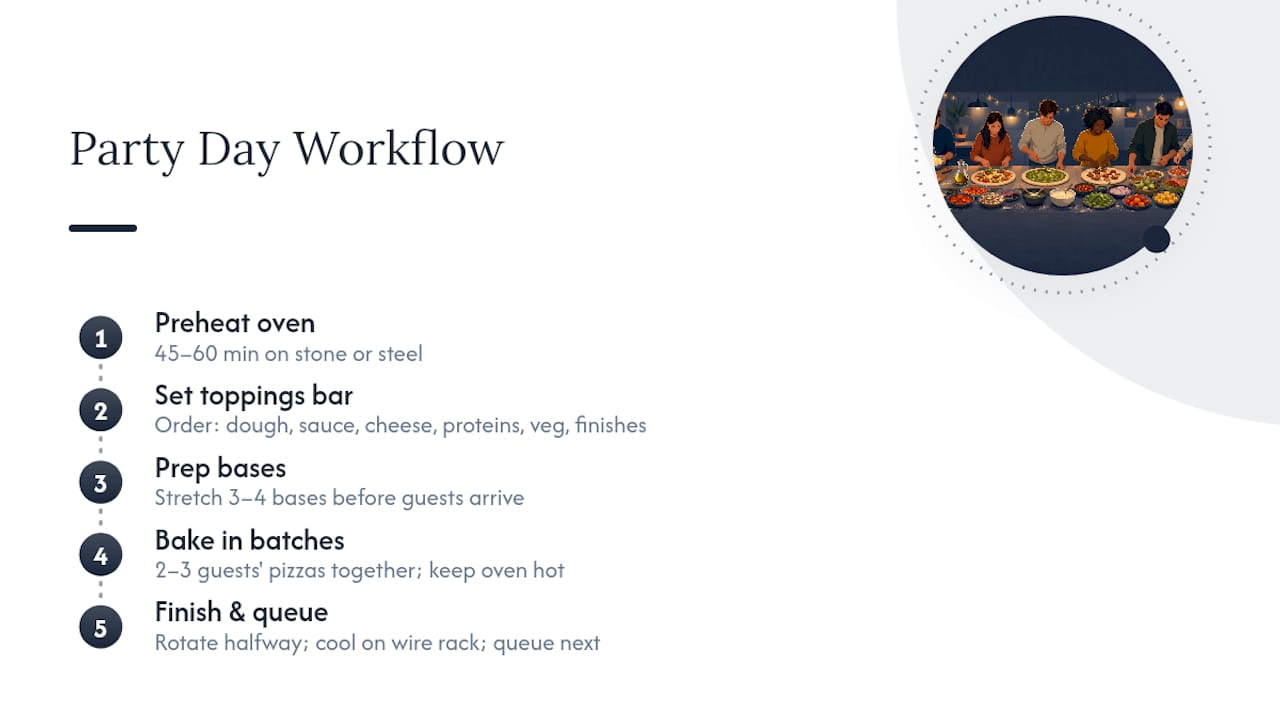
Stretch three or four bases ahead of the first guests arriving, so there’s no awkward wait once people are ready to eat. Once the party starts, work in small batches: let 2 to 3 guests build their pizzas at once, then bake them together to keep the oven running efficiently rather than cooking one pie at a time.
Rotate each pizza halfway through baking if using a stone, as oven temperatures can vary throughout. Pull pizzas the moment the crust hits deep golden brown with a few charred spots. A pizza that looks slightly underdone on the counter often finishes carry-over cooking on the way to the table.
Hold finished pizzas where steam can escape, such as on a wire rack, to keep the base from getting soggy. Keep a running queue: as one batch comes out, the next set of built pizzas should already be waiting by the oven door.
Managing Guests Around a Build-Your-Own Pizza Bar
The biggest risk with any DIY pizza bar isn’t the food. It’s the traffic jam that forms when six people try to reach the mozzarella at once. Set up two smaller stations instead of one long line if you’re hosting more than 10 guests, splitting the topping categories evenly so nobody waits behind the whole group.
Give clear instructions early, before people start building. A quick verbal walkthrough of the sauce, then cheese, then toppings order (and a nudge toward the right topping order for a crispy base) saves you from soggy, overloaded pies later.
Assign someone to manage the oven queue to keep things moving smoothly.
For kids, consider a separate lower table with pre-portioned dough and a smaller topping selection. It keeps enthusiastic small hands away from the hot oven and speeds up the adult line considerably.
Storing Leftovers and Make-Ahead Components
Leftover pizza keeps well in the fridge for up to 3 days in an airtight container or wrapped tightly in foil. Reheat it in a hot oven or dry frying pan rather than the microwave, which leaves the crust rubbery instead of crisp.
Unused dough balls freeze well for up to 3 months. Thaw them in the fridge overnight, then let them come to room temperature for the same 2 to 3 hour rest before stretching. Prepped sauces keep in the fridge for 4 to 5 days in a sealed container, and most hold up fine in the freezer for up to 2 months if you’re planning ahead for a future party.
Grated or torn cheese should go back in the fridge within an hour of the party ending. Chopped raw vegetables keep for 2 to 3 days, but anything roasted or cooked is best used within 2 days for texture’s sake. Par-baked bases that never made it into the oven freeze cleanly. Wrap them individually so they don’t stick together, and they’ll bake up almost as fresh as the day you made them.
Host Checklist and a Quick Note From the Publisher
Before guests arrive: count your dough balls (one per adult, plus a buffer pizza), set out three sauces, cap toppings at 8 to 10, and preheat your stone for a full hour. That’s the whole system.
Experience shows that fewer, better choices beat an overstuffed table for a successful pizza night. If dough timing has ever wrecked a party for you, that’s the one thing worth fixing first.
— Michael
Dough Dorks Products to Make Party Night Easier
There are ways to make every part of this menu from scratch, and plenty of hosts do. If you’d rather skip the fermentation math and still land a proper Neapolitan crust, this approach can get you there with less kitchen time and no guesswork on dough timing.

The 48-hour fermented dough balls are the closest thing to a shortcut that doesn’t cut corners. They’re made with Italian 00 flour and fresh yeast, and they arrive already through the resting window Serious Eats recommends, so you just portion, stretch, and bake. For hosts short on oven time, the pre-cooked Neapolitan bases cut baking down to a few minutes per pizza, which matters when you’re feeding a crowd in batches.
If your group likes variety, the mixed dough box with three flavors covers a bigger party without you having to portion and season dough yourself, and the curated topping and cheese collection pairs directly with the categories outlined earlier in this guide. Order a few days ahead of your party date to give delivery time to land comfortably before your prep window starts.
Sources
- Pizza party ideas | BBC Good Food
- Serious Entertaining: How To Throw a Pizza Party | Serious Eats
- How to use a pizza stone | KitchenAid
Recommended
- Host a Stress Free Pizza Party at Home with 4–5 Dough Balls from Dough
- The Right Pizza Toppings Order for a Crispy, Flavorful Pie
- make my pizza in 3 easy steps
- Authentic Pre-Cooked Neapolitan Pizza Bases (Pack of 8)
READY-MADE • FROZEN • UK DELIVERY
Skip the mixing. Keep proper dough in your freezer.
48-hour fermented, individually proofed in their own pot and delivered frozen across the UK. Defrost, stretch, top and bake.
-
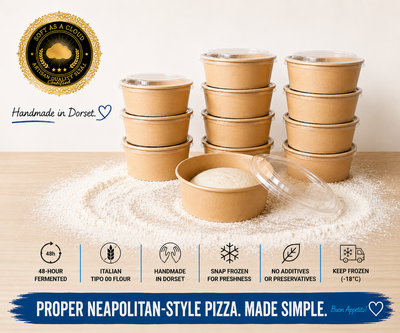 48-Hour Neapolitan-Style Pizza Dough Balls – Box of 12
£22.88
-
 48-Hour Neapolitan-Style Pizza Dough Balls – Box of 20
£32.30
-
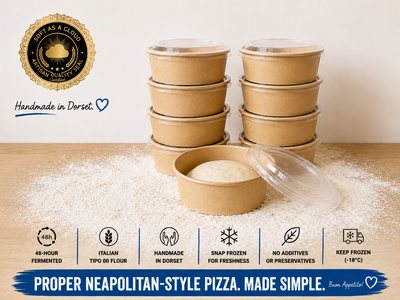 48-Hour Neapolitan-Style Pizza Dough Balls – Box of 8
£18
Handmade in Dorset • Free UK delivery over £50 • Free proofing pot with every dough ball