Keep Pesto Bright on Pizza With Two Stage Finish, No Soggy Crust
Make brighter, less soggy pesto pizza: spread 1/4 to 1/2 cup before baking, then top with fresh dollops after to keep basil bright and the crust crisp.
Yes, pesto makes an excellent pizza base, and it beats red sauce for anyone who wants a fresher, more herb-forward pie. The single rule that determines whether it works: spread a thin layer before baking, then finish with a fresh dollop the moment it comes out of the oven. Skip that second step and high heat mutes the basil into something dull and slightly bitter.
TL;DR:
- Using a thin layer of pesto before baking prevents greasiness and bitterness, with fresh dollops added after baking preserving basil’s bright flavor.
- A total pesto amount of half a cup divided between the base and finishing dollops optimizes flavor and avoids overpowering or soggy crusts.
- Patting dry mozzarella, roasting tomatoes, and leaving a border of plain crust are key steps to prevent soggy textures and maintain crispness.
- Longer fermentation of dough enhances gluten structure, reducing sogginess, while pre-cooked or store-bought bases eliminate par-baking steps for convenience.
- Store-bought pesto needs thinning and balancing with lemon juice or basil, and freezing extra pesto in ice cubes ensures quick, portioned finishing dollops.
Table of Contents
- How to Make Pesto Pizza: A Reliable Recipe
- How to Make Pesto That Works on Pizza
- Assembly and Baking: Getting the Moisture Right
- Best Pesto Pizza Topping Combinations
- Fixing Common Pesto Pizza Mistakes
- Where Pesto Pizza Came From
- Nutrition and Dietary Variations for Pesto Pizza
- Why the Dough Matters as Much as the Pesto
- Get the Right Base for Your Next Pesto Pizza
- Sources
How to Make Pesto Pizza: A Reliable Recipe
For one 12-inch pizza, you need less pesto than most people assume. Here’s what actually works:
- Dough: a moderate amount, stretched to a 12-inch round with a slightly thicker edge
- Pesto: a quarter to half a cup, spread thin, with more reserved for after baking
- Mozzarella: a moderate amount, torn and patted dry
- Tomatoes: some roasted cherry tomatoes, halved
- Finishing: grated Parmesan and a handful of fresh basil
Sally’s Baking Addiction recommends around half a cup of pesto per pizza, split between the base layer and the finish, along with red pepper flakes for anyone who wants a kick. That split matters more than the total amount. Too much pesto on the base before baking is the number one reason home pesto pizzas turn out greasy or bitter.
If you’re using a pizza stone or steel, preheat your oven as hot as it goes, typically very hot (near 250°C/480°F), for close to an hour before baking. A stone-baked pesto pizza usually finishes in under 10 minutes. Without a stone, a sheet pan works fine, though you may want to briefly par-bake the crust before adding toppings and then finish baking with pesto, cheese, and tomatoes on.
Store-bought shortcuts work well here. Jarred pesto needs a splash of extra virgin olive oil to loosen it for spreading. Pre-made dough or a pre-cooked Neapolitan base cuts the par-bake step out entirely since the crust structure is already set, which means you go straight to topping and finishing in one bake.
How to Make Pesto That Works on Pizza
A basic pesto pizza sauce leans on the same five ingredients every version starts with: basil, pine nuts, garlic, Parmesan, and olive oil. The difference between a pesto meant for pasta and one meant for pizza comes down to oil ratio. A table pesto is often thick enough to cling to noodles. For pizza, you want it loose enough to spread without tearing the dough, so add an extra tablespoon or two of oil beyond what a standard recipe calls for.
Nut swaps work fine if pine nuts are pricey or you’re out. Walnuts give a deeper, slightly bitter edge; almonds keep things milder and sweeter. Vegetarian hard cheeses widely available in supermarkets substitute cleanly for Parmesan if you’re avoiding animal rennet.
If you’re working from a jar, here’s the fix for most store-bought pesto:
- Thin it with a tablespoon of extra virgin olive oil per quarter cup until it moves easily off a spoon
- Add a small squeeze of lemon juice if the pesto tastes flat or overly oily
- Taste before spreading. Jarred pesto is often saltier than homemade, so go lighter on the base layer
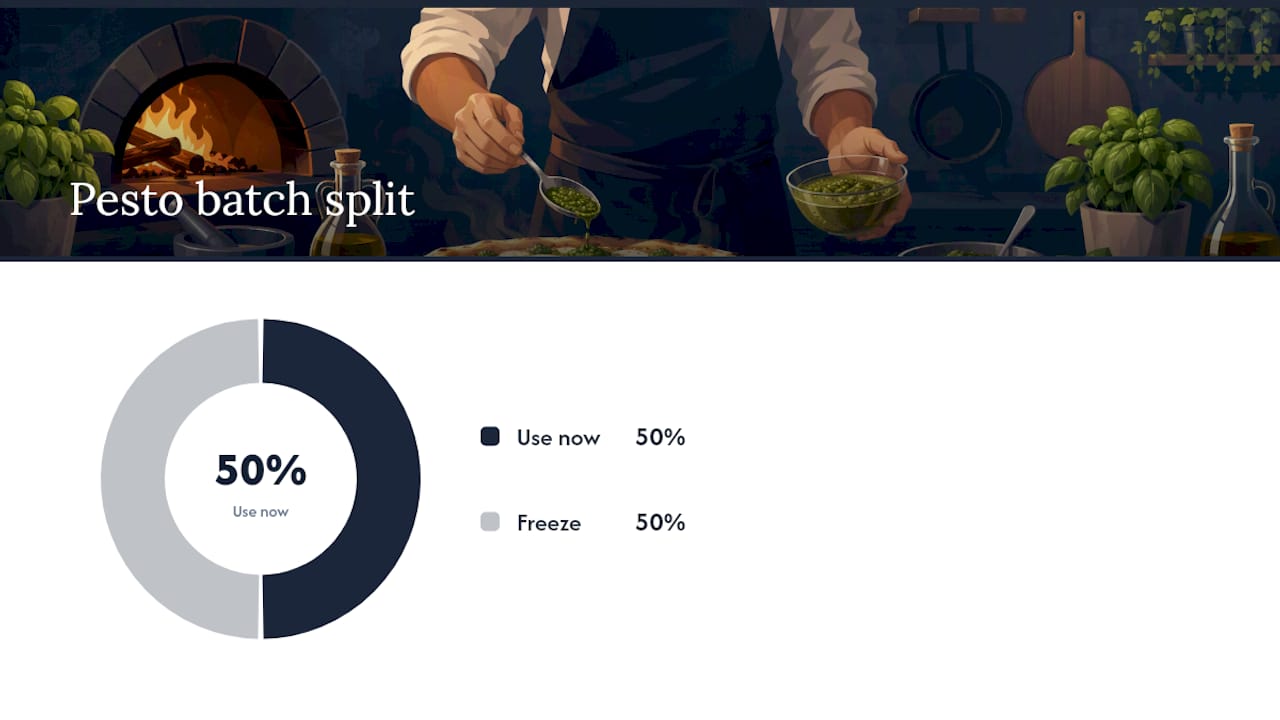
Pro Tip: Make double the pesto you think you need and freeze half in an ice cube tray. Frozen cubes thaw in minutes and give you pre-portioned finishing dollops for the next pizza night.
Assembly and Baking: Getting the Moisture Right
Soggy crust almost always traces back to moisture management, not the pesto itself. Fix these three things and most sogginess problems disappear.
- Drain and pat fresh mozzarella dry. Fresh mozzarella holds a surprising amount of water, and that water pools on the pizza as it bakes unless you drain and blot the cheese first.
- Roast your tomatoes instead of using them raw. Roasting cherry tomatoes concentrates their umami and drives off excess moisture, so they add flavor without watering down the base.
- Leave a one-inch border free of pesto and toppings. This lets the crust edge puff and brown properly instead of staying flat and pale under a wall of sauce.
Par-baking solves a different problem: it gives the crust structure before wetter toppings hit it. If you’re using a high-hydration, slow-fermented dough, par-baking for a few minutes before adding pesto and cheese keeps the center from turning gummy.
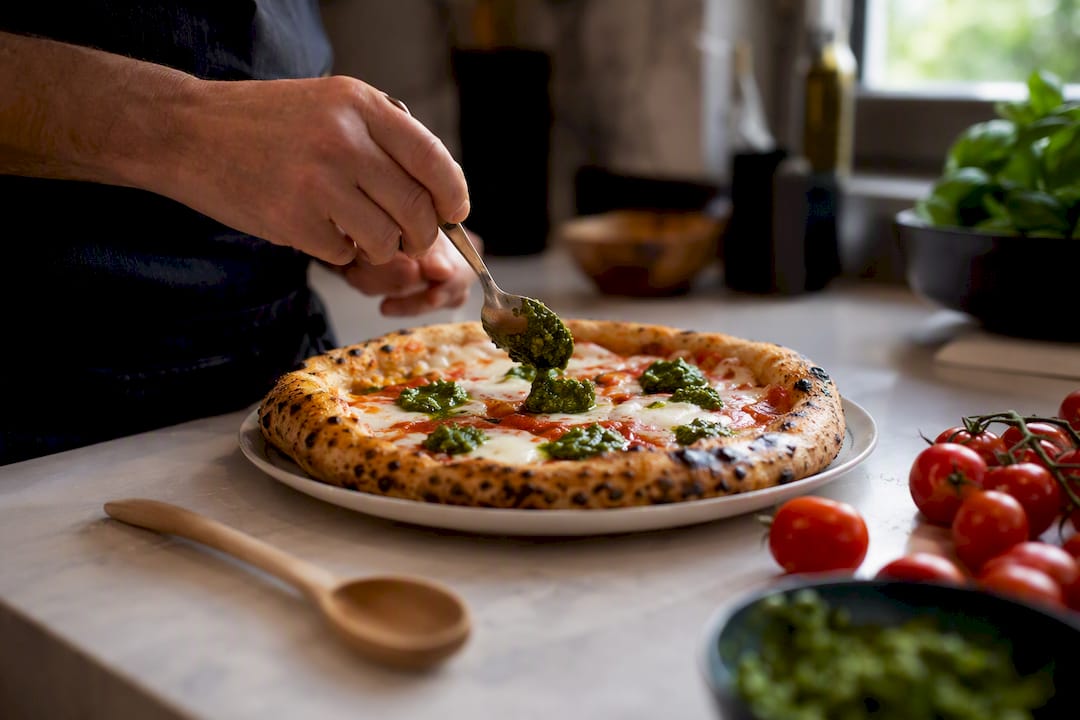
The two-stage pesto method is the technique that ties everything together. Spread a thin layer before the pizza goes in, then add fresh dollops the second it comes out. Basil is heat-sensitive, and prolonged oven exposure turns its bright, grassy flavor flat and occasionally bitter. Reserving fresh pesto for after baking sidesteps that entirely; you get the herb aroma at full strength instead of a muted version of it.
Best Pesto Pizza Topping Combinations
The classic combination is fresh mozzarella, roasted cherry tomatoes, grated Parmesan, and torn basil added after baking. It’s balanced, familiar, and forgiving for pesto pizza beginners.
For something richer, add dairy after the bake rather than before:
- Ricotta: small spoonfuls dotted around the pizza post-bake hold their shape and add creaminess without melting into the crust
- Burrata: torn open and placed in the center right after baking, letting the heat soften it slightly without cooking it through
- Fresh mozzarella pearls: work as a lighter alternative when you want creaminess without burrata’s richness
If you want heat, Calabrian chiles are the move. They sit around 25,000 to 40,000 Scoville units, a fruity, assertive heat that cuts through pesto’s oil and cheese instead of just adding spice for its own sake. Use them sparingly, chopped or as chili-infused oil, since a little goes further than red pepper flakes. A light drizzle of honey afterward balances the heat nicely if the chiles push things too far in one direction.
Fixing Common Pesto Pizza Mistakes
Most pesto pizza problems trace back to one of three causes, and each has a quick fix.
- Soggy crust. Cut back on pesto quantity, switch to a drier cheese, roast or drain your tomatoes, and par-bake the crust if you haven’t already.
- Bitter, dull basil. This almost always means the pesto spent too long in the oven. Pull back the pre-bake amount and lean harder on the post-bake finish. For big batches, blanching basil for a few seconds before blending also reduces bitterness.
- Pesto that’s too salty or too oily. Dilute it with a spoonful of neutral oil, or fold in extra fresh basil leaves to rebalance the flavor without thinning it too much.
Pro Tip: If your pesto separates or looks oily after sitting, give it a quick stir before spreading. Pesto naturally splits as the oil rises, and a stir brings it back to a cohesive sauce.
Where Pesto Pizza Came From
Pesto itself is Ligurian, tracing back to Genoa, where basil, garlic, pine nuts, cheese, and olive oil were ground by hand with a mortar and pestle, which is where the name comes from. It predates pizza’s modern rise as an export by centuries and started as a pasta condiment, not a pizza topping.
Pizza’s classic identity, on the other hand, is Neapolitan, built around tomato, mozzarella, and basil in combinations like the Margherita. Pesto pizza is a newer hybrid, born less from culinary tradition than from Italian regional ingredients crossing paths once pizza spread beyond Naples and cooks started treating it as a blank canvas for other regional sauces.
The pairing caught on because it solves a real problem: tomato sauce and basil already work together, so swapping tomato for a basil-forward pesto simply shifted the emphasis rather than reinventing the pizza. Once pizzerias outside Italy started experimenting with white pizzas and alternative bases in the late 20th century, pesto became one of the standard non-tomato options, alongside olive oil and garlic bases. It’s now common enough on menus that most home cooks encounter it long before they think to make it themselves.
Nutrition and Dietary Variations for Pesto Pizza
Pesto brings a different nutritional profile to pizza than tomato sauce. It’s higher in fat, largely from olive oil and pine nuts, which means a pesto pizza tends to be more calorie-dense per slice than a comparable tomato-based one. That fat is mostly unsaturated, and pine nuts add a modest amount of protein and healthy fats, but portion size still matters if you’re watching calories, since it’s easy to over-pour pesto straight from the jar.
Vegan pesto is straightforward to make at home: swap the Parmesan for nutritional yeast or a plant-based hard cheese, and the rest of the recipe holds up. Basil, garlic, nuts, and olive oil are all naturally plant-based, so the cheese is really the only substitution needed. Nut-free versions are trickier since pine nuts (or their walnut and almond substitutes) provide much of pesto’s body, but sunflower seeds or pepitas work as a reasonable stand-in for anyone with a tree nut allergy.
Gluten-free eaters can pair either homemade or store-bought pesto with a gluten-free crust without changing the sauce recipe at all. For anyone reducing sodium, going homemade rather than jarred is the easiest lever to pull. Store-bought pesto is often heavily salted, so a homemade batch lets you control salt directly rather than diluting a jar after the fact.
Why the Dough Matters as Much as the Pesto
Most pesto pizza advice fixates on the sauce and ignores the base it sits on, but a 48-hour fermented dough handles pesto’s oil content better than a same-day dough does. The longer fermentation builds gluten structure that resists sogginess, which is exactly the failure point pesto pizzas are prone to.
For a weeknight pizza, a pre-cooked Neapolitan base gets you consistent results with none of the par-baking guesswork. Fresh dough is worth the extra step when you want that classic puffed, blistered cornicione.
— Michael
Get the Right Base for Your Next Pesto Pizza
Getting pesto pizza right at home comes down to two things most people skip: a dough that can handle rich, oily toppings, and a base that doesn’t need a par-bake step you’ll forget halfway through. Doughdorks solves both. The 48-hour fermented dough balls give you the gluten structure that resists sogginess under a wet pesto and roasted tomato combination, while the pre-cooked Neapolitan bases skip par-baking entirely if you’re short on time.

Round out the pizza with a curated topping pack from the pizza toppings collection, which covers the cheeses and sauces this recipe calls for without a separate grocery run. If you’re new to the process, the three-step guide walks through ordering dough, adding toppings, and baking from start to finish. Order a dough ball or pre-cooked base today and you can have a properly fermented, pesto-ready crust on your counter in time for dinner.
Sources
- Pesto Pizza with Fresh Tomatoes & Mozzarella — Once Upon a Chef
- Pesto Pizza (Easy Recipe) — Sally’s Baking Addiction
- Calabrian pepper — PepperScale
Recommended
- Olive Oil for Pizza: How to Use the Right Oil
- The Right Pizza Toppings Order for a Crispy, Flavorful Pie
- How to Par Bake Pizza Dough for a Crispier Crust
- How to Use Olive Oil on Pizza: Timing, Types, and Amounts
READY-MADE • FROZEN • UK DELIVERY
Skip the mixing. Keep proper dough in your freezer.
48-hour fermented, individually proofed in their own pot and delivered frozen across the UK. Defrost, stretch, top and bake.
-
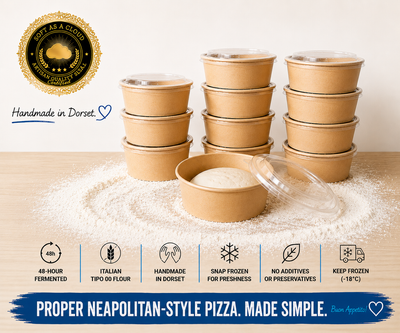 48-Hour Neapolitan-Style Pizza Dough Balls – Box of 12
£22.88
48-Hour Neapolitan-Style Pizza Dough Balls – Box of 12
£22.88
-
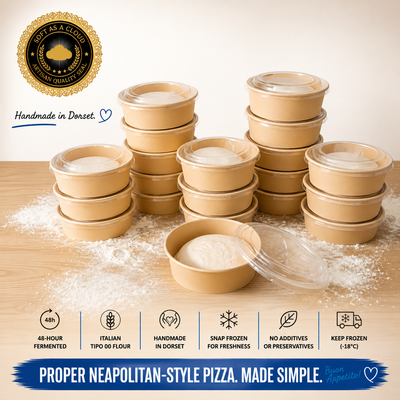 48-Hour Neapolitan-Style Pizza Dough Balls – Box of 20
£32.30
48-Hour Neapolitan-Style Pizza Dough Balls – Box of 20
£32.30
-
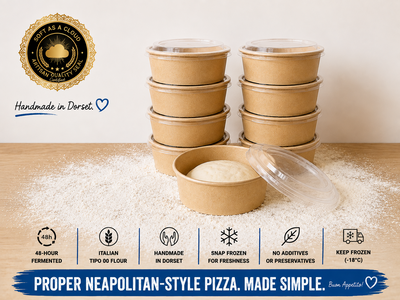 48-Hour Neapolitan-Style Pizza Dough Balls – Box of 8
£18
48-Hour Neapolitan-Style Pizza Dough Balls – Box of 8
£18
Handmade in Dorset • Free UK delivery over £50 • Free proofing pot with every dough ball