UK Home Cooks: Keep Oven Spring and Flavor When Defrosting Pizza Dough
UK friendly methods to defrost pizza dough without losing oven spring or flavor. Use 12–24hr fridge thaw, same day countertop, or a 45–60min water bath.
The best way to defrost pizza dough is a slow fridge thaw, giving frozen dough generally half a day to a full day before you plan to bake. If you’re short on time, a cold-to-lukewarm water bath gets sealed dough ready in about 45 to 60 minutes. Skip the microwave entirely. It cooks the outside before the center even thaws, and either method above will need a short rest afterward before the dough stretches properly.
TL;DR:
- Use the refrigerator to thaw pizza dough over 12 to 24 hours for optimal flavor and gluten recovery, especially for larger dough balls.
- In a pinch, a sealed dough in a cold water bath can thaw safely in 45 to 60 minutes if water is changed regularly and the bag remains intact.
- Avoid using the microwave, as it unevenly heats the dough, causing patchy textures and risking yeast death.
- After thawing, rest the dough at room temperature for up to an hour to allow proper tempering before shaping.
- Proper freezing practices, like portioning and double-bagging, help preserve dough quality and make thawing more consistent.
Table of Contents
- How to Defrost Frozen Pizza Dough: Methods at a Glance
- Fridge Thaw: The Recommended Method
- Countertop Thaw: The Same-Day Option
- Water Bath Quick Thaw: The Emergency Method
- Why Microwave Thawing Usually Wrecks the Dough
- Final Proofing and Tempering: Getting Dough Ready to Stretch
- Storage and Freezing Best Practices for Pizza Dough Balls
- Troubleshooting Sticky or Unworkable Dough
- Why These Steps Actually Work
- What Most Guides Get Wrong About Thawing Dough
- Skip the Guesswork With Ready-Made Dough Balls
- Sources
- FAQ
How to Defrost Frozen Pizza Dough: Methods at a Glance
Three real options exist, and one method you should never use.
- Fridge thaw: 12 to 24 hours, the best flavor and texture, needs planning ahead.
- Countertop thaw: 2 to 4 hours, works for same-day pizza nights if your kitchen isn’t too warm.
- Water bath thaw: 45 to 60 minutes, the fastest safe option when you forgot to plan.
- Microwave: avoid. It creates hot spots that partially cook the dough while the center stays frozen solid.
The decision rule is simple: if you have time, use the fridge. If it’s same-day, use the countertop. If it’s an emergency, use the water bath.
Fridge Thaw: The Recommended Method
A slow refrigerator thaw is the gold standard for one reason. Cold, gradual thawing lets the gluten structure and yeast recover instead of getting shocked by heat, which is exactly what happens with faster methods.
- Move the still-wrapped dough ball from the freezer straight to the fridge, 12 to 24 hours before you plan to bake.
- Keep it in its original wrap or a lightly oiled airtight container to stop a dry skin from forming.
- Check doneness with a gentle poke. It should feel cool but pliable, with no icy center.
- A standard 250 to 280 gram ball usually needs the full range; smaller portions thaw closer to the 12-hour mark.
- Once it’s out of the fridge, temper it at room temperature for 45 to 60 minutes before shaping, per the Baking Steel thawing guide.
Pro Tip: Set the dough on the counter still covered while you get your toppings ready. That waiting period doubles as your tempering time, so nothing gets wasted.
For a deeper breakdown of timing by dough weight, Dough Dorks’ guide on defrosting frozen pizza dough balls covers portion sizes in more detail.
Countertop Thaw: The Same-Day Option
Countertop thawing works when you need dough ready in a few hours instead of overnight.
- Keep the dough covered and lightly oiled so the surface doesn’t dry out or crust over.
- Expect 2 to 4 hours depending on the size of the ball and how warm your kitchen runs.
- Check every 30 minutes once you hit the two-hour mark. You’re watching for even softness, not a puffy rise.
- If your kitchen runs hot (above roughly 75°F), skip this method. The outside can over-proof while the middle is still frozen. Switch to the water bath instead.
Once it feels evenly soft with no cold center, move straight to tempering rather than letting it sit and keep proofing on the counter.
Water Bath Quick Thaw: The Emergency Method
This is your rescue plan when frozen dough shows up on a night you didn’t plan for it. A cold water bath is widely considered the quickest safe way to thaw dough, well ahead of any microwave shortcut.
- Keep the dough sealed in its original airtight bag. Water should never touch the dough directly.
- Submerge it in cool to lukewarm water, never hot.
- Change the water every 10 to 15 minutes to keep the temperature steady as it pulls cold from the dough.
- Expect a full thaw in 45 to 60 minutes, then temper at room temperature for another 30 to 45 minutes.
The most common mistake is a leaky bag that lets water in, which turns your dough gummy on one side. The second is using hot water to rush things, which warms the outer layer unevenly while the core stays frozen. Changing the water regularly also keeps things sanitary during the soak, since stagnant warm water invites bacterial growth.
Pro Tip: Double-bag the dough before it goes in the water. One small hole won’t matter if there’s a second layer of protection.
Why Microwave Thawing Usually Wrecks the Dough
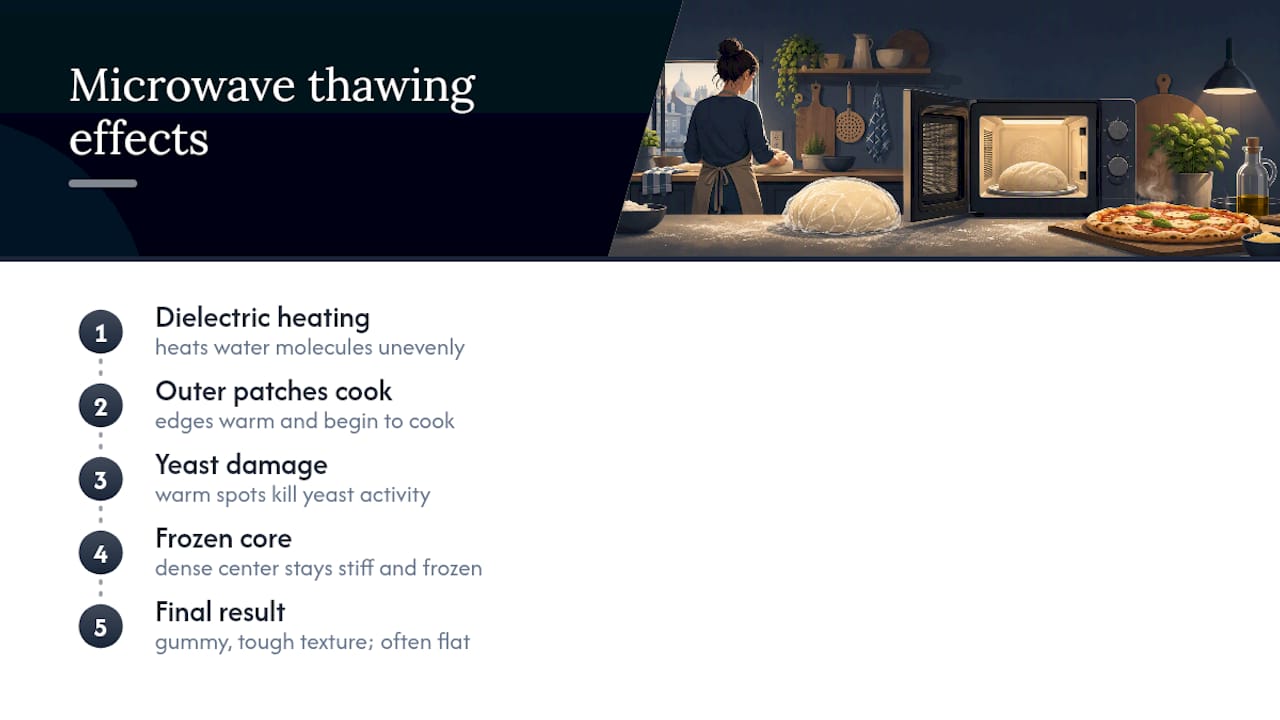
Microwaves don’t heat evenly. They rely on dielectric heating, which excites water molecules unevenly throughout the food, and dense dough is a particularly bad candidate for it. The outer edges can start cooking, or the yeast in those warm patches dies off, while the core stays frozen and stiff. The result is patchy texture: gummy in spots, tough in others, and often flat when it hits the oven because the yeast never had a fair shot at recovering.
If a microwave is genuinely your last resort, use the defrost setting only, in 10 second bursts, checking and flipping the dough between each one. It will still likely underperform compared to a fridge or water bath thaw.
Final Proofing and Tempering: Getting Dough Ready to Stretch
Thawed dough isn’t stretch-ready straight away. It needs a rest period, and how long depends on which method you used.
- After a fridge thaw: rest 45 to 60 minutes at room temperature.
- After a countertop thaw: 15 to 30 minutes is usually enough since it’s already closer to room temperature.
- After a water bath thaw: 30 to 45 minutes, since the dough warmed quickly and needs time to relax.
Test readiness with a gentle poke. The indentation should spring back slowly, not instantly and not stay sunken. If the dough resists and snaps back hard, it needs more time. Handle it as little as possible during this window, and keep it away from drafts or fans, which dry the surface and cause skinning. For more detail on reading proofing signs, see Dough Dorks’ guide on proofing pizza dough properly.
Storage and Freezing Best Practices for Pizza Dough Balls
Good thawing starts with good freezing. Freeze dough balls after they’ve finished bulk fermentation for the best flavor, and portion into 250 to 280 gram balls before freezing rather than freezing one large mass.
- Wrap each ball skin-tight in plastic, then double-bag or store in a freezer-safe airtight container.
- Label with the freeze date. It matters more than people think once several bags pile up.
- Aim to use frozen dough within 30 to 45 days for the best texture and rise.
- Refreezing is technically safe if the dough stayed refrigerated below 40°F the whole time, but expect a noticeable drop in quality each time you do it.
Troubleshooting Sticky or Unworkable Dough
Not every thaw goes perfectly, but most problems have an easy fix.
- Dough snaps back and won’t stretch: cover it and rest another 15 to 30 minutes, or re-ball it and try again after a short pause.
- Dough feels sticky: work in a little olive oil on your hands and surface rather than dusting with extra flour, which dries out the crust once baked.
- Dough feels slack or over-proofed: reshape it into a tight ball and give it a short cold rest in the fridge, or plan for a flatter, more rustic bake instead of a puffy-crust style.
- Dough smells sour or off, or looks gray and dry throughout: discard it. That’s freezer burn or fermentation gone too far, not something a rest will fix.
Pro Tip: If your dough is consistently sticky no matter what, the issue is usually too much surface moisture from condensation during thawing, not the dough itself. Pat it dry before handling.
Why These Steps Actually Work
Cold, slow thawing isn’t just the “safe” advice. It functions almost like a second cold ferment, giving yeast time to redistribute and flavor time to develop rather than getting shocked awake. Tests baking slowly thawed dough on a hot steel or stone show it can match fresh dough closely when handled this way. The trade-off is time in the freezer itself: dough held too long loses some oven spring regardless of how carefully you thaw it, which is why the 30 to 45 day window matters as much as the thaw method you pick.
What Most Guides Get Wrong About Thawing Dough
Most advice treats thawing as a single step: pick a method, wait, bake. That misses the part that actually determines whether your crust turns out right, which is tempering. A fridge thaw without a follow-up rest at room temperature gives you cold, tight dough that tears the moment you try to stretch it. That’s not a thawing failure. It’s a skipped step that gets blamed on the wrong method.
The other thing overlooked constantly is that timing ranges aren’t decoration. A 250 gram ball and a 400 gram ball don’t thaw at the same rate, and treating every dough ball like it needs the same 24 hours leads to either impatience or waste.
If there’s one priority above the rest, it’s this: match the thaw method to how much time you actually have, then respect the temper step every time. Cooks who buy pre-fermented dough are already halfway to consistent results, since a properly made ball behaves predictably. The thaw method just needs to not undo that groundwork.
— Michael
Skip the Guesswork With Ready-Made Dough Balls
Consistency is the real advantage here. When every dough ball starts from the same 48-hour fermentation and the same portion size, your fridge thaw timing stops being a guessing game.

Dough Dorks makes 48 hour Neapolitan pizza dough by weight, portioned and frozen at peak fermentation, so the thawing steps above work the same way every single time you order. If you want variety, the Italian herb ready-made dough balls give you a seasoned option without changing your thaw routine at all. Browse the full range on the pizza dough balls collection page, pick your size, and get dough in your fridge tonight ready for a proper thaw tomorrow.
Sources
- How to Freeze Pizza Dough Without Ruining It – Baking Steel
- How to Prep Frozen Pizza Dough? - Chef’s Resource
- How to Thaw/Defrost Frozen Pizza Dough (Without Ruining It) - PizzaLogic
- The Best Way to Thaw Frozen Pizza Dough | Lifehacker
FAQ
Does Frozen Pizza Dough Need to Rise After Thawing?
Yes. Thawed dough needs a tempering rest, ranging from 15 minutes after a countertop thaw up to 60 minutes after a fridge thaw, before it stretches without tearing.
How Long Should Pizza Dough Defrost?
A fridge thaw takes 12 to 24 hours and gives the best texture. A cold water bath thaws sealed dough in about 45 to 60 minutes if you’re short on time.
How Do You Bring Frozen Pizza Dough Back to Life?
Thaw it slowly in the fridge or quickly in a sealed water bath, then let it temper at room temperature until it feels soft and springs back slowly when poked. Handle it gently and avoid extra flour if it’s sticky.
Can I Defrost Pizza Dough in 7 Minutes?
Not safely. Even the fastest reliable method, a cold water bath, needs 45 to 60 minutes, and shortcuts like the microwave in a few minutes tend to cook the outside while the center stays frozen.
Recommended
- Keep Oven Spring When Hand Stretching Pizza Dough for Home Cooks
- How to Defrost Frozen Pizza Dough Balls
- Frozen vs Fresh Pizza Dough: Which Is Better?
- Can Pizza Dough Be Frozen? Yes - Here’s How
READY-MADE • FROZEN • UK DELIVERY
Skip the mixing. Keep proper dough in your freezer.
48-hour fermented, individually proofed in their own pot and delivered frozen across the UK. Defrost, stretch, top and bake.
-
 48-Hour Neapolitan-Style Pizza Dough Balls – Box of 12
£22.88
-
 48-Hour Neapolitan-Style Pizza Dough Balls – Box of 20
£32.30
-
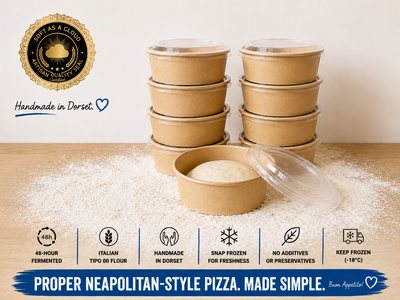 48-Hour Neapolitan-Style Pizza Dough Balls – Box of 8
£18
Handmade in Dorset • Free UK delivery over £50 • Free proofing pot with every dough ball