00 Flour for Pasta: A Home Cook's Complete Guide
Unlock the secrets of making perfect pasta with 00 flour. Discover why this fine flour is essential for achieving silky, homemade noodles.
00 flour is the best choice for fresh egg pasta. Use 100 g of tipo 00 flour to 1 large egg per serving, and you get a silky, pliable dough that rolls thin without tearing and cooks in 2–4 minutes. If you’re making extruded shapes or want a firmer bite, blend it 50:50 with semolina rimacinata — but for tagliatelle, pappardelle, or ravioli, pure 00 is hard to beat.
Key Takeaways
00 flour for pasta works best at 100 g per large egg, rested for 30–60 minutes, and blended with semolina only when your shape demands extra structure.
| Point | Details |
|---|---|
| Core ratio | Use 100 g tipo 00 flour to 1 large egg per serving; scale directly for larger batches. |
| Resting is non-negotiable | Rest dough 30–60 minutes at room temperature to relax gluten and prevent snap-back. |
| When to blend with semolina | Use a 50:50 00/semolina rimacinata blend for extruded shapes or pasta needing a firmer bite. |
| Buying tip | Check protein percentage (10–12% for egg pasta) and look for pasta-labeled 00, not pizza-labeled. |
| Doughdorks option | Doughdorks supplies Italian 00 flour with UK-wide delivery, matched to the protein range this guide recommends. |
Table of Contents
- What is 00 flour, and why does it matter for pasta?
- How does 00 flour compare with all-purpose, bread flour, and semolina?
- How do you pick the right 00 flour for pasta?
- A simple fresh egg pasta recipe using 00 flour
- Rolling, dusting, and keeping pasta from sticking
- When to substitute 00 flour, and when not to
- Where to buy 00 flour in the UK
- Quick fixes for common pasta dough problems
- Why 00 flour is the right call for fresh pasta
- Doughdorks 00 flour: a practical option for UK home cooks
- Sources
What is 00 flour, and why does it matter for pasta?
The “00” in tipo 00 refers to grind fineness, not protein content or wheat variety. It’s the finest classification in the Italian milling system, producing a powder-soft flour that hydrates quickly and forms a smooth, cohesive dough with minimal effort. Think of it as the opposite of coarse semolina — where semolina has a sandy, gritty texture, 00 feels almost like talc between your fingers.
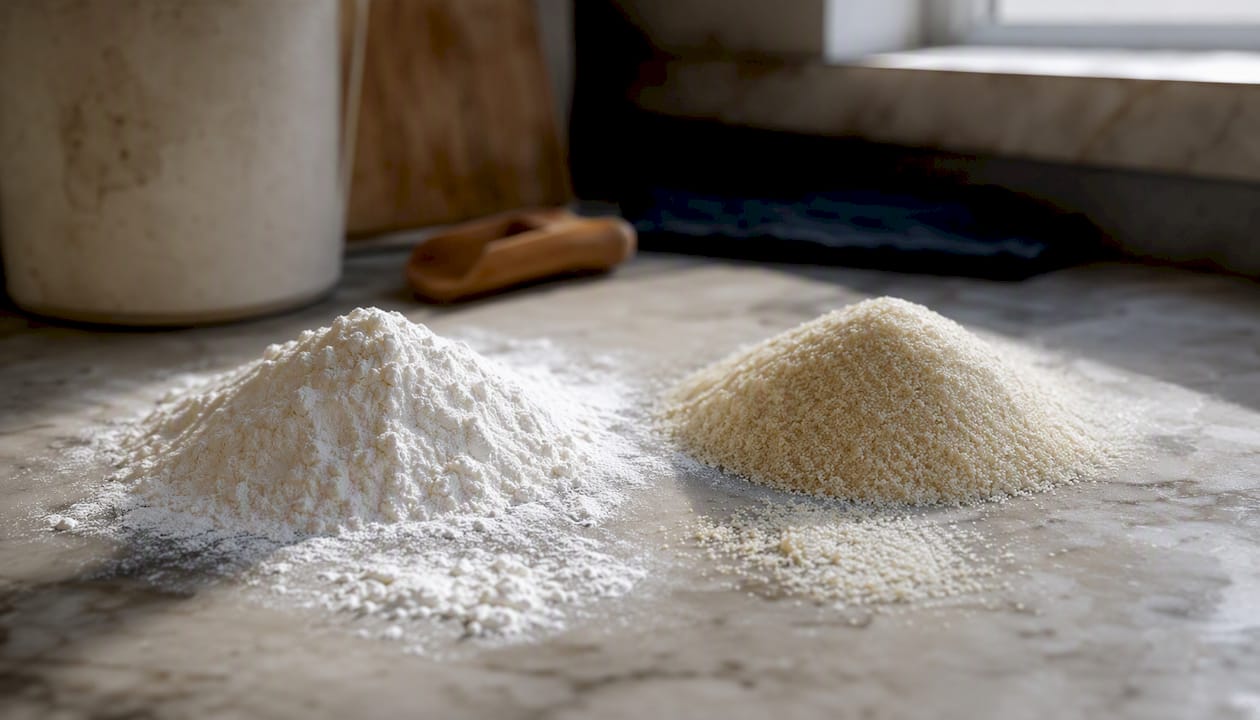
Most 00 flours are milled from soft or medium-hard wheat, which produces gluten that’s elastic enough to stretch thin but not so strong that it fights you. That balance is exactly what fresh pasta needs.
A few things worth knowing about protein in 00 flour:
- Pasta-labeled 00 flour typically has moderate protein content optimized for tenderness and elasticity.
- Pizza-labeled 00 flour often has higher protein content designed for fermentation and a chewier crust.
- Pastry 00 flour is softer and may not hold its shape well in pasta.
The “00” label alone tells you nothing about protein. Two bags from different producers can behave completely differently in the same recipe. Always check the protein percentage on the back of the bag.
How does 00 flour compare with all-purpose, bread flour, and semolina?
Flour choice shapes the final texture more than almost any other variable in fresh pasta. Here’s how the main options stack up:
| Flour | Protein Range | Texture Result | Best For |
|---|---|---|---|
| Tipo 00 (pasta) | Moderate protein content | Silky, tender, smooth | Egg pasta, filled shapes, thin ribbons |
| All-purpose | Moderate protein content | Workable, slightly less silky | Everyday substitute when 00 isn’t available |
| Bread / strong flour | Higher protein content | Chewier, more structured | Not ideal for fresh pasta |
| Semolina / durum | Higher protein content | Gritty bite, firm, holds sauce | Extruded shapes, dried pasta, dusting |
| 00 + semolina blend | Mixed protein content | Firm yet smooth | Rigatoni, penne, shapes needing structure |
America’s Test Kitchen confirms that all-purpose flour is a reasonable substitute in home kitchens, but 00 and semolina produce noticeably different textures. Bread flour creates gluten that’s too strong for delicate pasta — the dough springs back aggressively and the finished noodle chews more like a bagel than a ribbon of tagliatelle.
Semolina’s coarser grind adds grip and structure, which is why it works so well for shapes that need to hold a heavy ragù. For delicate filled pasta like tortellini or thin-rolled lasagne sheets, that grittiness is a liability. A 1:1 blend of 00 and semolina rimacinata (finely milled durum) splits the difference: smooth enough to roll, firm enough to hold shape through extrusion or a thick sauce.
How do you pick the right 00 flour for pasta?
Not all 00 flours are interchangeable. The label “00” is a milling grade, not a quality guarantee or a use-case promise. Before you buy, check these four things:
- Protein percentage. For egg pasta, aim for 10–12%. Higher protein means more chew and more resistance when rolling.
- Intended use. Look for “pasta” or “all-purpose” on the label. Pizza 00s are engineered for fermentation, not for the quick hydration fresh pasta needs.
- Grind description. “Finely milled” or “tipo 00” on a UK bag is a good sign. Some imported Italian brands state the ash content (lower ash = finer, whiter flour).
- Bag size. For a first test, a 1 kg bag is plenty. You’ll know within one batch whether the protein level suits your preferred texture.
As The Kitchn explains, 00 flours vary significantly by producer and intended use — a bag labeled for pizza may behave very differently from one labeled for pasta, even at the same protein percentage.
Pro Tip: Buy a small bag of pasta-specific 00 before committing to a 5 kg sack. One 200 g test batch (2 eggs, 200 g flour) tells you everything about how that flour hydrates and handles.
A simple fresh egg pasta recipe using 00 flour
This is the ratio that works: 100 g 00 flour to 1 large egg, per serving. Scale it directly — 4 servings means 400 g flour and 4 eggs. For a slightly richer dough, swap one whole egg per 200 g flour for an extra yolk.
A practical 2-serving batch: 200 g 00 flour, 2 eggs, and optionally 2 tsp olive oil. Silvia Baldini recommends leaving salt out of the dough entirely so the pasta stays a neutral canvas that absorbs sauce flavors better — a traditional Italian approach worth trying.
Step-by-step method
- Make a well. Mound the flour on a wooden board or in a wide bowl. Create a well in the center large enough to hold the eggs without spilling.
- Add eggs. Crack eggs into the well. Beat lightly with a fork, then gradually draw flour in from the inner wall.
- Bring it together. Once the dough is shaggy and holds together, use your hands. Knead for 8–10 minutes until smooth and slightly tacky — it should feel like firm Play-Doh, not sticky.
- Rest. Wrap tightly in cling film and rest at room temperature for 30–60 minutes. This is not optional. Gluten needs time to relax before the dough will roll thin without snapping back.
- Roll. Divide into portions. On a lightly floured surface, roll to your target thickness — roughly 1–2 mm for tagliatelle, thinner for filled pasta. A pasta machine makes this easier; start at the widest setting and work down gradually.
- Cut and dust. Cut to shape and dust lightly with semolina or 00 flour to prevent sticking.
- Cook. Drop into well-salted boiling water. Fresh pasta cooks fast — 2–4 minutes depending on thickness. Taste at 2 minutes.
| Step | Time | What to look for |
|---|---|---|
| Kneading | 8–10 min | Smooth, slightly tacky surface |
| Resting | 30–60 min | Dough relaxes, no spring-back |
| Rolling | 5–10 min | Even thickness, no tearing |
| Cooking | 2–4 min | Tender bite, no raw flour taste |
Rolling, dusting, and keeping pasta from sticking
The two biggest hands-on problems home cooks hit are snap-back during rolling and sheets sticking together after cutting. Both are fixable.
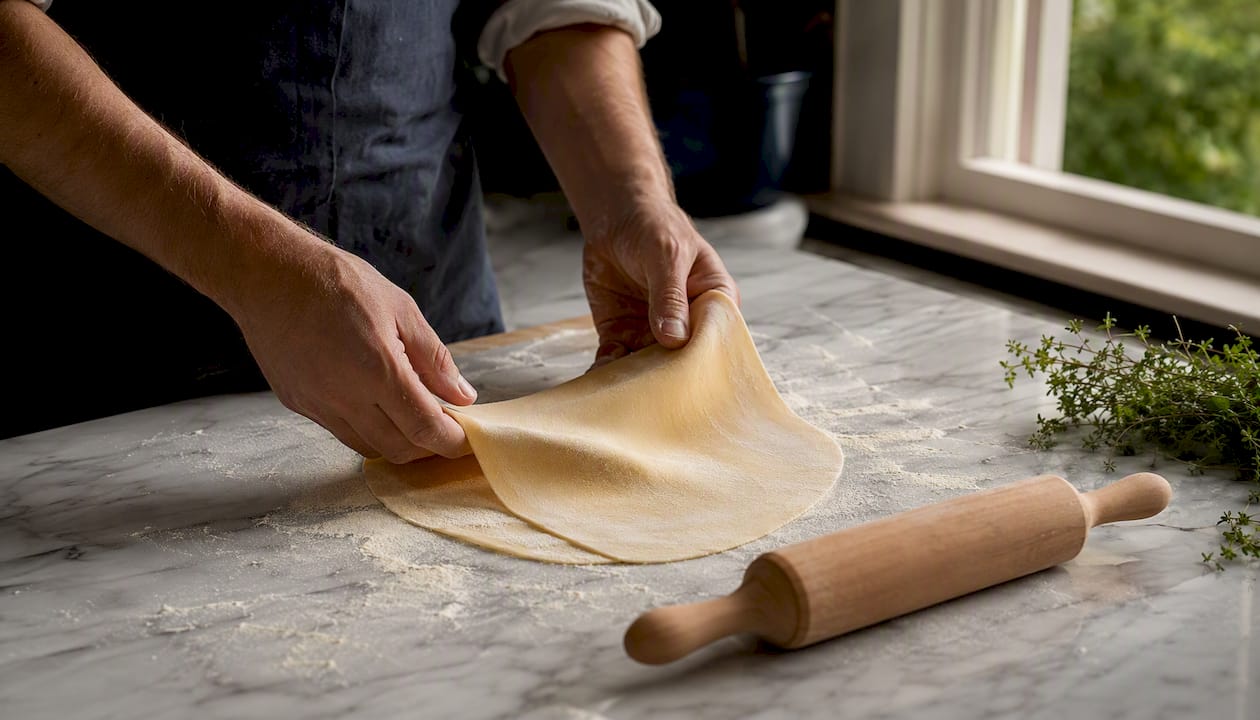
On snap-back: if your dough keeps shrinking when you roll it, the gluten hasn’t relaxed enough. Wrap it back up and give it another 15 minutes. Resting is the most underrated technique in pasta-making — the New York Times Cooking team describes it as one of the most effective single steps for smoother rolling.
On dusting: use semolina for cut noodles you’re setting aside. It’s coarser, so it doesn’t clump and keeps strands separate. For rolling and shaping, stick with 00 flour — semolina under a thin sheet can cause uneven texture. A fresh pasta recipe from Salt + Olive uses semolina specifically for the final toss of cut noodles, which is the right call.
On working surfaces: Silvia Baldini recommends a wooden board for hand mixing and kneading. Wood provides friction that helps the dough come together; a slick marble or granite counter makes early kneading harder, especially for beginners. Finish the last few minutes of kneading by hand even if you started in a stand mixer — it’s the only way to accurately judge texture.
Pro Tip: Hang cut noodles over a wooden spoon resting across two mugs for 10–15 minutes before cooking. They dry slightly on the outside, which stops them from clumping in the pot.
When to substitute 00 flour, and when not to
If you don’t have 00 on hand, all-purpose flour works as a 1:1 substitute. The dough will be slightly less silky and may need a touch more water, but the result is still good pasta. Expect a marginally chewier bite and a slightly rougher surface texture.
Here’s how the substitutes break down:
- All-purpose flour (1:1 swap): works well for most egg pasta shapes; hydration may need a small adjustment of a teaspoon or two of water.
- Semolina rimacinata (50:50 with 00): adds bite and structure; ideal for pappardelle with heavy meat sauces or for extruded shapes like rigatoni.
- Pure semolina (no 00): produces a very firm, gritty dough that’s difficult to roll thin by hand; better suited to dried pasta production or dusting.
- Bread / strong flour: too much gluten development; the dough fights back and the noodle chews more than most people want from fresh pasta.
When not to use pure 00: if you’re making pasta for extrusion (a pasta machine that pushes dough through dies), pure 00 can be too soft and may collapse under pressure. A 50:50 blend with semolina rimacinata gives the structure those shapes need. The same logic applies if you want pasta that holds up to a very long braise or a thick, heavy sauce.
Where to buy 00 flour in the UK
00 flour is more widely available in the UK than it was a decade ago. Here’s where to look:
-
Italian delis and specialty grocers: the most reliable source for pasta-specific 00, often stocking brands like Caputo or De Cecco. Staff can usually tell you the protein percentage.
-
Major supermarkets (Waitrose, Sainsbury’s, Ocado): carry own-brand or imported 00, though these are often pizza-labeled. Check the protein percentage before buying.
-
Online retailers: wider selection, easier to compare protein percentages across brands, and often cheaper per kilogram for larger bags.
-
Doughdorks: sources Italian 00 flour as part of its authentic Neapolitan pizza ingredient range. The flour is the same grade used in its 48-hour fermented dough balls — milled fine, with the protein level suited to both pasta and pizza dough. UK-wide delivery means you can order alongside other Italian ingredients and have everything arrive together.
When buying online, look for bags that state the protein percentage clearly and specify the intended use. A milling date is a bonus — fresher flour hydrates more predictably.
Quick fixes for common pasta dough problems
Sticky dough: the dough is absorbing humidity or the eggs were large. Dust your hands and the board with a little 00 flour and knead it in gradually. Don’t add too much at once — a teaspoon at a time is enough.
Dry, crumbly dough: not enough liquid. Add water half a teaspoon at a time, kneading between additions. This usually happens when eggs are small or the kitchen is dry.
Snap-back when rolling: gluten is still tight. Wrap and rest for another 15–20 minutes. If it’s still fighting you after a full hour of total rest, the flour may have a higher protein content than expected.
Gummy, sticky finished pasta: overcooked. Fresh pasta goes from perfect to gummy fast. Start tasting at 2 minutes. It should have a slight bite — not raw, but not soft all the way through.
Pasta sticking in the pot: not enough water, or you didn’t stir in the first 30 seconds. Use a large pot, plenty of well-salted water, and stir immediately after dropping the pasta in.
When to start over: if the dough tears repeatedly during rolling and resting hasn’t helped, the hydration is off. A new batch takes 10 minutes to mix — faster than fighting a bad dough.
Why 00 flour is the right call for fresh pasta
Most pasta guides treat flour choice as a footnote. It isn’t. The difference between a batch made with 00 and one made with bread flour isn’t subtle — it’s the difference between pasta that drapes over a fork and pasta that chews like a bread roll.
What makes 00 work isn’t mystique. It’s physics: a fine grind hydrates evenly, soft wheat gluten stretches without tearing, and moderate protein gives you elasticity without excessive resistance. The 100 g to 1 egg ratio has been used by Italian home cooks for generations because it works across egg sizes, humidity levels, and skill levels.
The one thing most home cooks underestimate is resting time. Thirty minutes feels like a lot when you’re hungry, but it’s the single step that separates pasta that rolls beautifully from pasta that fights you every centimeter. Gluten needs time to relax. Give it that time and the rest of the process becomes noticeably easier.
For anyone curious about how the same gluten principles apply to pizza dough, the Doughdorks guide to chewy pizza dough covers the hydration and protein mechanics in detail — the overlap with pasta is real and worth reading.
Doughdorks 00 flour: a practical option for UK home cooks
Fresh pasta made with the right 00 flour is noticeably better than pasta made with whatever’s in the cupboard.

Doughdorks sources Italian 00 flour at the same grade used in its 48-hour Neapolitan pizza dough — powder-fine, pasta-ready, and shipped UK-wide with fast delivery. It matches every point on the buying checklist in this guide: protein percentage in the right range, fine grind, and labeled for authentic Italian use. If you want to skip the supermarket guessing game and order flour alongside other Italian ingredients, the Doughdorks store is the straightforward option. Head to Doughdorks to order.
Sources
A short list of reliable sources used in this guide, worth bookmarking for deeper reading:
- What Is 00 Flour — Pizza and Pasta Flour | The Kitchn
- Choosing the best flour for pasta | America’s Test Kitchen
- Basic Pasta Dough | Silvia Baldini
- How to make chewy homemade Italian egg pasta using Italian 00 flour | Biting at the Bits
Recommended
- Best Pizza Dough Balls for Home Cooks (2026 Guide)
- Neapolitan Pizza Dough: Authentic Recipe for Home Ovens
- Best Cheeses for Pizza: A Home Cook’s Guide
- The Best Mozzarella for Pizza: A Home Cook’s Guide
READY-MADE • FROZEN • UK DELIVERY
Skip the mixing. Keep proper dough in your freezer.
48-hour fermented, individually proofed in their own pot and delivered frozen across the UK. Defrost, stretch, top and bake.
-
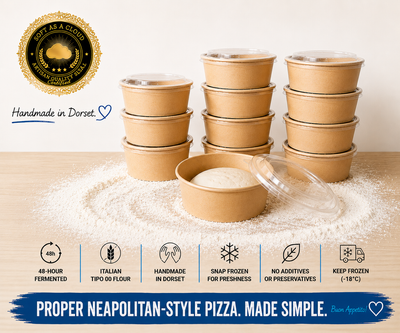 48-Hour Neapolitan-Style Pizza Dough Balls – Box of 12
£22.88
48-Hour Neapolitan-Style Pizza Dough Balls – Box of 12
£22.88
-
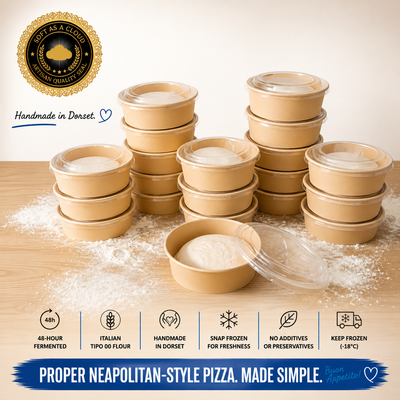 48-Hour Neapolitan-Style Pizza Dough Balls – Box of 20
£32.30
48-Hour Neapolitan-Style Pizza Dough Balls – Box of 20
£32.30
-
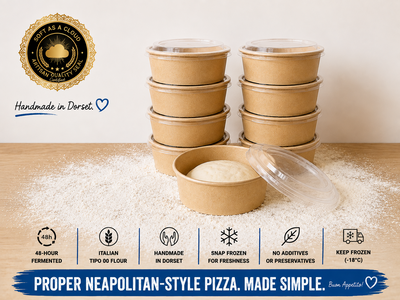 48-Hour Neapolitan-Style Pizza Dough Balls – Box of 8
£18
48-Hour Neapolitan-Style Pizza Dough Balls – Box of 8
£18
Handmade in Dorset • Free UK delivery over £50 • Free proofing pot with every dough ball