How to Proof Pizza Dough Properly: Room Temperature vs Cold Proofing
Quick answer: pizza dough is properly proofed when it is soft, relaxed and slightly puffy, with enough gas inside to stretch without snapping back. Temperature matters as much as time, so judge the dough by how it feels rather than relying on the clock alone.
Quick answer
Pizza dough is properly proofed when it has had enough time for fermentation to create gas, flavour and a relaxed gluten structure. For home pizza, the two main approaches are cold proofing in the fridge and final proofing at room temperature.
If you are using Dough Dorks frozen dough balls, the long fermentation has already been done for you. After defrosting, your main job is to let the dough become fully thawed, soft and relaxed before stretching.
What does proofing pizza dough mean?
Proofing is the period when yeast ferments the dough and produces carbon dioxide. That gas becomes trapped in the gluten network, helping create a lighter crust and the airy rim associated with Neapolitan-style pizza.
Time also allows flavour to develop and the dough structure to relax, which can make stretching much easier.
Cold proofing vs room-temperature proofing
Cold proofing
Cold proofing means fermenting dough slowly in the fridge. The colder temperature slows yeast activity and gives the dough more time to develop flavour without racing through fermentation.
Long cold fermentation is one reason a well-made pizza crust can taste much more developed than a dough mixed and baked on the same day.
Room-temperature proofing
Room-temperature proofing is faster because yeast becomes more active as the dough warms. It is useful as the final stage before stretching, particularly after chilled or frozen dough has been brought back up to a workable temperature.
How long should pizza dough proof?
There is no universal proofing time. It depends on yeast quantity, dough temperature, room temperature, flour and the fermentation method.
That is why it is better to judge the dough itself rather than rely only on a clock.
How can you tell when pizza dough is ready?
Ready-to-use dough should normally feel soft, aerated and relaxed rather than dense and tight. Look for:
- a slightly puffy appearance
- a soft feel when gently pressed
- some visible gas or bubbles
- dough that stretches without immediately snapping back
- no frozen or cold, firm centre
If it feels tight and keeps shrinking, it needs more time to relax.
How to proof frozen pizza dough balls
With frozen dough, first make sure the ball is fully thawed. Keep it covered while defrosting so the surface does not dry out.
- Remove the number of dough balls you need from the freezer.
- Keep them covered in their proofing containers while they thaw.
- Allow the centre to defrost fully.
- Let the dough continue warming until soft and relaxed.
- Stretch only when it gives easily under gentle pressure.
For Dough Dorks dough balls, around 18–20°C is a useful handling temperature.
Our defrosting guide covers this process in more detail.
Can pizza dough be over-proofed?
Yes. If dough ferments for too long, the gluten structure can weaken and the dough may become excessively gassy, sticky or difficult to handle. In severe cases it can collapse rather than hold its shape.
Over-proofing is another reason temperature matters. A warm kitchen speeds fermentation considerably.
Can pizza dough be under-proofed?
Yes. Under-proofed dough often feels dense, tight and difficult to stretch. It may keep springing back and can bake with a heavier texture.
If your dough is fighting you, do not immediately force it wider. Give it more time and reassess.
Why 48-hour fermentation matters
Dough Dorks pizza dough is slowly fermented for 48 hours before being portioned and frozen. That means the time-consuming fermentation stage has already taken place before it reaches your freezer.
This gives you the convenience of a ready-portioned dough ball while retaining the flavour and handling benefits of slower fermentation.
Read more in our 48-hour pizza dough guide.
Should dough be covered while proofing?
Yes. Keeping dough covered prevents the outer surface from drying and forming a skin. A dry skin can make stretching uneven and may cause tearing.
What happens after proofing?
Once your dough is ready, lightly flour it, release it from the container and stretch by hand. Try to keep the gas in the outer rim rather than pressing it flat.
Our stretching guide explains the technique step by step.
Ready-made dough without the fermentation planning
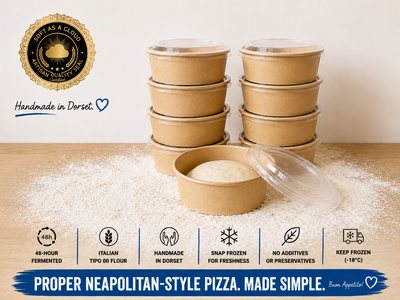
If you want the mixing, long fermentation and portioning already handled, browse our 48-hour fermented pizza dough balls. Each standard ball is around 265g and designed for roughly a generous 12-inch pizza.
READY-MADE • FROZEN • UK DELIVERY
Skip the mixing. Keep proper dough in your freezer.
48-hour fermented, individually proofed in their own pot and delivered frozen across the UK. Defrost, stretch, top and bake.
-
 48-Hour Neapolitan Pizza Dough Balls – Box of 12
£26
-
 48-Hour Neapolitan Pizza Dough Balls – Box of 20
£38
-
 48-Hour Neapolitan Pizza Dough Balls – Box of 8
£20
Handmade in Dorset • Free UK delivery over £50 • Free proofing pot with every dough ball