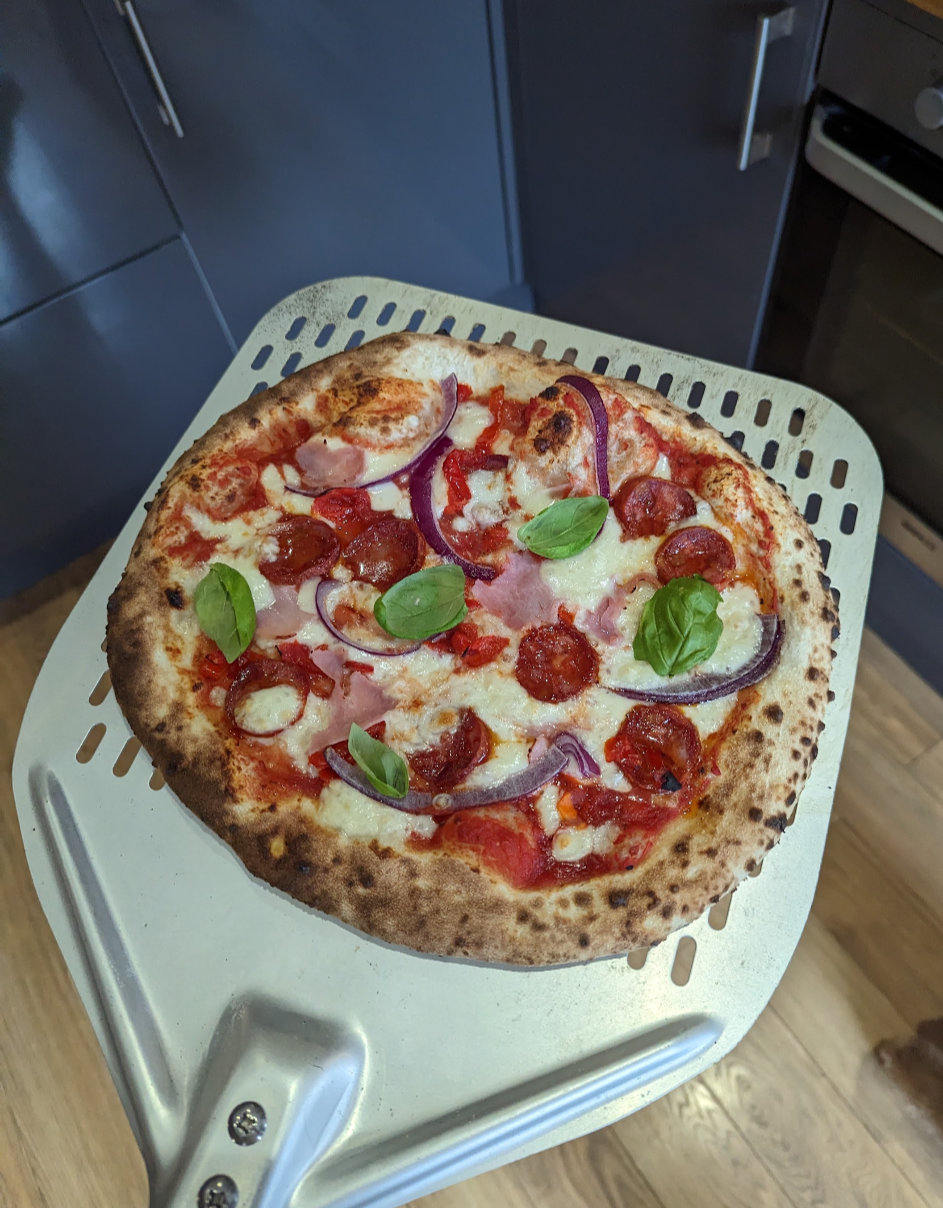
Authentic Neapolitan Pizza Toppings: The Complete Guide
Share
Explore classic Neapolitan pizza toppings, from Margherita and Marinara to Fior di Latte, 'Nduja, Scamorza, Spianata, truffle and EVOO.
Neapolitan pizza is not about piling on as many toppings as the dough can carry. The style works because the ingredients are good, the combinations are simple and the crust still gets to be part of the meal.
There is also an important distinction between strict Verace Pizza Napoletana and the wider world of traditional Neapolitan-style toppings. Under AVPN rules, Marinara and Margherita are the two reference pizzas, while other variations can still be recognised when they are rooted in Neapolitan tradition and respect Italian gastronomy.
This guide starts with those classics, then moves into the Italian cheeses, meats and finishing ingredients that work brilliantly on Neapolitan-style dough at home.
The foundation of great Neapolitan pizza toppings
The best topping list in the world cannot rescue a pizza that is overloaded. Neapolitan pizza depends on balance: enough tomato to season the centre, enough cheese to give richness, enough topping to create character, and enough uncovered surface for the heat to reach the dough.
A properly fermented base matters just as much. Our 48-hour fermented pizza dough balls are designed for exactly this kind of fast, high-heat pizza.
Pizza Margherita: the benchmark
The classic Margherita is the easiest pizza to understand and one of the hardest to improve by adding more things. The essential combination is tomato, mozzarella or fior di latte, fresh basil and extra virgin olive oil, with grated cheese used in traditional specifications where appropriate.
The reason it works is contrast. Tomato gives acidity and sweetness. Fior di latte brings clean, milky richness. Basil adds fragrance and extra virgin olive oil ties everything together.
If you want to judge dough, sauce or oven technique, make a Margherita. There is nowhere for a weak ingredient to hide.
Pizza Marinara: proof that cheese is not essential
Traditional Marinara is built around tomato, garlic, oregano and olive oil. No mozzarella is required.
That simplicity makes the quality of the tomato sauce even more obvious. Garlic should bring aroma without dominating every bite, while oregano and olive oil add the unmistakable savoury Mediterranean finish.
Start with our authentic Neapolitan pizza sauce guide if you want the tomato base right before you start experimenting with toppings.
Fior di latte and mozzarella
For many home pizza makers, cheese is where a Neapolitan pizza begins. Fior di latte is fresh cow's milk mozzarella and a classic choice because it melts cleanly while keeping a fresh, milky flavour.
Use it in pieces rather than as a solid blanket. If the cheese is wet, drain it before baking. Our guide to stopping mozzarella making pizza soggy explains the moisture side in detail.
Buffalo mozzarella gives a richer, tangier result but usually carries more moisture, so it needs a little more care in a home oven.
Scamorza: when you want more character
Scamorza is a stretched-curd Italian cheese with a firmer texture and deeper flavour than fresh mozzarella. Smoked scamorza is especially useful when you want a savoury, smoky note without loading the pizza with lots of meat.
Try it with mushrooms, sausage, roasted peppers or a small amount of spicy salami. It can be used alongside fior di latte rather than replacing it completely.
'Nduja: a little goes a long way
'Nduja is a soft, spicy Calabrian pork salume. It is not one of the two strict AVPN reference toppings, but it has become a hugely popular Italian ingredient on contemporary Neapolitan-style pizza.
Dot it across the pizza rather than spreading a thick layer. As it cooks, the fat and chilli melt into the tomato and cheese, so a small amount can season the whole pizza.
It works particularly well with fior di latte, red onion, a little honey after baking if you like sweet heat, or simply tomato and basil.
Spianata Piccante: spicy salami with structure
If you want slices rather than a soft spicy paste, Spianata Piccante is a great option. It gives you chilli heat, cured-pork flavour and crisped edges under high heat.
Keep the rest simple: tomato, fior di latte, a restrained amount of Spianata and perhaps basil or a drizzle of good olive oil after the bake.
Salsiccia and Italian sausage
Italian sausage brings a different kind of richness from cured meat. It can work beautifully with mushrooms, friarielli-style greens, smoked cheese or chilli.
The important thing is food safety and portion size. If you are using raw sausage, make sure the pieces are small enough and the cooking method is appropriate to cook the meat safely. If your very fast pizza bake does not give you confidence that raw meat will cook through, pre-cook it before topping the pizza.
Mushrooms, vegetables and herbs
Vegetable toppings are brilliant on Neapolitan-style pizza, but moisture still matters. Mushrooms, fresh tomatoes, courgettes and some greens can release enough water to soften the centre.
Use smaller amounts, slice evenly and consider pre-cooking especially wet vegetables. Good combinations include mushrooms with scamorza, peppers with spicy salami, artichoke with olives, or simple tomato with fresh basil.
Fresh herbs are usually best treated as seasoning rather than bulk topping. Basil is the obvious classic. A little fresh oregano can be excellent too, but dried oregano is the signature herb on Marinara.
Truffle: finish with restraint
Truffle flavour can dominate a pizza very quickly. If you are using truffle oil, think drops rather than a heavy pour and generally add it after baking.
It pairs particularly well with mushrooms, mild cheese and sausage because those flavours give it something savoury to sit against.
Extra virgin olive oil: topping and finishing ingredient
A good extra virgin olive oil is one of the simplest ways to make a pizza taste more complete. In classic Neapolitan preparation it is part of the topping itself, but it can also be used as a light finishing touch.
Our guide to olive oil on pizza goes deeper into when and how to use it.
Six Neapolitan-style topping combinations worth trying
1. Classic Margherita
Tomato, fior di latte, basil and extra virgin olive oil. The benchmark.
2. Marinara
Tomato, garlic, oregano and extra virgin olive oil. Simple, aromatic and completely cheese-free.
3. 'Nduja and Fior di Latte
Tomato, fior di latte and small dots of 'nduja. Spicy, rich and balanced when you keep the quantity under control.
4. Spianata Piccante
Tomato, fior di latte and thin slices of Spianata Piccante, finished with basil or olive oil.
5. Sausage, Mushroom and Scamorza
A more savoury combination: a restrained amount of cooked Italian sausage, mushrooms and scamorza over tomato.
6. Mushroom and Truffle
Tomato or a light white base, mushrooms, mild cheese and a tiny amount of truffle oil added after baking.
How much topping should you put on a Neapolitan pizza?
Less than most beginners expect. A pizza should not feel heavy when you lift it onto the peel. If the centre is buried under layers of sauce, cheese and meat, it becomes harder for heat to cook the dough cleanly.
Start with a thin layer of sauce. Add separated pieces of cheese with visible gaps. Then use your main topping as an accent rather than a second blanket.
You can always add a finishing ingredient after baking. You cannot take excess moisture back out once the pizza is in the oven.
What order should toppings go on?
For most tomato-based Neapolitan-style pizzas, a simple order works well:
- Stretch the dough.
- Add a light layer of tomato.
- Add grated hard cheese if your recipe calls for it.
- Add drained mozzarella or fior di latte.
- Add the main topping in a restrained amount.
- Add basil and olive oil according to the style you are making.
- Bake immediately rather than letting the topped dough sit on the peel.
For delicate ingredients such as burrata, prosciutto crudo or truffle oil, adding them after baking can preserve their texture and flavour.
The toppings should support the dough, not hide it
That is the simplest rule in this entire guide. Great Neapolitan pizza is a balance of dough, tomato, cheese, oil and heat. The toppings give the pizza its personality, but the crust still deserves a starring role.
If you are starting from scratch, master Margherita and Marinara first. Then explore 'Nduja, Scamorza, Spianata Piccante and other Italian ingredients one at a time.
And if you want the fermented base ready before the toppings even come out of the fridge, shop our 48-hour fermented pizza dough balls →.