


Neapolitan Pizza Dough Balls Explained
- Michael Fitzgerald

- 3 days ago
- 6 min read
You can have a blazing hot oven, a decent peel and top-tier toppings, but if your neapolitan pizza dough balls are wrong, the whole pizza feels off. Too tight and they fight back when you stretch them. Too slack and they turn into a sticky puddle on the worktop. Get the dough ball right, though, and everything else gets easier - better oven spring, softer leopard-spotted crusts and that light, airy bite every home pizza fan is chasing.
That is why dough balls matter more than most people realise. They are not just portions of dough. They are the stage where fermentation, gluten development and final handling all meet. Trust the crust - when the dough ball is spot on, restaurant-quality pizza at home stops feeling like guesswork.
What neapolitan pizza dough balls actually do
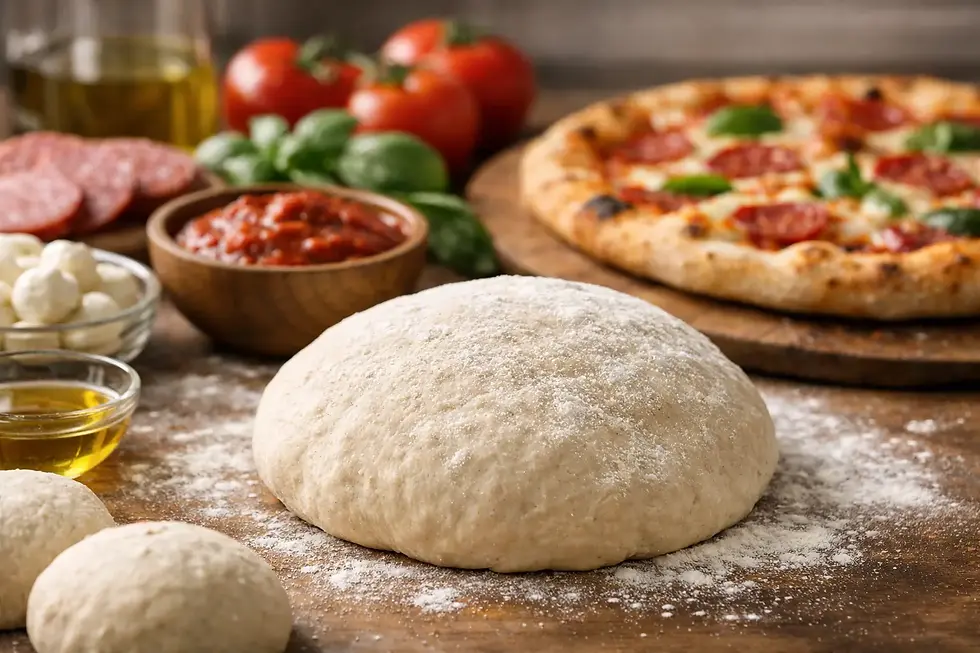
A dough ball is more than a neat little round waiting to be stretched. It is the final structure that holds gas, builds tension and creates the shape of your crust. When properly made, it gives you a dough that opens smoothly from the centre, leaves a puffed edge around the rim and bakes with that soft, tender interior that makes Neapolitan pizza so addictive.
The size of the dough ball affects almost everything. A smaller ball can produce a thinner pizza with less pronounced cornicione. A larger one tends to give you more oven spring and a fuller edge, but only if your oven and stretching technique can handle it. For most home pizza makers in the UK using compact petrol or wood pellet ovens, there is a sweet spot where the dough is easy to manage and still delivers an authentic result.
The ideal size for Neapolitan pizza dough balls
For a classic 10 to 12 inch Neapolitan pizza, most dough balls sit around 240g to 280g. That range works brilliantly for home cooks because it gives enough dough to create a soft, airy rim without making the base too thick.
If you are using a smaller oven or prefer a more central, softer base with a pronounced crust, 250g is a very reliable place to start. If you want a slightly larger pizza or like a bit more substance in the edge, 260g to 280g can work beautifully. Go much lower and the pizza can feel mean. Go much higher and the dough can become harder to stretch evenly unless you are already very comfortable handling high-hydration dough.
This is where convenience without compromise really comes into its own. When your dough balls are already portioned correctly, you remove one of the easiest ways to ruin pizza night. No weighing, no second guessing, no wondering why one pizza bakes beautifully while the next turns into a wonky frisbee.
Why fermentation changes everything
If you have ever compared rushed homemade dough with properly fermented dough, you already know the difference is not subtle. Slow fermentation gives dough more flavour, better texture and a lighter feel after baking. It also makes the dough easier to stretch because the gluten has had time to relax rather than staying tight and springy.
That is a big reason premium neapolitan pizza dough balls are usually built around a long fermentation schedule. A 48-hour ferment, for example, develops complexity that same-day dough simply cannot fake. You get a gentle tang, better browning and a more open, delicate crumb in the crust. Just as importantly for home cooks, the dough becomes more predictable.
There is a trade-off, of course. Longer fermentation means temperature control matters more, and over-proofing is still possible if the dough is left too warm for too long. But when the process has already been handled for you by specialists using strong flour, fresh yeast and a fermentation-led method, you get the upside without the faff.
Handling dough balls without wrecking them
A great dough ball can still be ruined in the final hour if it is handled badly. This is where plenty of home pizza sessions go sideways. The dough comes out of the fridge, gets poked about too much, stuck to the worktop or flattened like a rolling pin project, and all that lovely gas is gone.
The first job is patience. Let the dough come towards room temperature before stretching. Cold dough is tighter, harder to open and more likely to tear. Depending on your kitchen, that usually means allowing a couple of hours after taking it out of the fridge. You want the dough to feel soft and alive, not chilly and stiff.
Flour helps, but too much can create a dusty, dry base that burns underneath. A light coating on the bench and your hands is enough. Then press from the centre outwards, leaving a thicker border around the edge. That pushes the air into the crust instead of knocking it out. If you use a rolling pin, you flatten the very structure you spent all that time fermenting.
If the dough keeps shrinking back, it usually needs more time to relax. If it spreads too quickly and feels weak, it may be too warm or over-proofed. Neither issue means the pizza is doomed, but the handling changes. Tight dough needs patience. Slack dough needs a gentler touch and a faster move to the peel.
Proofing and timing at home
Home pizza is always a little bit of a balancing act because kitchens are not pizzerias. Some are cool, some are roasting, and the weather in Britain can make your dough behave one way in January and another in July.
That is why timing with dough balls is never completely fixed. As a rule, once removed from the fridge, dough balls need enough time to wake up, soften and finish proofing. In a cool kitchen, they may need longer than you expect. In a warm one, they can race ahead.
Look for visual signs as much as the clock. A ready dough ball should have a smoother, slightly puffed appearance and feel airy without collapsing. It should open willingly, not resist like elastic. That is the sweet spot.
One common mistake is leaving dough in a sealed container with no room to expand. Another is exposing it to air so the surface dries and forms a skin. Covered proofing trays or dough boxes make life easier, but even a lightly covered tray can do the job if handled properly.
Why quality ingredients still matter
You cannot hide poor ingredients inside a simple dough. Neapolitan pizza is brutally honest like that. Flour quality affects strength and stretch. Yeast affects fermentation behaviour. Water and salt influence texture and flavour. Olive oil is not always used in strict Neapolitan formulas, but in pizza making generally, every ingredient choice shows up on the plate.
For home cooks who want pizzeria-standard results without becoming full-time dough nerds, this matters. A well-made dough ball built with Italian flour and fresh yeast gives you a proper foundation from the start. It behaves better, tastes better and helps your oven work harder for you.
That is also the gap between basic supermarket dough and artisan dough balls. Supermarket options can be convenient, but they often miss that fermentation-led depth and elasticity that make authentic Neapolitan pizza so satisfying. The dough may look similar in the packet, but the bake tells the truth.
Choosing the right neapolitan pizza dough balls for your setup
Not every dough ball suits every cook. If you are baking in an Ooni-style oven at high heat, you want dough that can handle a fast bake and still puff beautifully at the edges. If you are working with a domestic oven and steel, you may prefer a dough ball that gives a little more forgiveness and structure over a longer bake.
This is where buying from a specialist can save a lot of trial and error. Dough Dorks focuses on handcrafted 48-hour fermented dough designed to bridge the gap between authenticity and ease, which is exactly what most home pizza nights need. You still get the satisfaction of stretching, topping and launching your own pizza, but without spending two days trying to make the dough behave.
And that is the real appeal. Great pizza at home should feel exciting, not stressful. The best dough balls give you confidence. They make it easier to feed family, impress friends or turn a Friday night into something better than takeaway.
The difference you can taste
When neapolitan pizza dough balls are properly fermented, correctly portioned and handled with a bit of care, the final pizza has a completely different character. The crust rises fast, blisters beautifully and stays soft enough to fold. The base gets structure without turning cracker-like. The flavour has depth rather than just salt and flour.
That is what people mean by authentic results. Not just a round pizza cooked hot, but a pizza with balance - airy rim, tender centre, clean flavour and that unmistakable chew that tells you the dough has been taken seriously.
If you want better pizza at home, start with the dough ball. Everything after that gets simpler, and a lot more delicious.


Comments